
Hungary: A Budget Traveler’s Guide to the Heart of Europe
Source: budapest.org
Hungary is arguably Europe’s best-kept secret for travelers who want the "grand imperial" feel of Vienna or Paris without the sky-high price tag. It is a land of thermal water, paprika-spiked stews, and architectural marvels that look like they belong in a fairytale.
For the budget-conscious traveler, Hungary is a paradise. You can soak in world-class spas, eat hearty meals, and ride historic tram lines for a fraction of what you would pay further west. If you are ready to explore the Pearl of the Danube without breaking the bank, here is your factual guide.
1. Budapest: The Capital of Caves and Spas
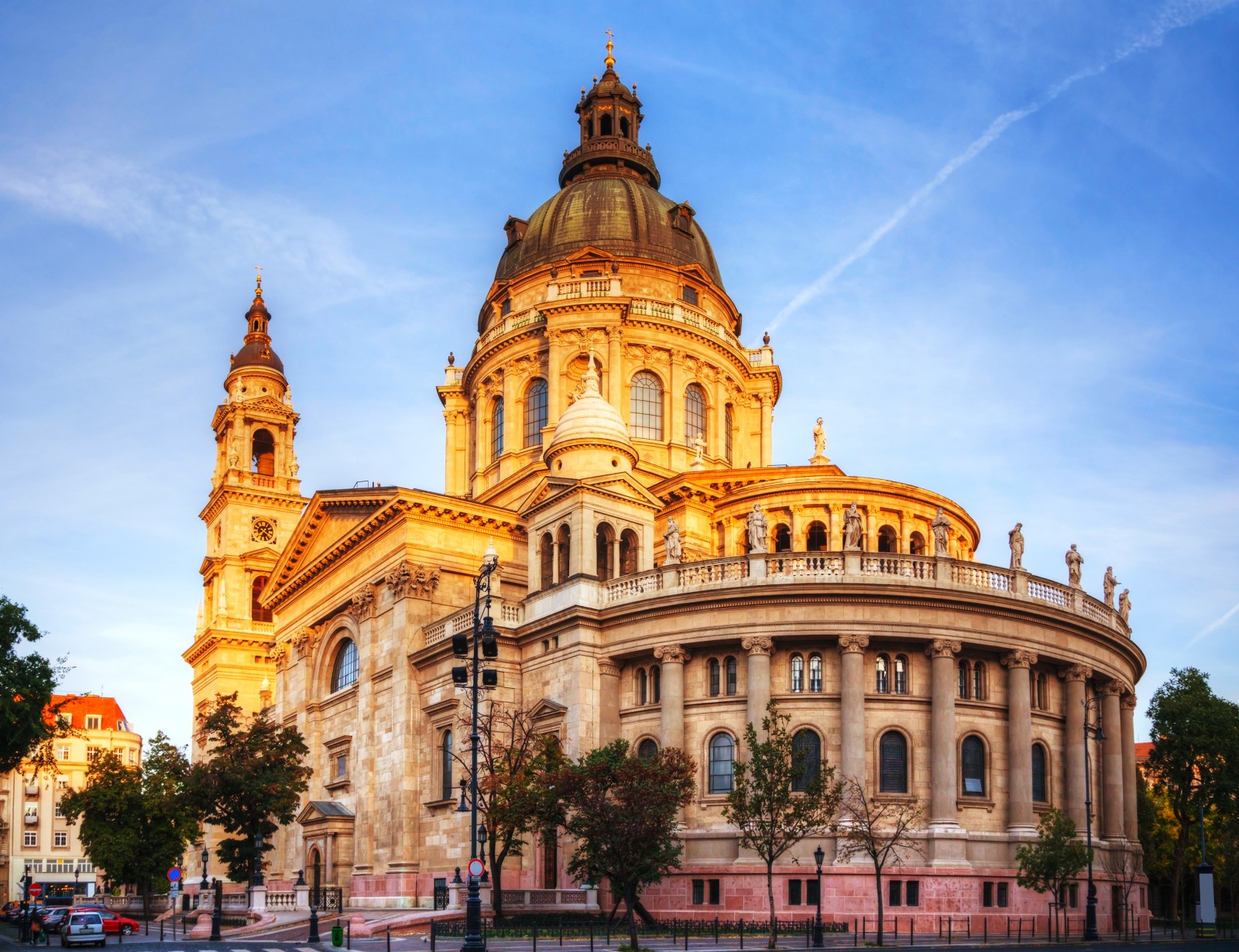
Your journey begins in Budapest, a city split by the Danube River into two distinct sides: the hilly, historic Buda and the flat, buzzing Pest.
- Free Views: Skip the expensive funicular. You can walk up to Buda Castle for free. The grounds offer sweeping views of the river and the Parliament building. While you are there, visit Fisherman’s Bastion. While the upper turrets charge a fee, the lower balconies are free and offer the exact same stunning view.
- The Thermal Baths: Budapest sits on a patchwork of thermal springs. Széchenyi Thermal Bath is the most famous (and expensive), but for a budget-friendly and authentic experience, try the Lukács Baths. It is included for free with the Budapest Card if you choose to buy one, or is significantly cheaper than the major tourist spots.
- Ride Tram 2: Forget the expensive hop-on-hop-off buses. A standard public transport ticket (approx. €1.00) gets you a seat on Tram 2, which runs along the Danube bank. It is widely cited as one of the most scenic tram routes in Europe, passing the Parliament and the Chain Bridge.
2. Eger: History and Architecture
A two-hour train ride from Budapest takes you to Eger. It is a small, walkable city famous for its castle and history.
- Eger Castle: This fortress is legendary for stopping a massive Ottoman siege in 1552. The entry fee is modest, and the museum provides a deep dive into Hungarian resilience.
- The Minaret: Eger is home to the northernmost Ottoman minaret in Europe. You can climb the narrow spiral staircase for a panoramic view of the baroque town center.
3. The Connectivity Reality: Why You Need an eSIM
Here is a logistical reality check. Hungarian is one of the most difficult languages in the world. It is not related to Germanic or Romance languages, meaning you cannot "guess" what signs mean.
The Language Barrier
- Translation: Outside of the main tourist hub in Budapest, English proficiency drops. You will need Google Lens to translate menus and street signs instantly.
- Navigation: Budapest’s public transport system is excellent, but complex. You need real-time data to use the BudapestGO app, which tells you exactly which bus to take and when to get off.
The Solution: The eSIM Roaming charges for non-EU travelers can be steep. To navigate the tram lines and translate the menu, purchase a Hungary-specific eSIM data plan before you fly.
- The Benefit: An eSIM connects you to local networks (like Yettel or Magyar Telekom) the moment you land at Ferenc Liszt International Airport. It allows you to validate digital transport tickets and find walking directions to your hostel without needing to hunt for Wi-Fi.
4. Eating on a Budget
Hungarian food is hearty, filling, and incredibly affordable.
- Gulyás (Goulash): The national dish is actually a soup, not a stew. Authentic Gulyás is almost always made with beef, potatoes, carrots, and plenty of paprika. It is often served with bread and constitutes a full meal for under €10.
- Chicken Paprikash (Csirkepaprikás): This is pure comfort food. Tender chicken is simmered in a creamy paprika sauce and served over nokedli (small egg dumplings similar to spaetzle).
- Lángos: This is the ultimate street food. It is a deep-fried flatbread. The traditional topping is garlic oil, sour cream, and grated cheese. It is vegetarian, filling, and usually costs less than €4.
- Fruit Soup (Gyümölcsleves): Don't be surprised if you see a cold, pink soup on the menu. Cold sour cherry soup is a beloved starter, especially in summer. It is tart, sweet, and refreshing.
- Chimney Cake (Kürtőskalács): For dessert, look for street stalls selling these spiral pastries. They are roasted over charcoal and rolled in sugar, cinnamon, or walnuts.
5. Lake Balaton: The Hungarian Sea
If you visit in summer, take a train to Lake Balaton, the largest lake in Central Europe.
- The "South" Shore: The towns of Siófok and Zamárdi have grassy beaches where you can swim for free. The water is shallow, warm, and milky-turquoise.
- Tihany: On the north shore, visit the Tihany Peninsula. It is famous for its lavender fields and the Benedictine Abbey. The view from the abbey hill looking out over the water is one of the most iconic images of Hungary.
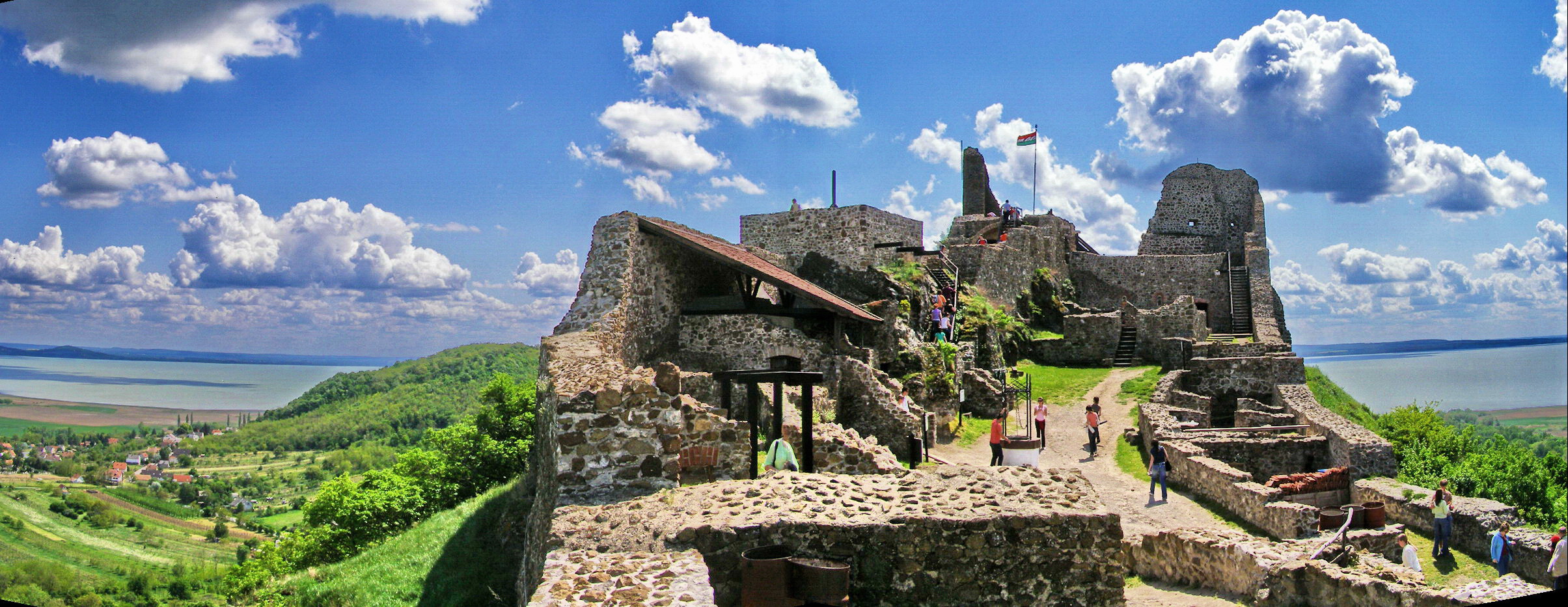
Szigliget, Western Hungary. Ruins of the medieval castle, overlooking the Lake Balaton.
Why Go Now?
Hungary offers a blend of Western European infrastructure and Eastern European prices. It is safe, clean, and culturally distinct. Whether you are marveling at the parliament building at night or eating a hot Lángos by the lake, you will find that your budget stretches further here than almost anywhere else on the continent.