
Turkmenistan: The Marble Mirage of Central Asia
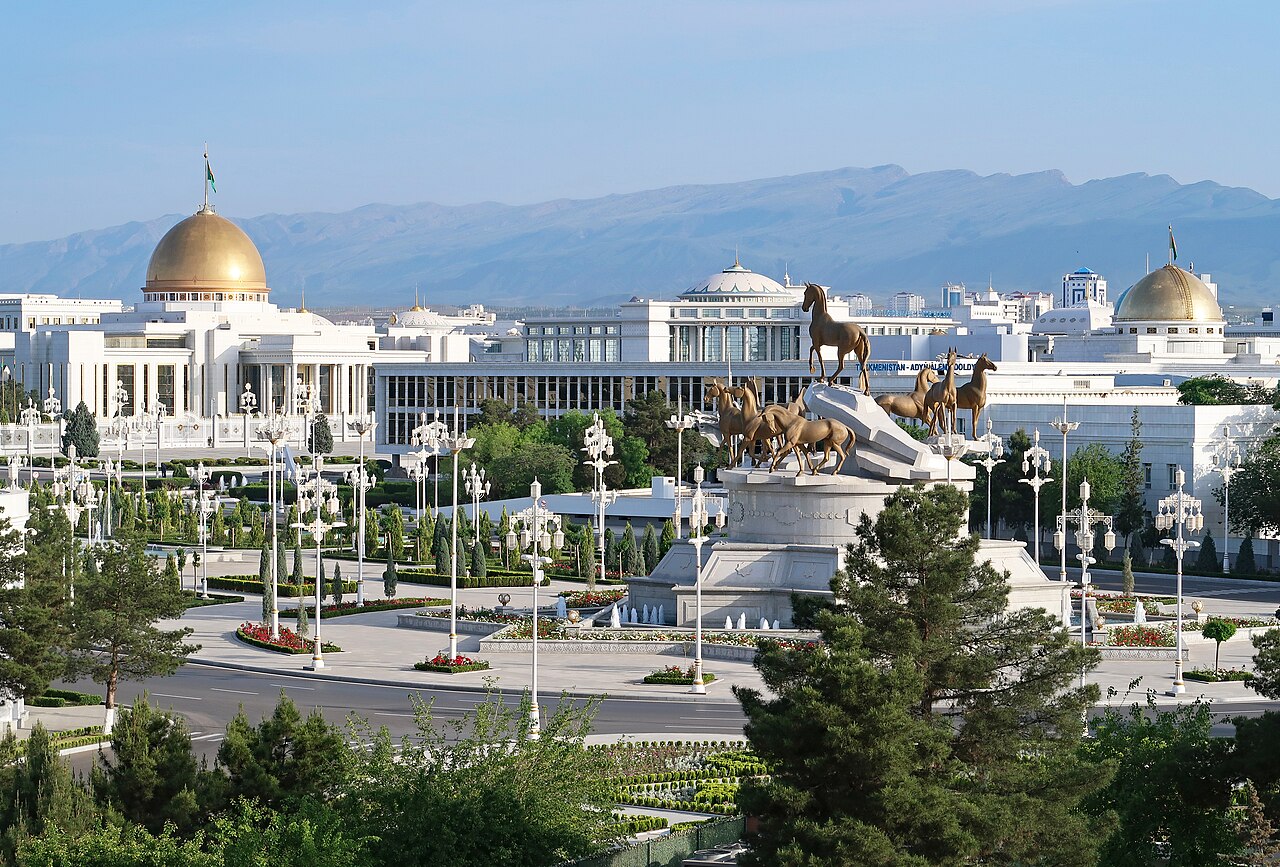
Turkmenistan is a land that often feels like it belongs to a different timeline. In 2026, it remains one of the most enigmatic stops on the ancient Silk Road—a country where nomadic tradition meets a futuristic, white-marble obsession. From the record-breaking monuments of its capital to the fiery glow of a desert crater that has been burning for decades, Turkmenistan is a sensory enigma waiting to be decoded.
Whether you are a historian tracing the footsteps of the Seljuks or an adventurer seeking the ultimate desert campsite, Turkmenistan offers a journey of staggering scale. Here is your factual, grounded guide to the "Land of the Turkmens."
1. Ashgabat: The White Marble Capital
Your journey begins in Ashgabat, a city that holds the Guinness World Record for the highest concentration of white marble buildings. It is a place of grand symmetry and silent boulevards.
- The Arch of Neutrality: Topped with a gold-plated statue of the former president that rotates to always face the sun, this monument is the iconic symbol of the city.
- The Independence Monument: A towering white column surrounded by larger-than-life statues of Turkmen heroes, set within a meticulously manicured park of fountains.
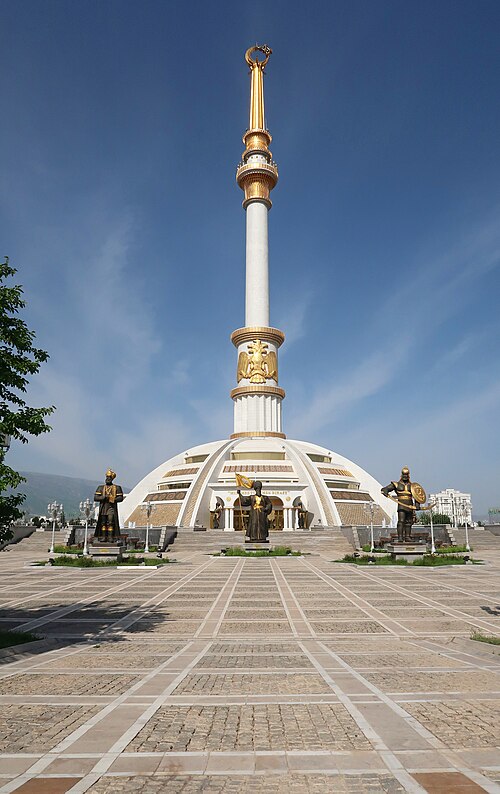
- Source- By John Pavelka from Austin, TX, USA - Independence Monument, CC BY 2.0
- The Wedding Palace: An architectural marvel shaped like a star with a globe inside, representing the map of Turkmenistan. At night, it glows in a rotating kaleidoscope of colors.
- The Turkmen Carpet Museum: Home to some of the largest hand-woven carpets in the world, this museum is a masterclass in the artistry that defines the nation's identity.
2. The Door to Hell: The Darvaza Gas Crater
Leaving the marble behind, you head into the vast Karakum Desert to witness one of the world's most surreal sights.
- The Fiery Glow: The Darvaza Gas Crater is a 70-meter-wide pit that has been burning continuously since 1971. While it’s impressive by day, it is spectacular at night. Camping under the stars on the edge of the crater, watching the flickering orange flames dance against the pitch-black desert sky, is a hauntingly beautiful experience.
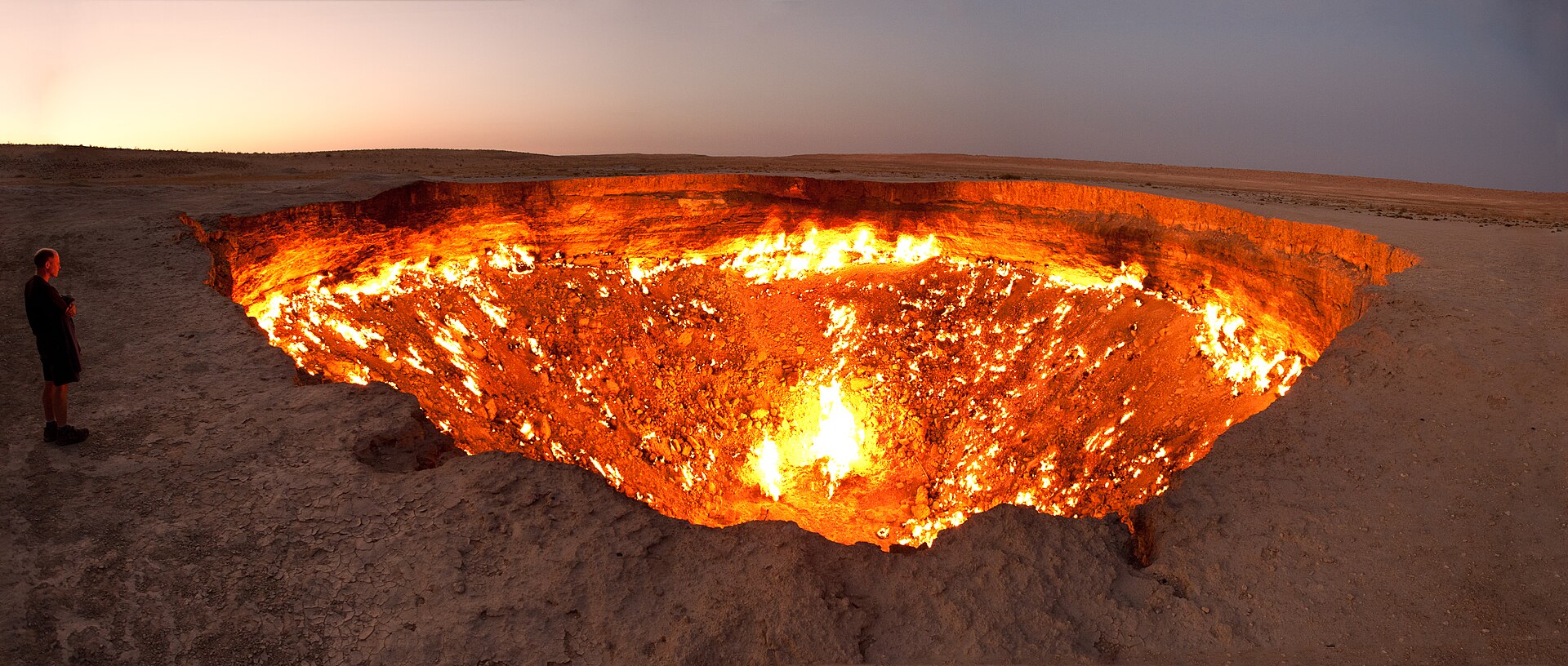
- Source- By Tormod Sandtorv - Flickr: Darvasa gas crater panorama, CC BY-SA 2.0
- Nearby Wonders: The area also features the Water Crater and the Mud Crater, where you can see the earth’s internal pressures manifesting in bubbling, turquoise pools and churning clay.
3. The Digital Compass: Navigating the Steppe
Turkmenistan is a place where self-reliance is vital, and staying connected is a primary safety and logistics essential. While the country is known for its "unplugged" feel, the modern explorer needs a reliable way to navigate.
The Logistics Challenge
- Real-Time Safety: Infrastructure in the desert can be sparse. Having a stable connection is vital for using offline GPS maps, receiving travel advisory updates, and coordinating with your local guide (who is required for almost all foreign visitors).
- Digital Documents: Your Letter of Invitation (LOI) and Visa are the keys to your stay. Having digital copies accessible at all times is essential for the frequent registration checks at internal checkpoints.
The Solution: The Travel eSIM To ensure you aren't left in a digital "blackout" zone, securing a Turkmenistan-compatible eSIM before you fly is the most efficient choice.
The Benefit: An eSIM allows you to activate a local data plan the moment you land at Ashgabat International Airport. It ensures you have instant access to translation tools for Turkmen signs and allows you to check in with your family once you emerge from the deep desert. It bypasses the need to hunt for physical SIM card kiosks in a country where such services can be complex for non-residents to obtain.
4. Silk Road Echoes: Merv and Kunya-Urgench
For those who seek the ghosts of the Silk Road, the eastern and northern provinces hold the keys to the past.
- Ancient Merv: Once one of the largest cities in the world, Merv is now a sprawling UNESCO archaeological park. The Sultan Sanjar Mausoleum, with its massive brick dome, remains a marvel of 12th-century engineering.
- Kunya-Urgench: Located near the northern border, this former capital of the Khorezm Empire features the Kutlug Timur Minaret, the tallest in Central Asia. The intricate tilework on the Turabek-Khanum Mausoleum is considered some of the finest in the Islamic world.
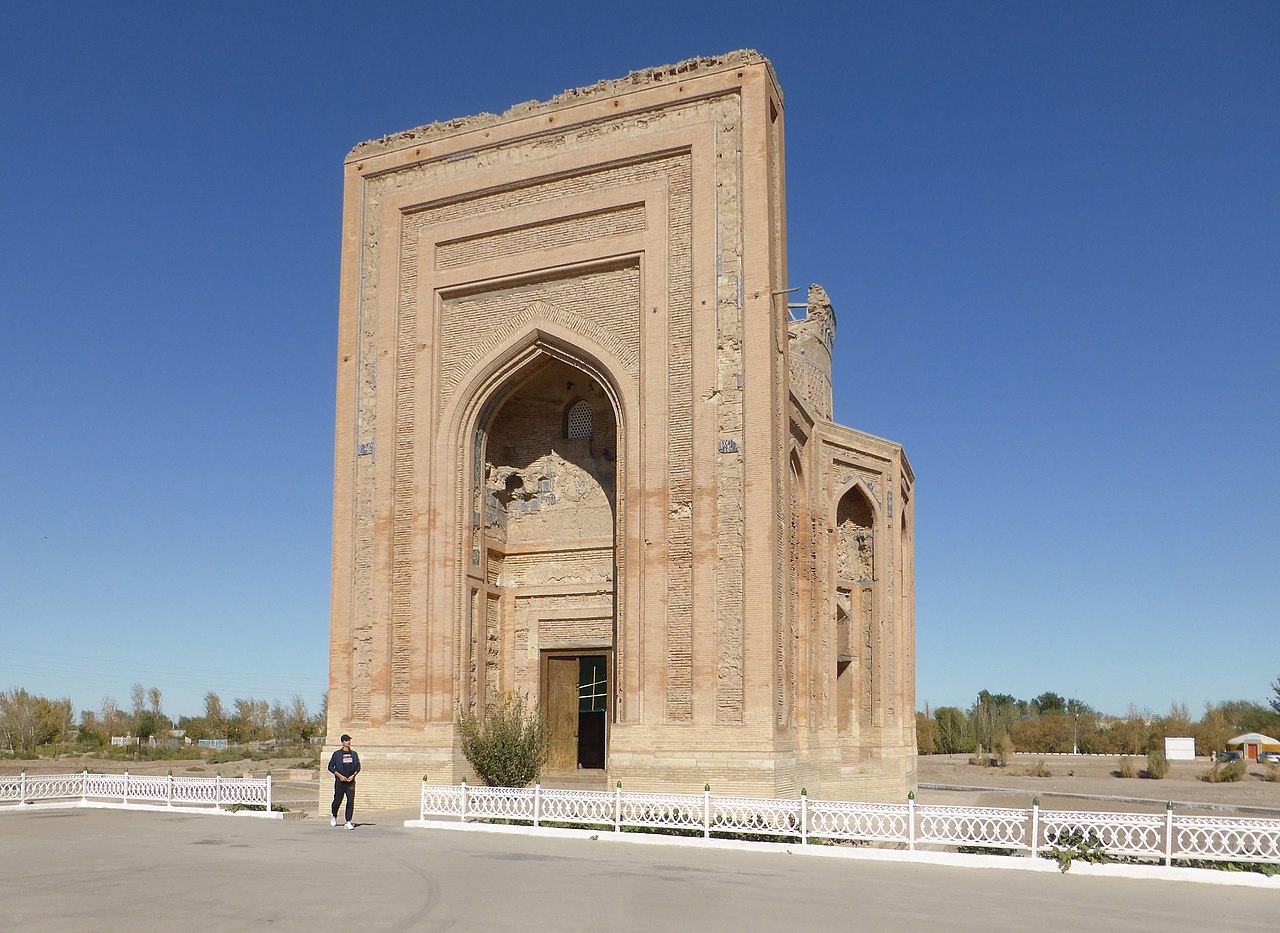
- Source- Hans Birger Nilsen, CC BY-SA 2.0, via Wikimedia Commons
5. A Taste of Turkmenistan
Turkmen cuisine is the fuel of the nomads—simple, sustaining, and deeply rooted in the land.
- Dograma: Often called the national dish, this is a hearty stew of shredded bread, onions, and succulent mutton that is traditionally prepared for large communal gatherings.
- Plov (Palaw): The king of Central Asian tables. Fragrant rice is cooked with carrots, onions, and tender chunks of lamb or beef in a large cast-iron cauldron.
- Chorek: Turkmen bread is sacred. These thick, round discs are baked fresh daily in a tamdyr (clay oven). It is considered disrespectful to place a chorek upside down or to cut it with a knife—always tear it by hand.
- Melons: Turkmenistan is famous for producing what many call the "sweetest melons in the world." They are so central to the culture that the country celebrates a national "Melon Day" every August.
- Green Tea: The national drink. No matter where you go, you will be welcomed with a bowl of hot green tea, served as a sign of respect and hospitality.
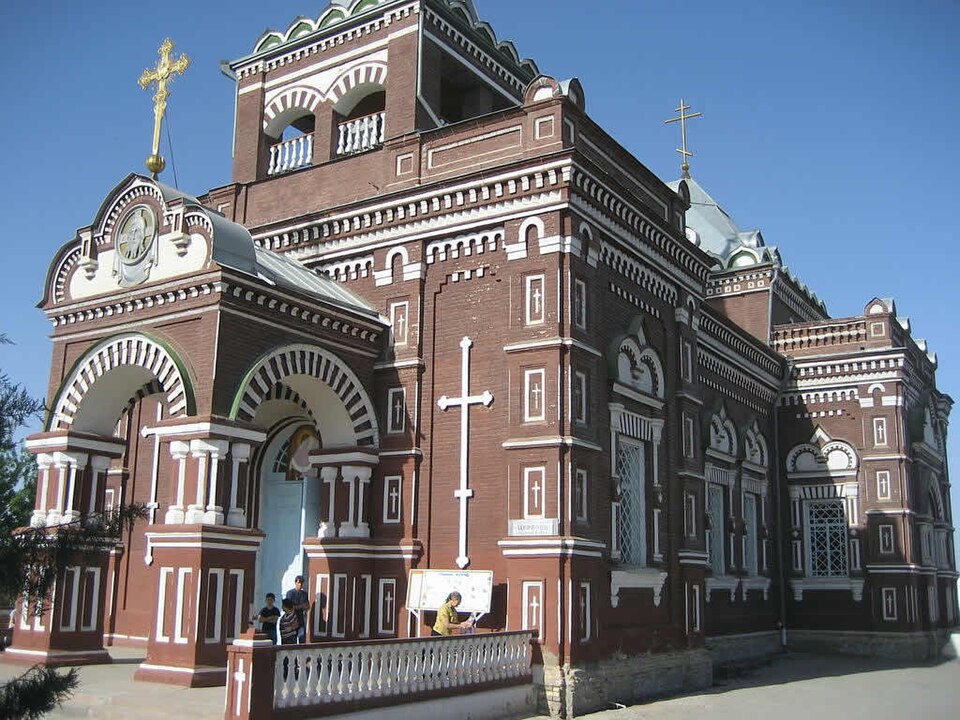
Pokrovkaya Church, Mary. Source- By David Stanley - Flickr: Pokrovkaya Church, Mary, CC BY 2.0
Essential Travel Logistics for 2026
- Visa: All travelers require a visa and a Letter of Invitation (LOI) from a licensed Turkmen travel agency.
- Currency: The Turkmen Manat (TMT). This is a strictly cash-based economy. Bring crisp, unblemished US Dollar bills to exchange at official bureaus. Credit cards are generally not accepted outside of high-end hotels in Ashgabat.
- Registration: You must register with the State Migration Service within three working days of your arrival. Your tour operator will typically handle this, but your eSIM will be vital for keeping digital records of your stamps.
- Safety: Turkmenistan is very safe for tourists who follow the law. Always carry your passport, avoid photographing government buildings, and be mindful of local traditions and modesty.
Why Visit Now?
Turkmenistan is a destination that rewards the bold. It is a place that challenges your perceptions and invites you into a world of spectacular, silent beauty. By securing your digital connection with an eSIM and traveling with a spirit of curiosity and respect, you can witness the spectacular "Marble Mirage" for yourself.