
The Faroe Islands: Where the Sheep Outnumber You
Source: Britannica
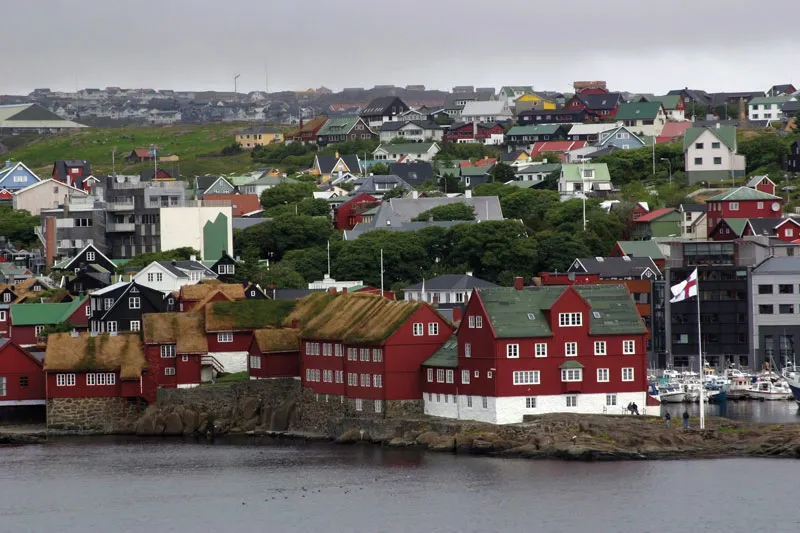
If you were to ask a child to draw a fantasy kingdom, they would probably draw the Faroe Islands. It is a place where jagged green mountains rise vertically out of the steel-grey Atlantic, where waterfalls tumble directly into the ocean, and where the houses have grass on their roofs.
Located halfway between Iceland and Norway, this archipelago of 18 islands is not a place you go for a "vacation." You go for an adventure. The weather is wild, the roads are feats of engineering, and the silence is profound.
If you are ready to visit one of the most dramatic landscapes on Earth, here is your factual guide to the Faroe Islands.
1. The "Lake Above the Ocean" (Sørvágsvatn)
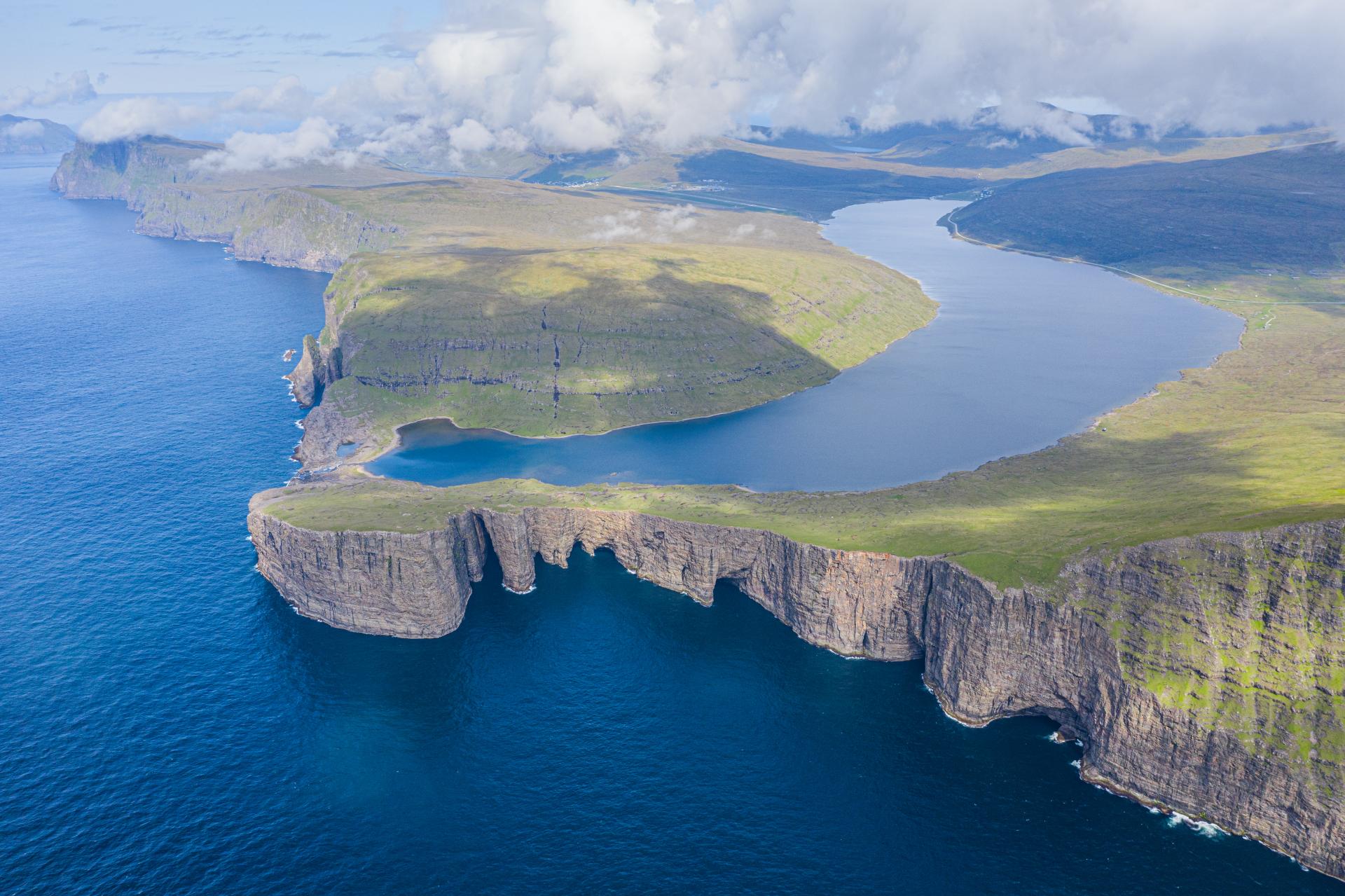
You have likely seen the photo. It looks like an optical illusion—a massive freshwater lake that appears to float hundreds of feet above the churning ocean.
- The Reality: It is real, and it is called Sørvágsvatn (or Leitisvatn).
- The Hike: You park near the village of Miðvágur. The hike is an easy 45-minute walk across a peaty cliff top.
- The View: When you reach the cliff edge at Trælanípa (Slave’s Cliff), the illusion aligns. You see the lake sitting calmly in its rock bowl, while the Atlantic crashes against the cliffs 142 meters below. Turn your head slightly, and you see the Bøsdalafossur waterfall draining the lake into the sea. It is one of the few places on Earth where your brain struggles to process the scale of what you are seeing.
- Source- Visit Vagar
2. Gásadalur and the Waterfall
Until 2004, the tiny village of Gásadalur was one of the most isolated settlements in the world. The only way in was a strenuous hike over a mountain pass or by helicopter. Today, a single-lane tunnel connects it to the rest of the island, but the village remains frozen in time.
- Múlafossur: This is the iconic shot. A thin, elegant ribbon of white water plunging off a green cliff into the sea, with the village houses nestled in the valley behind it.
- The Vibe: There are fewer than 20 residents. You walk to the viewpoint, take the photo that will make your friends jealous, and listen to the wind. There is no gift shop. There is no ticket booth. Just the raw power of nature.
3. The "Not EU" Trap & The eSIM Necessity
Here is the most critical logistical tip for your trip. Many travelers assume that because the Faroe Islands are part of the Kingdom of Denmark, they are part of the EU "Roam Like at Home" zone. They are not.
- The Shock: If you land and turn on your data using your UK, European, or US SIM, you will likely be hit with "Rest of World" roaming charges, which can be astronomical (often $10+ per megabyte).
- The Navigation Need: You will be driving. The islands are connected by a maze of mountain tunnels and sub-sea roads. You need Google Maps to navigate the single-lane roads and to check the live weather forecast (which changes every 10 minutes).
- The Fix: Purchase an eSIM data plan before you fly.
- Why? An eSIM allows you to connect to the local Føroya Tele or Nema networks immediately upon landing at Vágar Airport. It ensures you have a safety line when hiking in the fog and allows you to pay for tunnel tolls online without hunting for Wi-Fi.
4. Kalsoy: The James Bond Island
Take the ferry from Klaksvík to the finger-shaped island of Kalsoy.
- Kallur Lighthouse: Drive to the northern tip and hike the grassy ridge to the lighthouse. The sheer drop-offs here are vertigo-inducing. The ridge looks like the spine of a dragon.
- The Tomb: Fans of No Time to Die will recognize this location. It is where James Bond met his end. The locals have even erected a simple tombstone for the fictional spy near the lighthouse.
5. The Driving: An Underwater Roundabout
Driving here is an attraction in itself.
- The Jellyfish: The Eysturoyartunnilin is an 11km sub-sea tunnel connecting the capital, Tórshavn, to the island of Eysturoy. Deep beneath the Atlantic, you will drive into the world’s first underwater roundabout. It is illuminated by blue and green lights to look like a giant jellyfish.
- Sheep Rule: There are 50,000 people and 80,000 sheep. Sheep have the right of way. If they are sleeping on the warm asphalt (which they love to do), you wait.
6. Mykines: The Puffin Colony
If you want to see puffins, you must go to Mykines.
- The Window: This is strictly a summer activity. Puffins arrive in May and leave by late August.
- The Colony: Mykines is the westernmost island. You take a small ferry (which is frequently cancelled due to high waves) to get there. Once you hike up the cliffs, you are surrounded. Thousands of puffins with their brightly colored beaks waddle around your feet, preparing their burrows.
- Rules: You must pay a hiking fee, and you must stay on the path. The puffin burrows make the ground fragile; stepping off the path can collapse a nest.
7. Practical Survival Tips
It Will Be Expensive
- Budget: This is one of the most expensive destinations in Europe. A burger and fries can cost $30 USD. A rental car can be $100+ per day.
- Food: Try the local specialty if you dare: Ræst. It is semi-dried, fermented mutton. It smells strong (like very old cheese) and tastes like nothing else on earth. For something safer, the Salmon is the freshest you will ever eat.
The Weather
- The Faroese have a saying: "If you don't like the weather, wait five minutes." It is true. You can experience rain, hail, sun, and fog in a single hour. Pack waterproofs, not umbrellas (the wind will destroy an umbrella in seconds).
Why Go Now?
The Faroe Islands are becoming popular, but they still feel undiscovered. There are no tour buses blocking the roads. There are no queues for the waterfalls. It is a place that reminds you how small you are. Standing on a cliff edge, with nothing between you and the North Pole but ocean, is a feeling that stays with you long after you fly home.