
The Cook Islands: Paradise Without the Filter
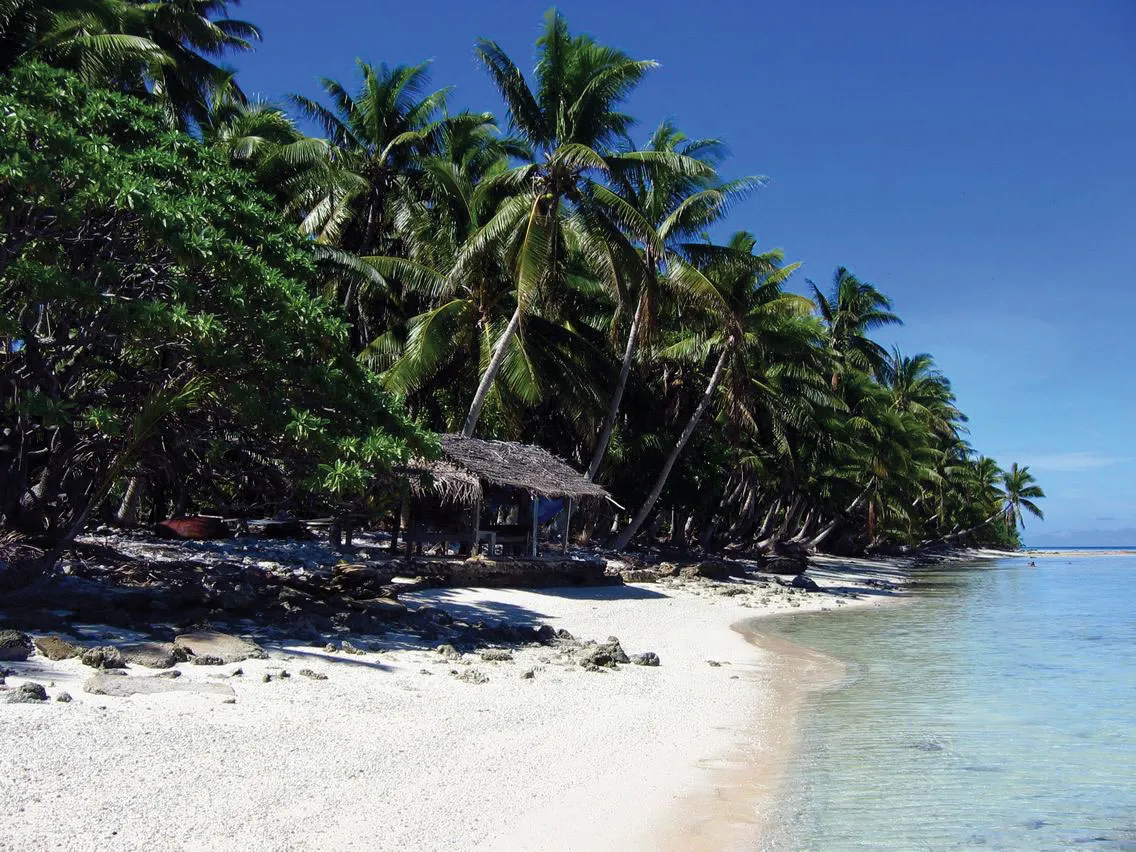
Source: Britannica
There are places in the world that look great on Instagram but feel underwhelming in real life. The Cook Islands is the opposite. It is a place where the water is actually bluer than the photos, where the locals stop their scooters to say hello, and where "rush hour" is a couple of stray chickens crossing the road.
Located halfway between New Zealand and Hawaii, this archipelago of 15 islands is often overshadowed by its flashier neighbors, Fiji and Tahiti. But that is exactly why you should go. There are no chain hotels, no McDonald's (literally—it’s illegal), and no buildings taller than a coconut tree.
If you are ready to unplug in a place that feels like the world used to be, here is your guide to the Cook Islands.
1. Rarotonga: The Little Island with a Big Heart
Your journey starts in Rarotonga (Raro). It is the main island, but don't let that fool you—you can drive around the whole thing in 45 minutes.
- The Vibe: Raro feels like a small town where everyone knows each other. The center of the island is dominated by jagged, Jurassic-green mountains, while the edge is ringed by a lagoon protected by a coral reef.
- The "Bus" System: There is no Uber here. Instead, there are two buses: "Clockwise" and "Anti-Clockwise." They circle the island in—you guessed it—opposite directions. You just wave them down from anywhere on the road. It’s charming, cheap, and impossible to get lost.
- The Cross-Island Trek: If you want to sweat, hike from the north coast to the south coast. The trail takes about 3-4 hours and passes "The Needle" (Te Rua Manga), a massive rock spire sticking out of the jungle. The view from the base of the Needle is one of the best in the South Pacific.
2. Aitutaki: The World’s Most Beautiful Lagoon
You can stay in Rarotonga, but you must fly to Aitutaki. It is a 45-minute flight north, and the view from the plane window alone is worth the ticket price.
- The Lagoon: Aitutaki isn't really an island; it’s a massive, triangular coral atoll with bright turquoise water so clear it looks like swimming pool water.
- One Foot Island: Take a "Vaka" (traditional boat) cruise to Tapuaetai (One Foot Island). It is a tiny islet in the lagoon with powder-soft sand. Bring your passport—there is a tiny post office here that will stamp it with a "One Foot Island" souvenir stamp. It’s arguably the coolest passport stamp you can get.
- No Dogs: Fun fact—there are no dogs on Aitutaki. The silence at night, broken only by the sound of the reef, is profound.
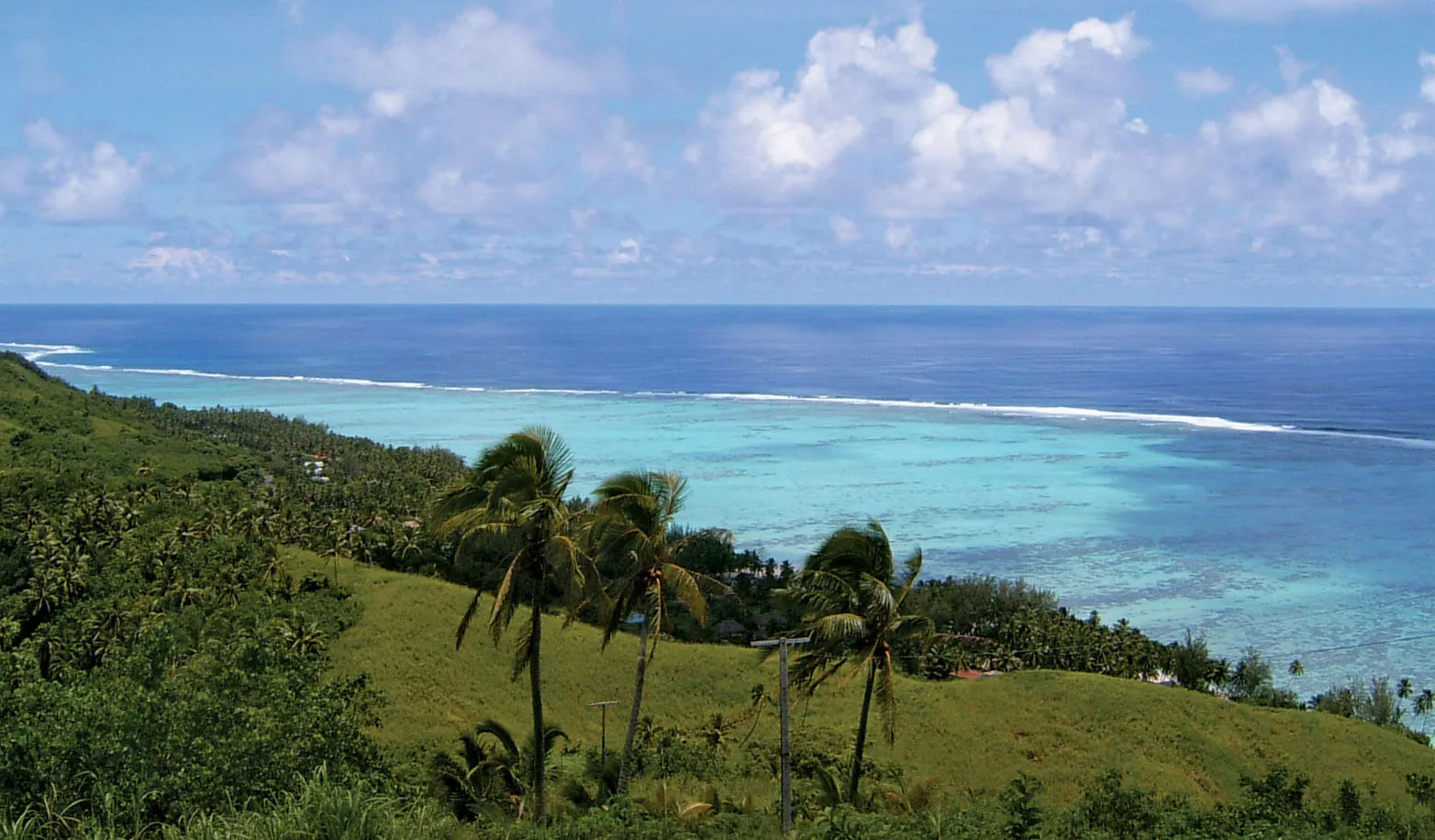
- Aitutaki Atoll. Source- Britannica
3. Eat the Ika Mata
You cannot leave the Cook Islands without eating Ika Mata.
- What is it? It is the national dish: raw tuna "cooked" in lime juice and mixed with freshly squeezed coconut cream, cucumber, and chili.
- The Taste: It is fresh, creamy, and zesty. You will likely eat it every day. The best place to try it is at the Muri Night Markets in Rarotonga (open Tu/W/Th/Sun), where locals sell homemade plates for about $15 NZD.
4. The Connectivity Reality: Why You Need an eSIM
Here is a crucial tip that catches many travelers off guard. The Cook Islands is incredibly remote. For years, getting online meant buying expensive paper "Wi-Fi vouchers" from gas stations and logging in at specific hotspots.
The "Roaming" Trap Because of its isolation, international roaming rates for US, UK, and European carriers are often astronomical (sometimes $10+ per megabyte). If you turn on your regular data, you could drain your bank account before you leave the airport.
The Fix: The eSIM To avoid the voucher hunt and the roaming bill, purchase an eSIM data plan before you fly.
- The Local Option: Vodafone Cook Islands (the main provider) now offers a "Travel eSIM" that you can buy online. It gives you a local number and data instantly.
- The Benefit: Having an eSIM means you have data the moment you land. You can check the "Clockwise" bus schedule, use Google Maps to find that hidden beach, or post your Aitutaki lagoon photo without waiting to find a hotspot. It is the modern survival tool for a remote island.
5. Practical Tips for the "Kuki" Life
- Currency: The official currency is the New Zealand Dollar (NZD). They also have their own local coins (the triangular $2 coin is a great souvenir) and a $3 bill, but they are pegged 1:1 with NZD.
- Scooters: The best way to see Rarotonga is by scooter. However, you need a full motorcycle license from back home. If you only have a car license, you have to go to the police station in Avarua, take a short test, and get a Cook Islands license (it’s a great souvenir, too).
- Sunday Shutdown: Sunday is for church and family. Most shops are closed. Respect the culture, relax, and maybe attend a church service—the singing (himene) is legendary, harmonious, and welcoming to visitors.
Why Go Now?
The Cook Islands sits in a "Goldilocks" zone. It is developed enough to be comfortable (good coffee, English is spoken everywhere), but traditional enough to feel like a discovery. It is a place where you don't watch the clock; you watch the tide.