
The Canary Islands: Europe’s Hawaii
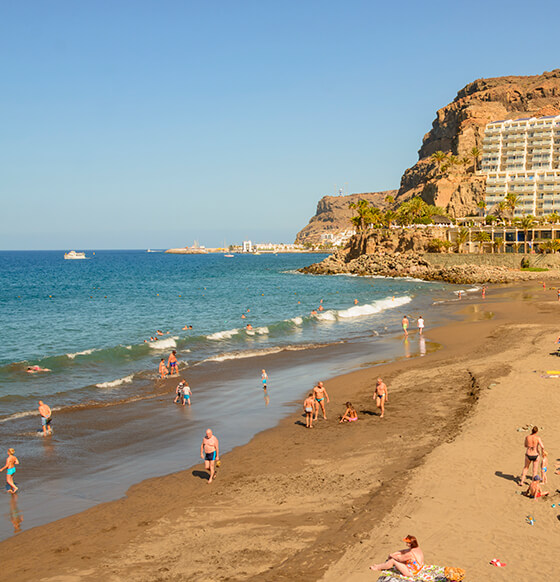
Source: Canary Islands Tourism
If you look at a map, the Canary Islands sit just 60 miles off the coast of Morocco, yet they are distinctively Spanish. Known as the "Islands of Eternal Spring," this archipelago offers a climate that hovers around a perfect 24°C (75°F) year-round.
But to think of them just as a beach destination is to miss the point. These islands are a geological wonder. From the black lava fields of Lanzarote to the pine forests of La Palma and the sand dunes of Gran Canaria, each island is a world unto itself.
If you are looking for a destination that combines European safety with African geography and Latin American flair, here is your factual guide to the Canaries.
1. Tenerife: Touching the Sky
The largest island, Tenerife, is dominated by Mount Teide. At 3,718 meters (12,198 ft), it is the highest peak in Spain and the third-highest volcanic structure in the world.
- The Landscape: You can take a cable car to the upper station (3,555m) for a view that spans the entire archipelago. The landscape around the base looks so much like Mars that NASA uses it to test planetary rovers.
- Stargazing: Tenerife is one of the best places on Earth for astronomy due to low light pollution and high altitude. Visit the Teide Observatory or simply drive up to the national park at night. You will see the Milky Way stretch across the sky with a clarity that is impossible to find on the mainland.
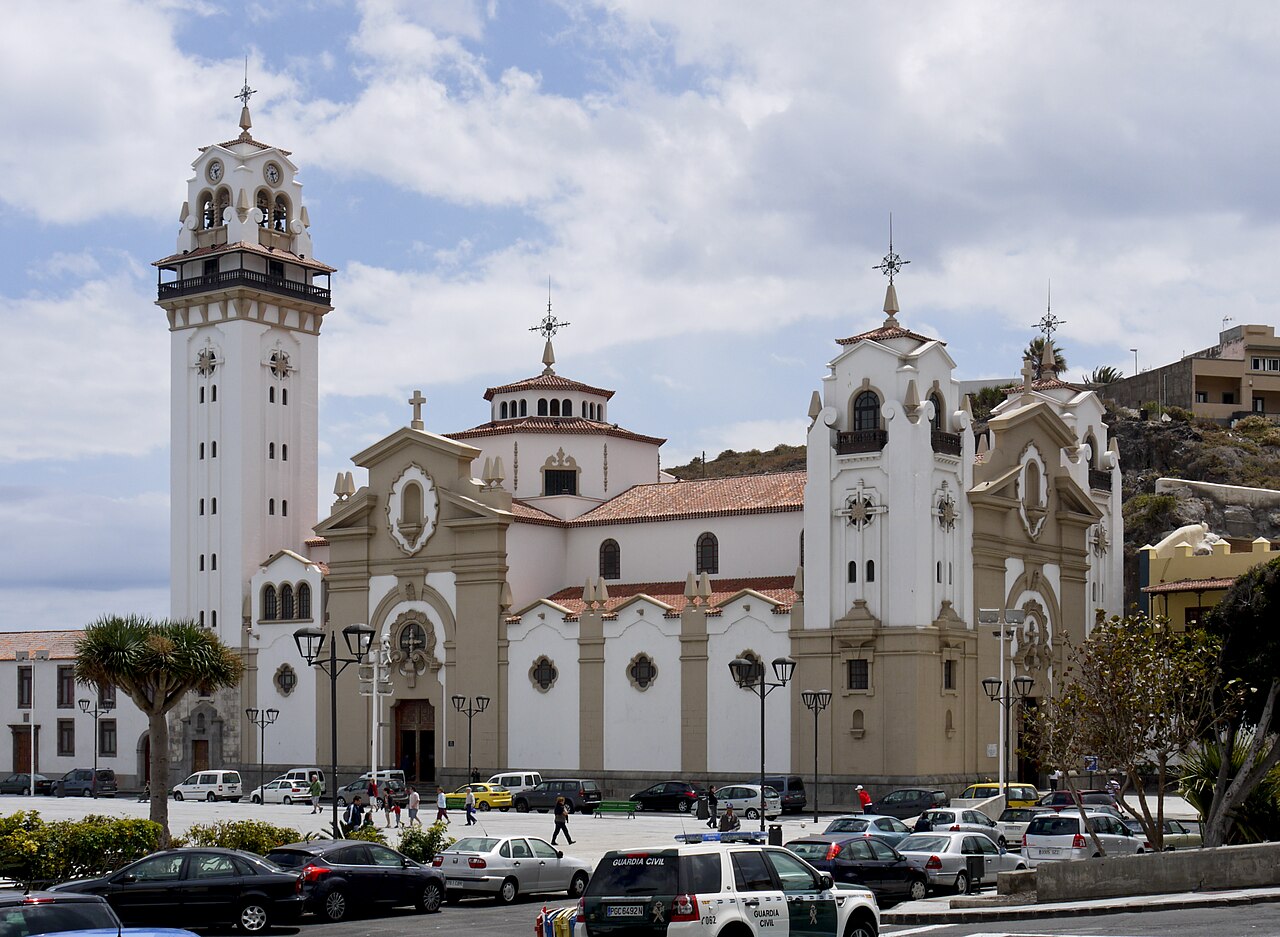
- Candelaria Basilica, Tenerife. Source- Xauxa (Håkan Svensson), Wikimedia Commons
2. Lanzarote: The Martian Landscape
If Tenerife is majestic, Lanzarote is surreal.
- Timanfaya National Park: Created by massive volcanic eruptions in the 1730s, this park is a sea of jagged black lava and red craters. It is so fragile that you cannot walk freely; you must take a bus tour or a guided camel ride. The ground is still hot—park rangers will pour water into a hole in the ground, and it will instantly erupt as a steam geyser.
- César Manrique: The island was shaped by local artist César Manrique, who fought to keep high-rise hotels away. Visit Jameos del Agua, a cultural center built inside a collapsed volcanic lava tube. It features a natural underground lake home to a unique species of blind albino crab.
3. The Connectivity Reality: Why You Need an eSIM
Here is a logistical reality check. While the main resorts have Wi-Fi, the real magic of the Canaries lies in the remote "barrancos" (ravines) and hidden beaches.
The Navigation Challenge
- Remote Roads: Driving in the Canaries involves winding mountain roads with spectacular views but few road signs. To find the trailhead for the Masca Gorge hike or the hidden pools of Garachico, you need live GPS.
- Island Hopping: Ferries between islands (Fred. Olsen or Naviera Armas) are efficient, but schedules change with the weather. You need real-time data to check for delays.
The Solution: The eSIM Roaming charges for non-EU travelers can be steep. Even for some European travelers, data caps apply offshore.
- The Fix: Purchase a Canary Islands compatible eSIM data plan before you fly.
- Why? An eSIM connects you to local networks (Movistar or Orange) immediately. It allows you to download offline maps for hiking and use translation apps in rural "guachinches" (makeshift local restaurants) where English is not spoken.
4. Gran Canaria: A Continent in Miniature
Gran Canaria is often called a "miniature continent" because you can walk from a desert to a rainforest in a single day.
- Maspalomas Dunes: located in the south, this 400-hectare nature reserve looks like the Sahara Desert meeting the Atlantic Ocean. The sand dunes are massive, shifting constantly with the wind. Walking over them at sunset is a serene experience.
- Roque Nublo: Hike to this cloud-piercing volcanic rock in the center of the island. The pine forests here, known as Pino Canario, are unique—they are fire-resistant and can regenerate after burning.
5. Fuerteventura: The Beach Capital
If your goal is pure ocean relaxation, Fuerteventura is the choice.
- Corralejo Natural Park: This park features miles of white sand dunes that drop directly into turquoise water. The wind here is constant, making it a world-class destination for windsurfing and kitesurfing.
- Popcorn Beach: Near Corralejo, there is a stretch of coast where the "sand" is actually white coral fossils shaped exactly like popcorn. It’s a fun, bizarre photo opportunity.
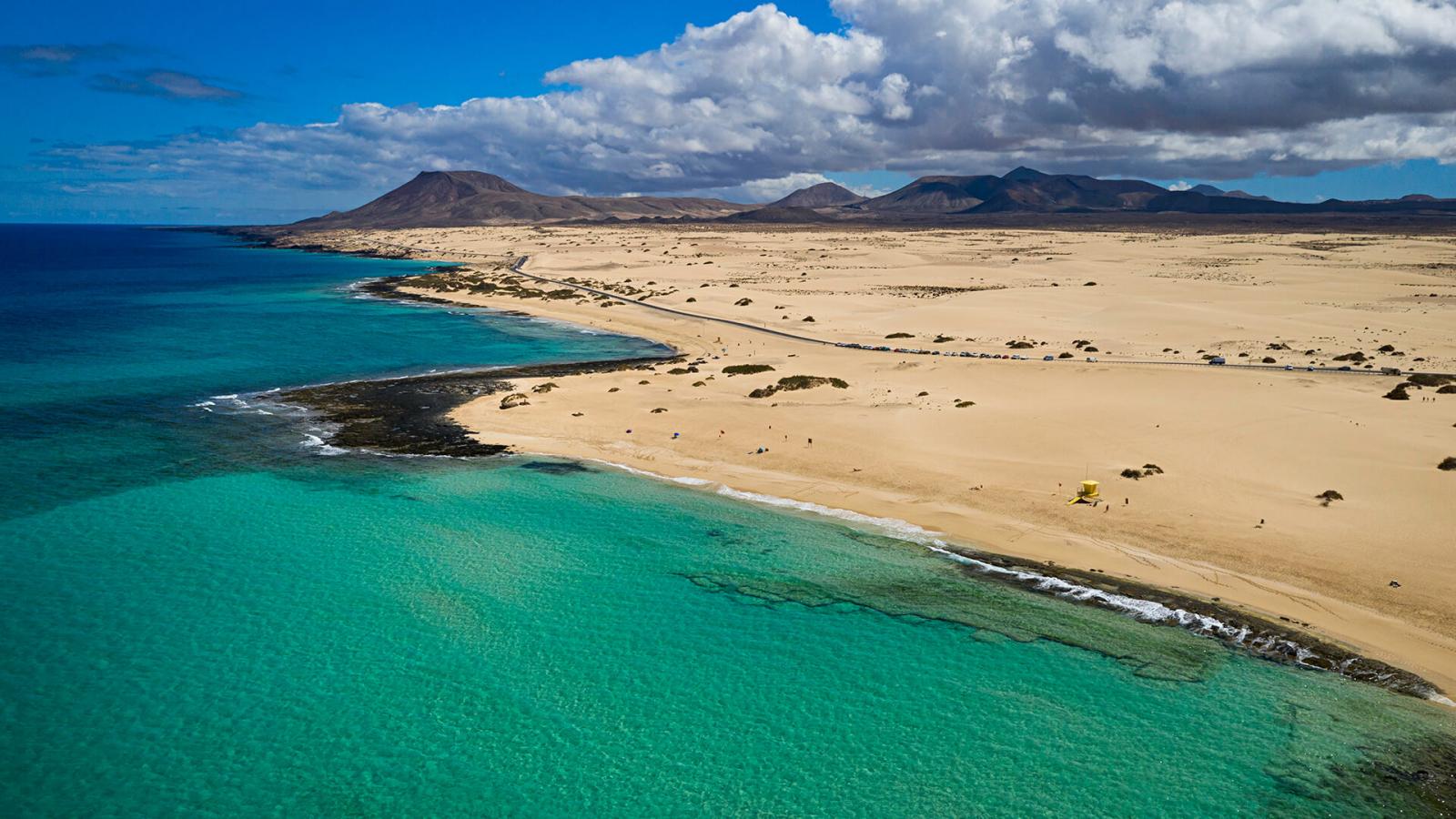
- Corralejo Natural Park. Source- Canary Islands Tourism
6. A Taste of the Canaries (Seafood & Potatoes)
Canarian cuisine is simple, fresh, and relies heavily on local produce and the ocean.
- Papas Arrugadas con Mojo: This is the signature dish. Small, local potatoes are boiled in salt water (traditionally sea water) until the skin wrinkles and gets a salty crust. They are served with Mojo, a sauce that comes in two varieties: Mojo Rojo (red, spicy, made with peppers) and Mojo Verde (green, mild, made with cilantro or parsley).
- Sancocho Canario: A traditional stew made with salted fish (usually wreckfish or sea bass), sweet potatoes, and gofio. It is healthy, hearty, and deeply traditional.
- Gofio: You will see this on every menu. It is a flour made from roasted grains (wheat or maize). It was the staple food of the indigenous Guanche people. It is often stirred into fish broth or served as a mousse for dessert.
- Tropical Fruit: Don’t leave without trying the Plátano Canario (local bananas). They are smaller and sweeter than the bananas you buy at home.
Why Go Now?
The Canary Islands offer a rare combination of exotic landscapes and European infrastructure. It is a place where you can hike a volcano in the morning and eat fresh grilled fish by the ocean at sunset. It is safe, accessible, and endlessly photogenic—perfect for travelers who want adventure without the hassle.