
Senegal: The Soul of West Africa and the Spirit of Teranga
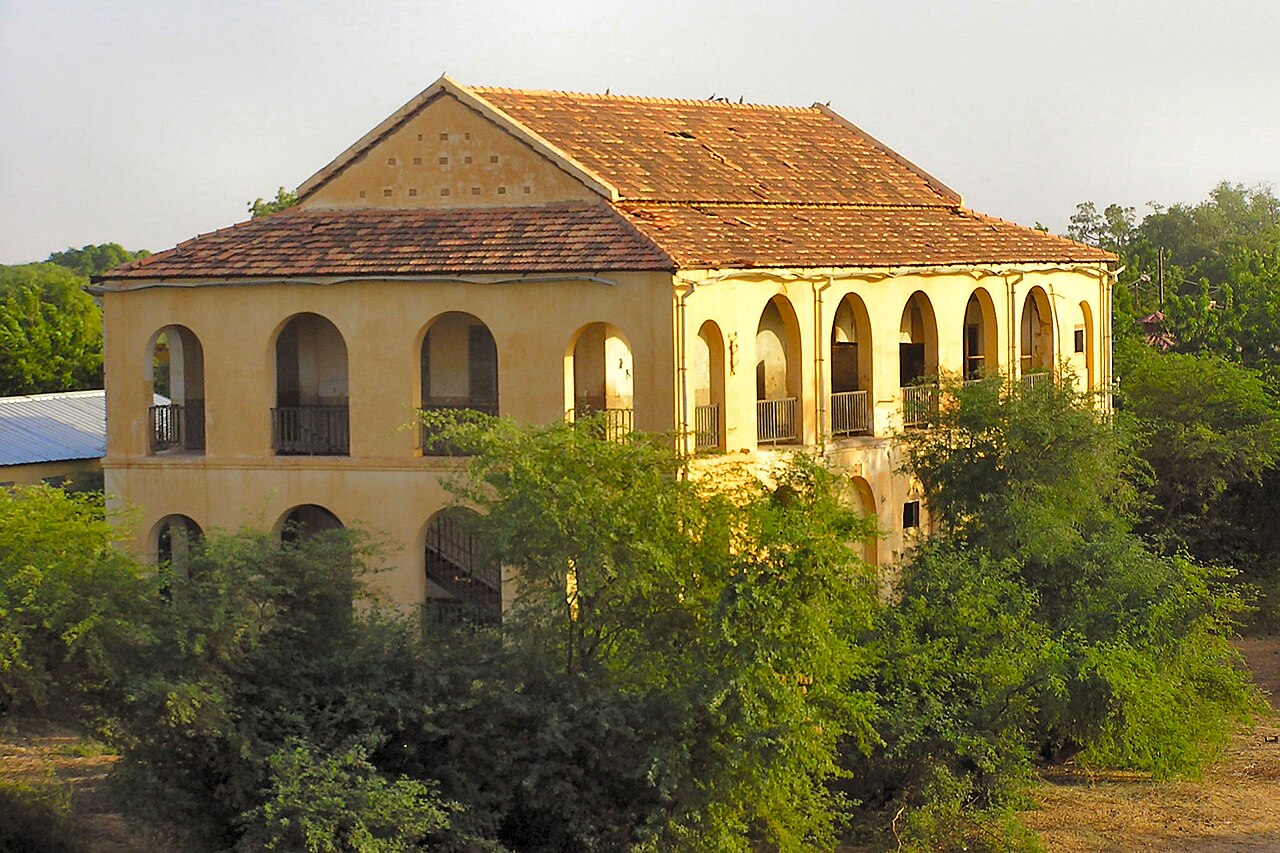
Senegal remains one of the most stable and inviting gems in West Africa. Known as the "Land of Teranga"—a Wolof word that translates to hospitality but means so much more—it’s a country that doesn't just welcome you; it treats you like a long-lost cousin. From the buzzing markets of Dakar to the hauntingly beautiful history of Gorée Island, Senegal is a place of deep contrasts and vibrant energy.
Here is your factual, grounded guide to exploring this West African icon.
1. Dakar: The Kinetic Capital
Your journey will almost certainly begin in Dakar, a city perched on the westernmost point of the African continent.
- The Monument to the African Renaissance: Towering over the city, this massive bronze statue is taller than the Statue of Liberty and offers a panoramic view of the Atlantic.
- The Markets: For a sensory overload, visit Marché Sandaga or Marché Kermel. These are the hearts of the city, where you can find everything from intricate wood carvings and vibrant wax fabrics to local spices.
- Gorée Island: A short 20-minute ferry ride from Dakar takes you to this UNESCO World Heritage site. Its pastel-colored buildings and bougainvillea-lined streets hide a somber history as a major slave-trading post. The Maison des Esclaves (House of Slaves) is a necessary, moving visit for any traveler.
2. Beyond the City: Pink Lakes and Desert Dunes
Senegal’s landscape shifts dramatically once you leave the urban sprawl.
- Lac Retba (Pink Lake): About an hour from Dakar, this lake is famous for its high salt content and a unique algae that turns the water various shades of pink. Watching the salt harvesters at work is a fascinating glimpse into local industry.
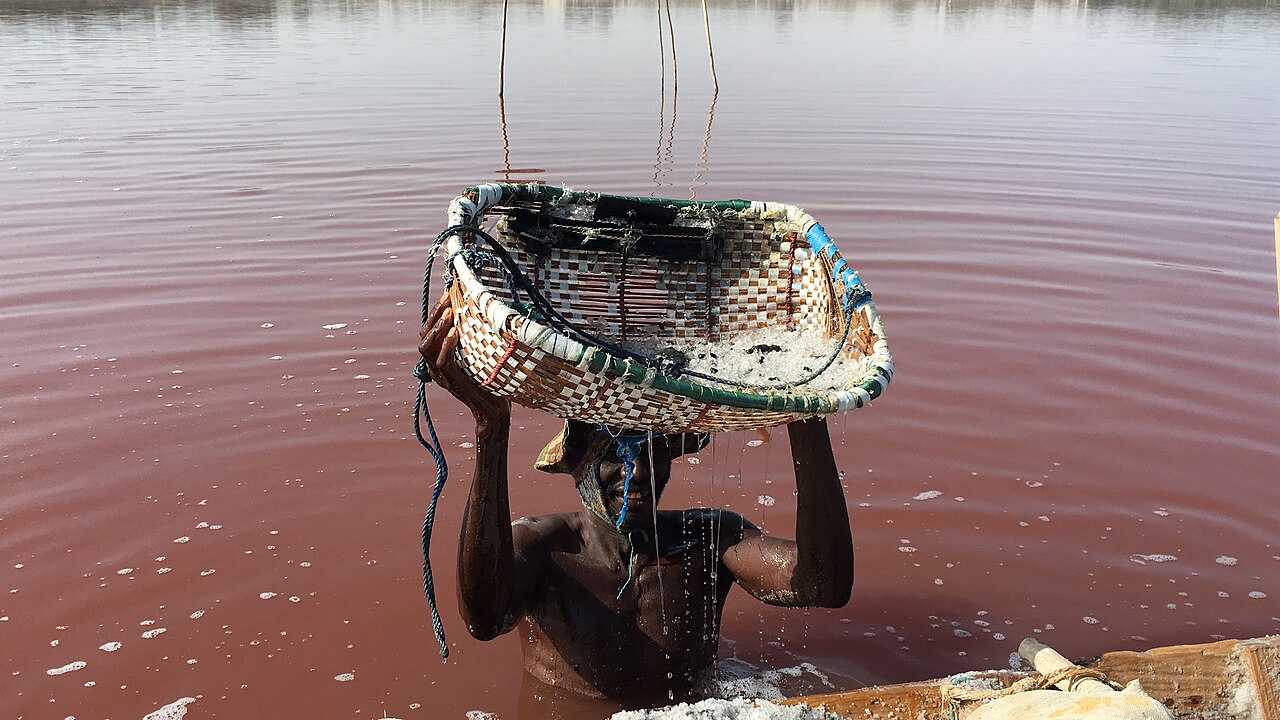
- Worker harvesting salt from the lake. Source- By 林戈亮 - Own work, CC BY-SA 4.0
- Saint-Louis: The former capital is a colonial time capsule. Located on an island in the Senegal River, its horse-drawn carriages and French-style architecture give it a unique, "old-world" feel. In May, the city hosts the world-renowned Saint-Louis Jazz Festival.
- Lompoul Desert: For a taste of the Sahara, head to Lompoul. You can stay in luxury Mauritanian-style tents nestled among towering orange sand dunes—it’s the ultimate spot for stargazing far from city lights.
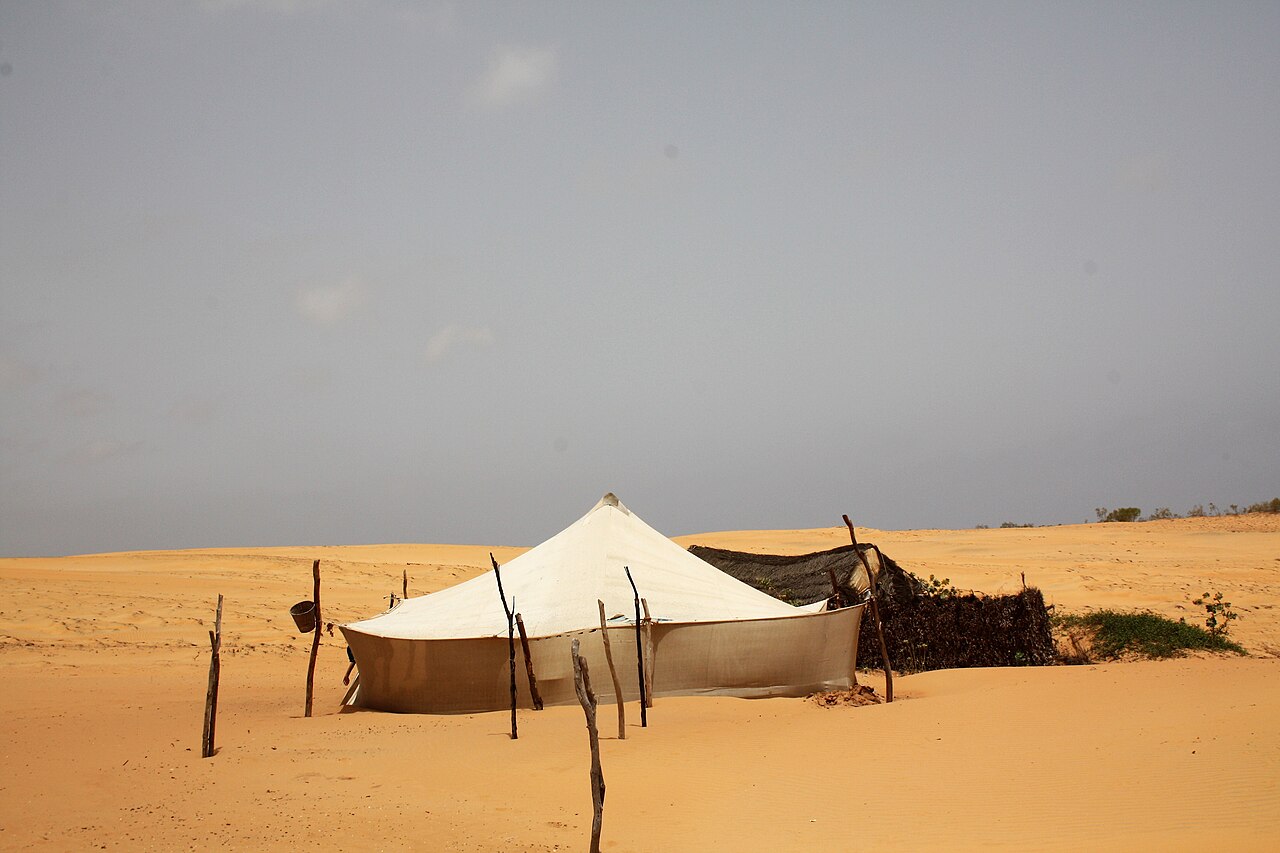
- Source- Mich-nguyen, CC BY-SA 4.0, via Wikimedia Commons
3. The Connectivity Reality: Why an eSIM is Your Best Friend
Traveling through Senegal—especially when navigating the legendary traffic of Dakar or finding a remote lodge in the Sine-Saloum Delta—requires constant coordination.
The Logistics Challenge
- Digital Navigation: There is no Uber in Senegal; instead, you’ll rely on taxis. While you should always negotiate the fare, having live GPS is vital to ensure you're on the right track.
- The Communication Gap: While French is the official language, Wolof is the heartbeat of daily life. Having a stable connection allows you to use translation apps in real-time at local markets.
- Safety & Updates: Staying connected to official travel advisories and weather alerts is a safety essential, especially if you plan to explore the southern Casamance region.
The Solution: The eSIM The smartest move for 2026 is to provision a Senegal-compatible eSIM before you land.
- The Benefit: An eSIM connects you to the local networks the second you touch down at Blaise Diagne International Airport (DSS). It avoids the hassle of finding a physical SIM kiosk and ensures your secure banking and communication apps are active immediately. It’s the most seamless way to avoid the "bill shock" of international roaming.
4. A Taste of Senegal
Senegalese cuisine is widely considered some of the best in Africa.
- Thieboudienne: The national dish. It’s a savory, one-pot masterpiece of rice, fish (usually grouper or snapper), tomato sauce, and a variety of vegetables like carrots and eggplant. It’s traditionally eaten family-style from a large communal platter.
- Chicken Yassa: A tangy, comforting dish of chicken marinated in lemon, onions, and garlic, then simmered to perfection. It is almost always served over white rice.
- Maafe: A rich, savory peanut stew made with beef or lamb and vegetables. The depth of flavor from the peanut paste is a signature of Senegalese home cooking.
- Bissap: You’ll be served this deep-red hibiscus juice everywhere. It’s sweet, tangy, and packed with antioxidants—the perfect refreshment for a hot afternoon.
5. Essential Tips
- Best Time to Visit: The dry season runs from November to May. This is when the weather is mild and the famous Saint-Louis Jazz Festival takes place.
- Modesty and Respect: Senegal is a conservative society. Both men and women should dress modestly, covering their shoulders and knees, especially when visiting religious sites or rural villages.
- Safety: Stick to established tourist corridors. While Senegal is generally safe, be vigilant in crowded markets to avoid pickpockets.
- Language: A simple "As-salamu alaykum" (Peace be upon you) followed by "Nanga def?" (How are you? in Wolof) will earn you a smile and open doors across the country.
Why Go Now?
Senegal in 2026 is a destination that rewards the patient traveler. It’s a country that hasn't been polished into a generic tourist product; it remains raw, authentic, and deeply proud. By securing your digital connection with an eSIM and arriving with an open heart, you are ready to experience the true meaning of Teranga.