
Saint Martin: The Friendly Island of Dual Delights
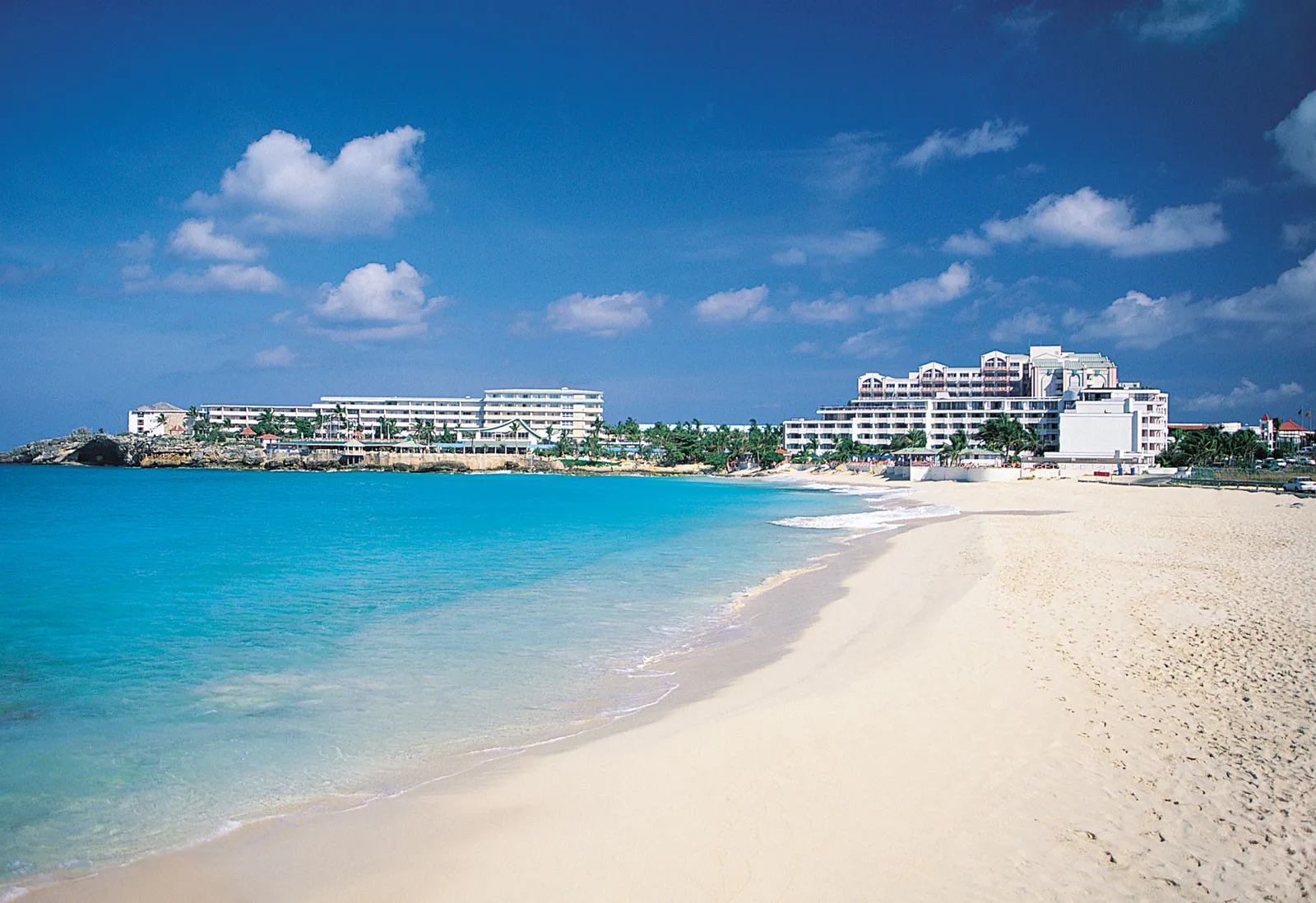
Source: Britannica
Saint Martin is a unique geographical marvel. Spanning just 34 square miles, this sun-drenched island is the smallest landmass in the world shared by two nations: France and the Kingdom of the Netherlands. Since the Treaty of Concordia in 1648, the border has remained open and peaceful, allowing travelers to experience two distinct European cultures blended with a vibrant Caribbean soul—all in a single afternoon.
In 2026, Saint Martin remains a premier destination for those seeking a balance of sophisticated French charm and lively Dutch hospitality. Here is your factual, grounded guide to exploring this "Friendly Island."
1. One Island, Two Perspectives
While there are no hard borders, you will feel the shift as you cross between the two sides.
- The French Side (Saint Martin): Occupying the northern part of the island, the French side is known for its rugged nature, high-end fashion, and the "Gourmet Capital of the Caribbean," Grand Case. It feels like a slice of the Mediterranean transplanted to the tropics, with quiet coves and elegant villas.
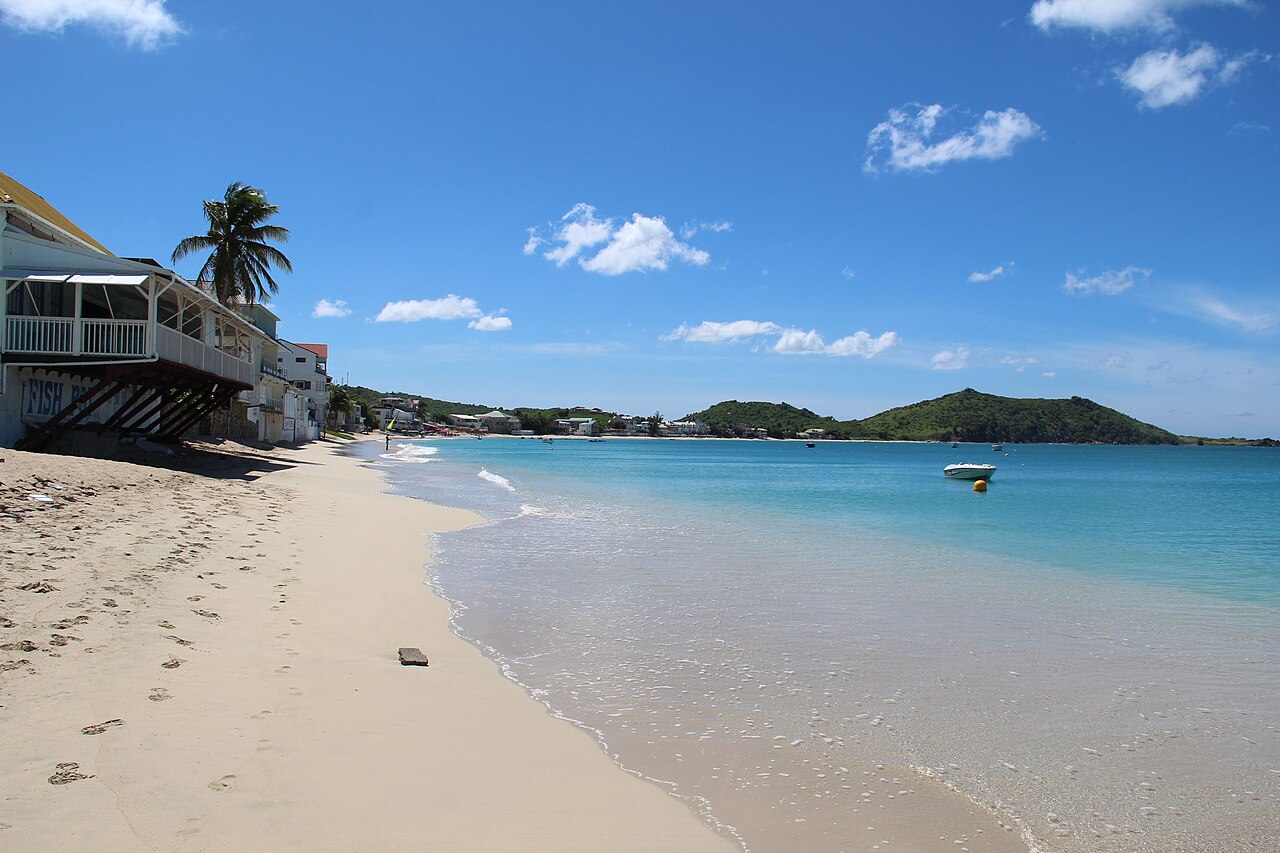
- Grande Case, the french side of Saint Martin island. Source- By Clavius66 - Own work, CC BY-SA 3.0
- The Dutch Side (Sint Maarten): The southern half is more developed and serves as the island’s main entry point via Princess Juliana International Airport. It is home to Philipsburg, famous for its bustling Front Street shopping and the iconic Maho Beach, where planes fly just feet above the sand.
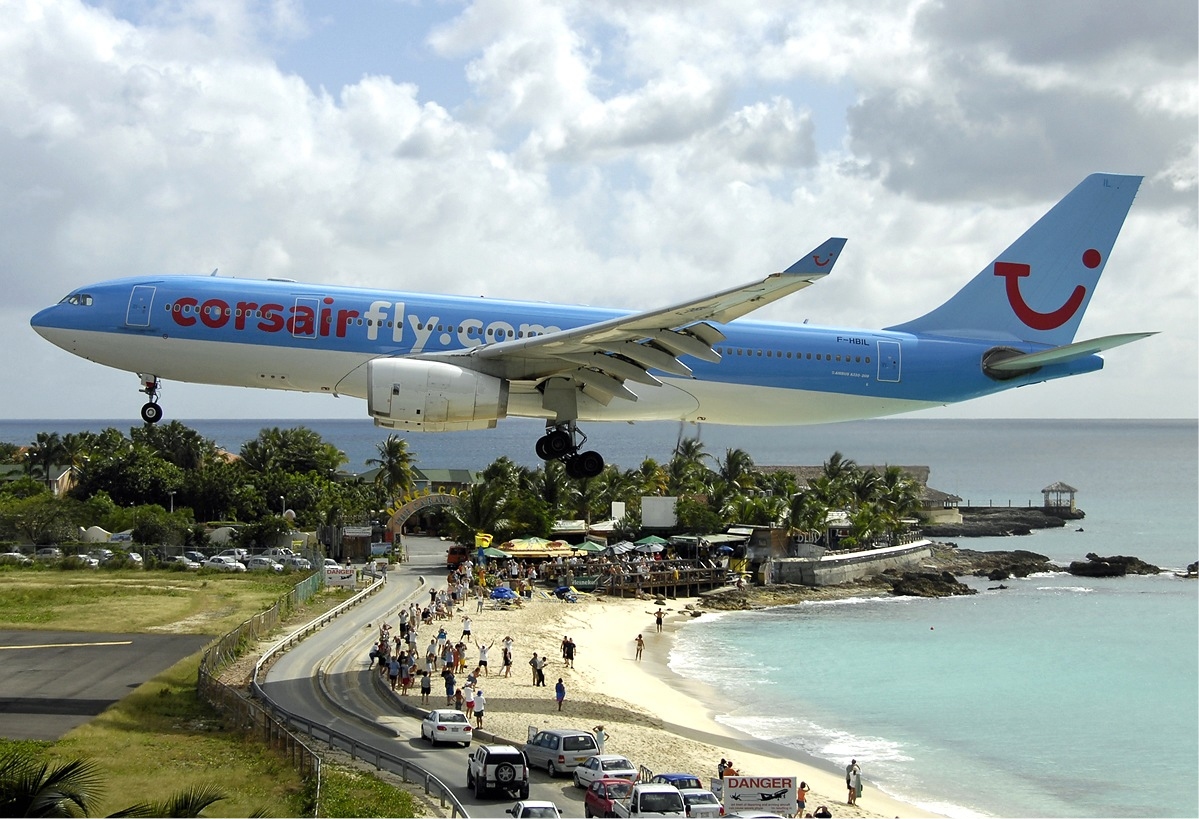
- Source- By Aldo Bidini, Wikimedia Commons
2. The Digital Compass: Why You Need an eSIM
Navigating a binational island in 2026 presents a unique digital challenge. While you can walk across the border freely, your mobile phone network may not transition as seamlessly.
The Logistics Challenge
- Two Networks, One Trip: The French and Dutch sides often operate on different mobile infrastructure. Depending on your provider, you might find yourself hit with international roaming charges just by driving from a bakery in Marigot to a shop in Simpson Bay.
- Real-Time Coordination: In 2026, most local ferries to neighboring islands (like Anguilla or St. Barths) and table reservations in Grand Case require digital confirmations. Having a steady connection is also vital for the mandatory Sint Maarten Digital Entry Form, which all travelers must complete before arrival.
The Solution: The eSIM To avoid the "bill shock" of cross-border roaming, provision a Saint Martin-compatible eSIM before you land.
- The Benefit: A regional Caribbean or specifically binational eSIM ensures you stay connected to the strongest local signal without switching physical cards. It keeps your GPS live for navigating the island’s winding roads and ensures you can access your travel documents at a moment’s notice.
3. Nature and Adventure: Beyond the Beaches
Beyond its 37 world-class beaches, Saint Martin offers incredible ecological and historical sites.
- Loterie Farm: Nestled at the foot of Pic Paradis (the island’s highest point), this private nature reserve is a sanctuary for local flora and fauna. You can hike through tropical forests or take a canopy tour on a zipline for a bird's-eye view of the emerald hills.
- Pinel Island: A short kayak or ferry ride from Cul-de-Sac brings you to this tiny islet. It is a peaceful getaway with shallow, turquoise waters perfect for snorkeling with sea turtles and stingrays.
- Fort Louis: Overlooking Marigot Bay, this 18th-century fortress was built to defend the French warehouses. The climb to the top is rewarded with a spectacular panoramic view of the island and the neighboring island of Anguilla.
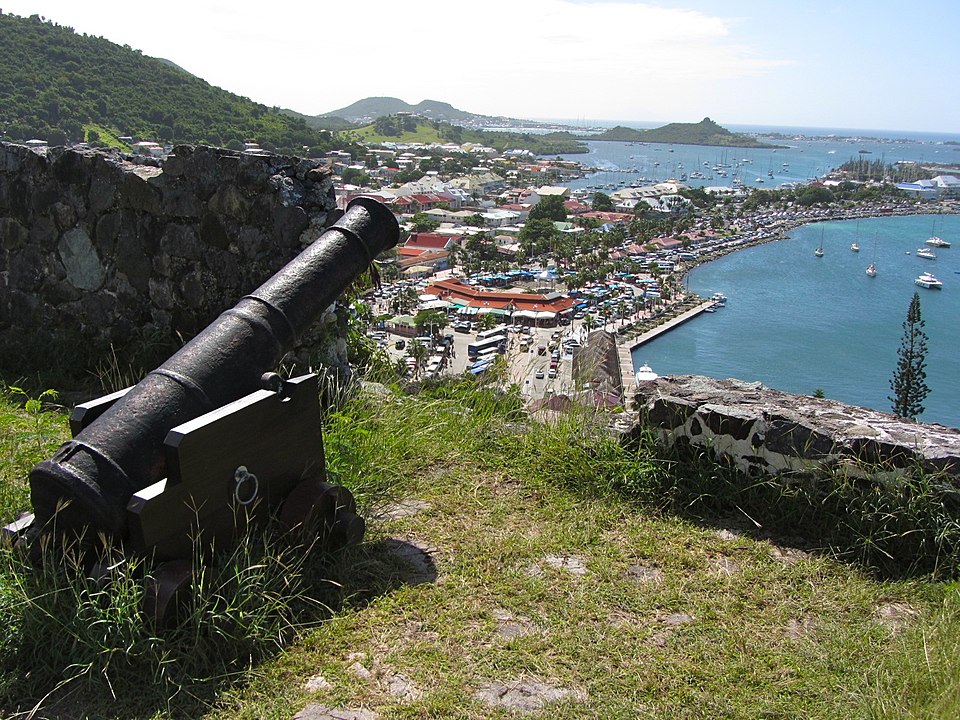
- View from Fort Louis. Source- By Richie Diesterheft, CC BY-SA 2.0
4. A Taste of the Island
Saint Martin is widely considered the culinary capital of the Caribbean. The island’s heritage means you can enjoy everything from classic French pastries to spicy Creole seafood.
- The Lolos of Grand Case: For an authentic local experience, visit the "lolos"—traditional open-air eateries. They specialize in fresh grilled chicken, snapper, and mahi-mahi. Because the island relies heavily on its coastal bounty, it is incredibly easy to find spectacular seafood platters and halal-friendly options.
- Johnny Cakes: A staple of the island, these savory, fried cornmeal flatbreads are often served as a side or a breakfast snack.
- Conch and Dumplings: On the Dutch side, this is a national favorite. The conch meat is tenderized and slow-cooked in a savory, herb-rich gravy, served with light, fluffy dumplings.
- Fresh Fruit and Juices: Don't miss the local guavaberry (a small berry found in the hills) used in jams and juices, or a fresh coconut opened for you right on the beach.
5. Essential Travel Logistics for 2026
- Entry Requirements: All travelers arriving at Princess Juliana International Airport must complete the Digital Entry Form (ED Form) online before arrival. Ensure your passport is valid for at least six months.
- Currency: The official currency on the French side is the Euro (€), while the Dutch side uses the Antillean Guilder (ANG). However, the US Dollar (USD) is widely accepted across the entire island.
- Safety: Saint Martin is generally safe, but standard travel precautions apply. Use your eSIM to keep your maps live, and avoid leaving valuables in your rental car when visiting remote beaches.
- Driving: They drive on the right side of the road on both sides of the island. Traffic can be heavy around the Simpson Bay bridge and Marigot during peak hours, so plan your transit accordingly.
Why Visit Now?
Saint Martin in 2026 is a destination of profound harmony. It is a place where you can start your morning with a French croissant and end your day watching the sunset from a Dutch boardwalk. By securing your digital connection with an eSIM and bringing a spirit of curiosity, you can navigate this binational paradise with total ease.