
Niger: The Sahel’s Golden Horizon
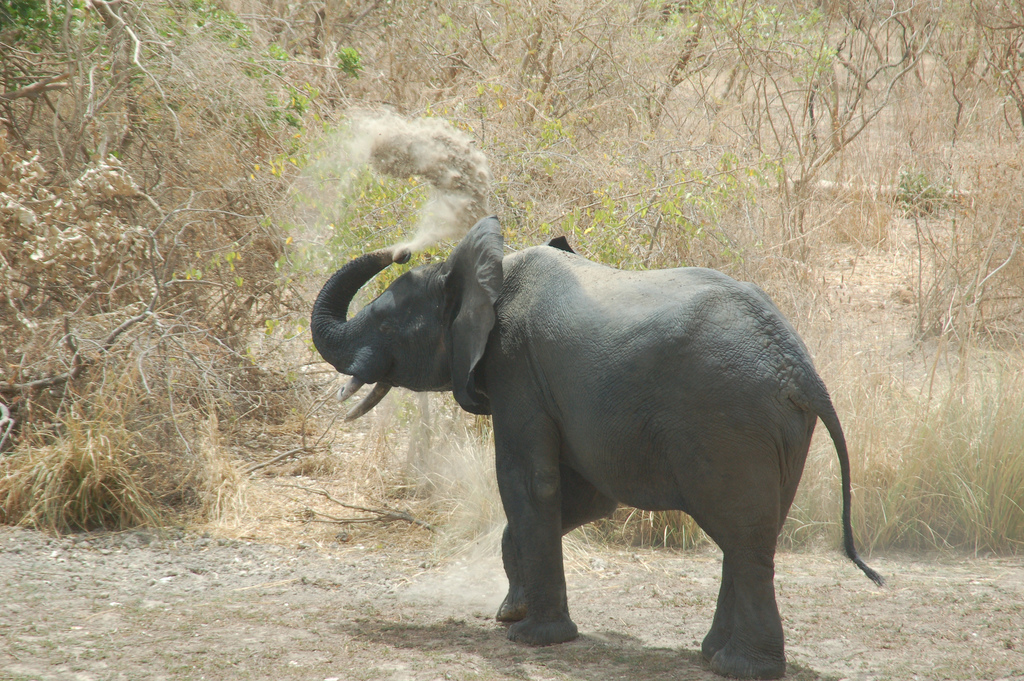
Niger is not the kind of destination you stumble upon by accident. It is a land of stark, uncompromising beauty—a place where the Sahara Desert meets the Sahelian savannah, and where the mighty Niger River cuts a ribbon of green through the dust.
To travel here is to step into a world of ancient caravan routes, mud-brick architecture, and profound cultural resilience. However, let us be factual: in 2026, Niger remains a destination for the intrepid and the well-prepared. With current travel advisories in place for much of the region, visiting requires rigorous planning, professional security awareness, and a deep respect for the local context.
For those who make the journey—whether for essential travel, humanitarian work, or extreme expeditions—here is your guide to the beating heart of West Africa.
1. Niamey: The River Capital
Your journey begins in Niamey, the capital city that hugs the banks of the Niger River. Unlike the frantic energy of other West African capitals, Niamey moves at a slower, more rhythmic pace.
- The National Museum (Musée National Boubou Hama): This is arguably one of the best museums in West Africa. It is a sprawling open-air complex that functions as a zoo, a cultural center, and a history museum all in one. You can view traditional dwellings from the Hausa, Tuareg, and Zarma people, see dinosaur skeletons unearthed in the desert, and walk through pavilions showcasing local artisans at work.
- The Grand Mosque: A gift from Libya in the 1970s, this emerald-domed structure is a stunning piece of modern Islamic architecture. While entry to the prayer hall is restricted for non-Muslims, the exterior and the surrounding gardens offer a peaceful respite from the heat.
- Sunset on the River: The quintessential Niamey experience is watching the sunset over the Niger River. You can hire a traditional pirogue (wooden boat) to float past basking hippos as the sky turns a bruised purple and orange.
2. The Last Giraffes of Koure
Just a 90-minute drive southeast of Niamey lies a conservation miracle: the Koure Giraffe Reserve.
- The Wildlife: This area is home to the last self-sustaining herd of West African giraffes ( Giraffa camelopardalis peralta ) on Earth. Distinguished by their lighter, almost bleached spots, these "White Giraffes of Niger" live freely among the local villagers rather than in a fenced park.
- The Experience: Because the giraffes are habituated to humans, guides can often take you surprisingly close on foot. Walking through the tiger bush (brousse tigrée) and looking up at these gentle giants is a humbling reminder of nature’s resilience.
3. The Connectivity Reality: Why an eSIM is a Safety Essential
In many destinations, having data is a convenience for social media. In Niger, it is a vital safety tool.
The Infrastructure Challenge
- Security & Navigation: The security situation in the Sahel can change rapidly. You need constant access to travel advisories, real-time updates from your embassy, and reliable GPS navigation to ensure you do not stray into restricted zones.
- The Physical SIM Hurdle: Purchasing a local SIM card (like Airtel or Moov) is possible but involves bureaucracy, fingerprint registration, and often long queues at the airport—time you do not want to waste in a new environment.
The Solution: The eSIM To ensure a secure digital lifeline the moment you arrive, provision a Niger-compatible eSIM data plan before you fly.
- The Benefit: An eSIM connects you seamlessly to local towers (usually partnering with major networks like Airtel Niger) as soon as you land at Diori Hamani International Airport. It allows you to maintain encrypted communication with your security contacts, use translation apps for French and Hausa, and keep your maps online without the vulnerability of a physical swap.
4. Agadez: The Gateway to the Desert
Note: Travel to Agadez currently requires strict security protocols and often a military escort. Always check the latest government directives before attempting travel north.
If Niamey is the political capital, Agadez is the soul of the country. Historically, it was the most important stop for trans-Saharan caravans hauling gold and salt.
- The Great Mosque of Agadez: This is the defining image of the nation. Built entirely of mud-brick and reinforced with wooden scaffolding (toron), its towering 27-meter minaret is the tallest mud-brick structure in the world. It serves as a lighthouse for travelers emerging from the deep desert.
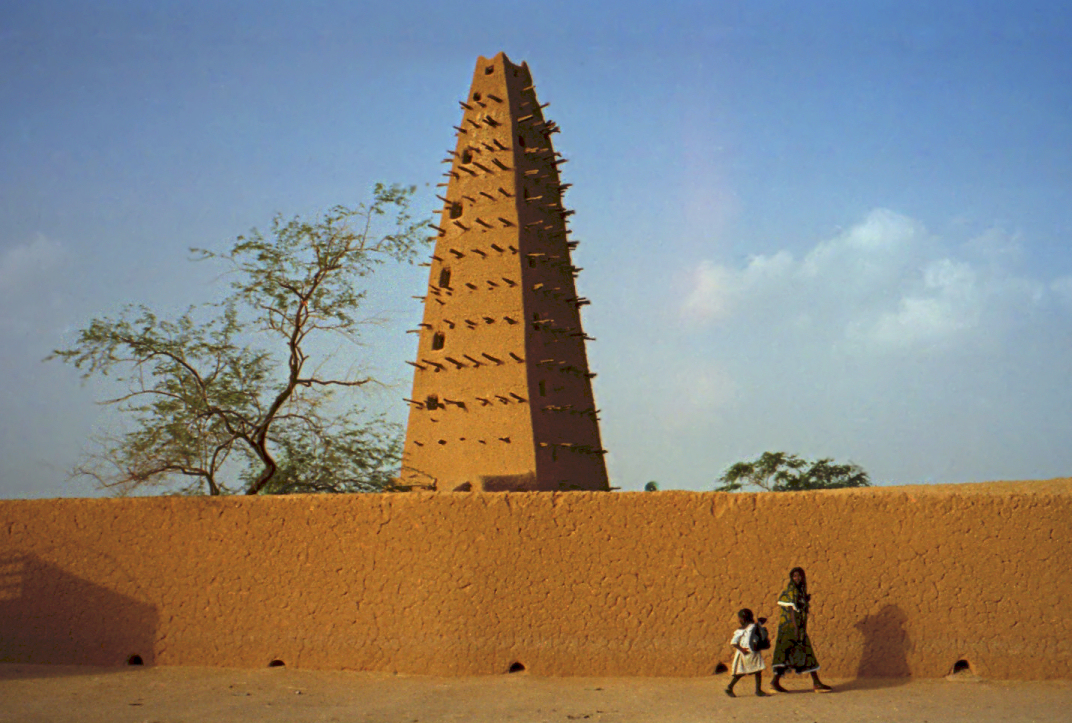
- The Grand Mosque of Agadez. Source- By Dan Lundberg - Flickr, CC BY-SA 2.0
- The Vibe: The streets here are filled with Tuareg artisans crafting intricate silver jewelry and leatherwork. The Tuareg, known as the "Blue People" for the indigo dye of their veils that stains their skin, are the guardians of this desert culture.
5. A Taste of the Sahel
Nigerien cuisine is fueled by the grains of the Sahel—millet, rice, and sorghum. It is hearty, communal, and deeply flavorful.
- Kilishi: You cannot leave Niger without trying this. It is the original jerky—thin strips of beef that are coated in a spicy peanut paste (labu), dried in the hot sun, and then roasted over a fire. It is spicy, savory, and keeps for months, making it the perfect travel snack.
- Riz Gras (Jollof Rice): A staple across West Africa, the Nigerien version is a rich, one-pot rice dish cooked with vegetables, meat stock, and often chunks of beef or river fish.
- Masa: These are delicious, slightly sour fermented rice cakes, fried in a special pan until golden brown. They are often eaten for breakfast or as a snack with a dusting of spicy pepper blend (yaji).
- Fura da Nono: A traditional drink that is a meal in itself. It consists of millet dough balls (fura) mashed into fermented cow’s milk (nono). It is tart, cooling, and incredibly rich in probiotics—perfect for the desert heat.
- The Tea Ritual: Like much of the Sahara, life here pauses for tea. The "three teas" ritual involves boiling loose-leaf green tea with sugar and pouring it from a height to create a thick foam. It is a sign of hospitality that you should always accept.
Looking Forward
Niger is a land that commands respect. It is not a place for casual tourism, but for those who are drawn to the "edge of the world," it offers a glimpse into a way of life that has survived empires and elements alike. By traveling with a reputable local guide, respecting the conservative culture, and keeping your digital lifeline active via an eSIM, you can witness the golden heart of West Africa.