
Mongolia: The Land of the Eternal Blue Sky
Source: Britannica
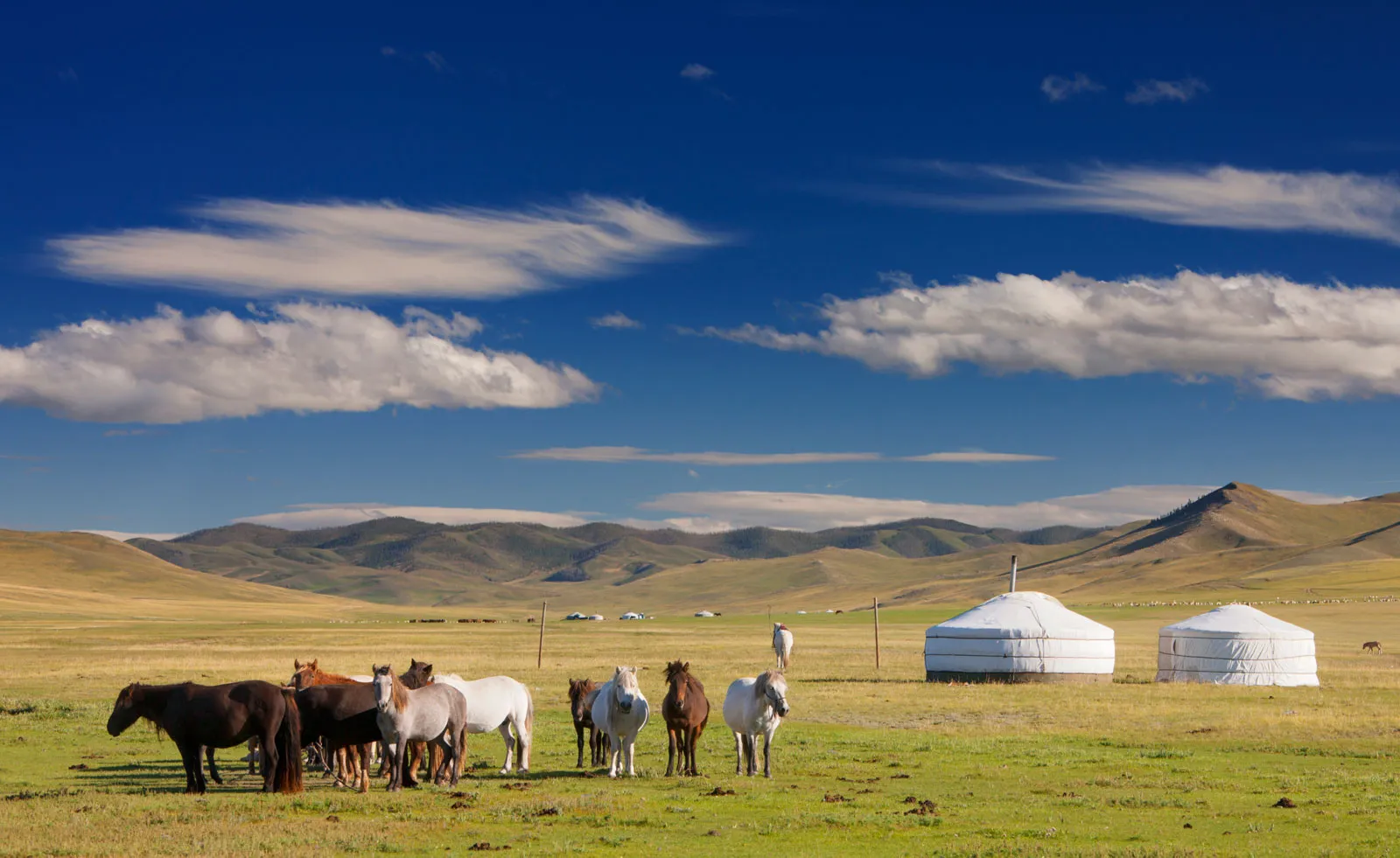
Mongolia is the least densely populated country on Earth. It is a place of staggering scale—where the horizon feels infinitely wide, the air is crisp, and the ancient nomadic way of life remains largely unbroken.
Traveling here is not about checking off a list of manicured tourist attractions; it is about embracing the wild. It is a land of red deserts, emerald-green valleys, and hospitality that has survived the harshest climates in the world.
If you are ready for a true overland adventure, here is your factual guide to exploring the final frontier of the nomadic world.
1. Ulaanbaatar and the Giant Khan
Your journey will begin in Ulaanbaatar (often just called UB), a sprawling capital where modern high-rises stand alongside traditional felt yurts (gers).
- Gandantegchinlen Monastery: Start your morning at this classic Tibetan Buddhist monastery, one of the most important in the country. It is a peaceful sanctuary in the middle of a bustling city.
- Genghis Khan Statue Complex: Located about an hour's drive east of the city, this is a sight you have to see to believe. Rising 40 meters (131 feet) into the air, it is the largest equestrian statue in the world, dedicated to the founder of the Mongol Empire. You can actually ride an elevator up through the horse's body and walk out onto its head for a panoramic view of the surrounding steppes.
2. The Connectivity Reality: Why You Need an eSIM
Here is a critical logistical fact for your trip. Mongolia is vast, and once you leave the capital, paved highways quickly turn into dirt tracks woven across the open grass.
The Navigation & Safety Challenge
- Remote Travel: Because there are very few road signs in the countryside, you and your driver will rely heavily on digital maps and GPS coordinates to find remote ger camps and natural landmarks.
- The Bureaucracy: Buying a physical SIM card upon arrival requires navigating language barriers, registering your passport, and waiting out activation delays.
The Solution: The eSIM To ensure you have a digital lifeline the moment you arrive, purchase a Mongolia-compatible eSIM data plan before your flight.
- The Benefit: An eSIM provides a seamless digital handover to local cell towers (like Unitel or Mobicom, which have the best rural coverage) the moment you land at Chinggis Khaan International Airport. It guarantees you have immediate bandwidth to load your offline maps, use translation apps for Mongolian Cyrillic, and coordinate securely with your tour operator.
3. The Gobi Desert: A Landscape from Another Planet
Heading south takes you into the Gobi Desert, which is surprisingly diverse. It is not just endless sand; it is a region of towering dunes, ice canyons, and dinosaur fossils.
- Khongoryn Els (The Singing Sands): These colossal sand dunes stretch for over 100 kilometers and rise up to 300 meters high. The climb to the top is physically demanding, but the view of the green steppe colliding with the sea of sand is unforgettable. When the wind blows, the shifting sand creates a low, humming noise, giving them their nickname.
- Bayanzag (The Flaming Cliffs): Famous for its striking red and orange sandstone cliffs that look like they are on fire during sunset. This is also one of the world's most famous paleontological sites, where the first-ever fossilized dinosaur eggs were discovered in the 1920s.
4. Gorkhi-Terelj National Park
If you don't have time to venture deep into the Gobi, Gorkhi-Terelj National Park is just a short drive from Ulaanbaatar and offers incredible alpine scenery.
- The Landscape: The park is famous for its rolling green hills, winding rivers, and massive, striking granite rock formations—the most famous of which is shaped exactly like a giant turtle (Turtle Rock).
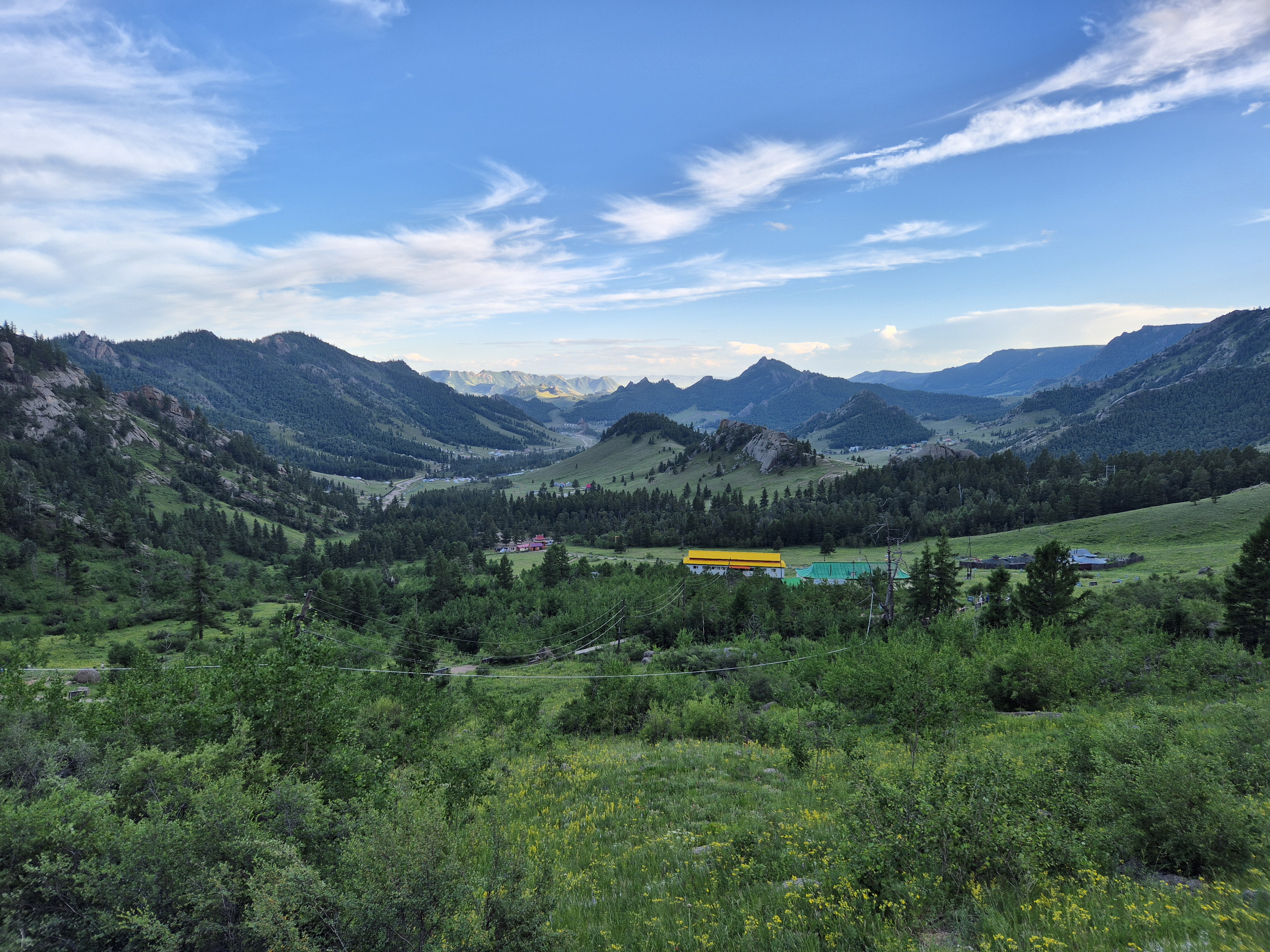
- Source- By Chongkian - Own work, CC BY-SA 4.0
- Aryabal Meditation Temple: A steep walk up the mountainside brings you to this peaceful Buddhist temple. The hike is lined with Buddhist proverbs, and the view from the top overlooking the valley is incredibly serene.
5. A Taste of the Steppe
Mongolian cuisine is built for survival in extreme climates. It is simple, highly caloric, and relies almost entirely on meat (specifically mutton and beef) and dairy.
- Buuz: The undisputed staple of Mongolian comfort food. These are large, steamed dumplings filled with minced mutton or beef, onions, and garlic. They are eaten by hand and are a symbol of hospitality.
- Tsuivan: A hearty, filling dish of hand-cut noodles stir-fried with meat (usually beef or mutton), carrots, and onions. It is the ultimate meal after a long day of horseback riding.
- Aaruul: A traditional nomadic snack made of dried, hardened yogurt curds. It has a sharp, sour, and tangy flavor. It does not spoil, making it the perfect trail snack for long drives across the steppe.
- Suutei Tsai: Mongolian milk tea. Unlike the sweet teas of other Asian countries, this is boiled with water, milk, tea leaves, and a generous pinch of salt.
Why Go Now?
Mongolia is one of the few places left on Earth where you can truly disconnect from the modern world. It requires long drives and a willingness to step outside your comfort zone, but the reward is experiencing a profound, untamed silence that you cannot find anywhere else.