
Libya: Intact Roman Cities, Saharan Oases, and Frontier Travel
Libya is not a standard holiday destination. After years of being largely off-limits to the outside world due to conflict, this North African giant is slowly and cautiously opening its doors to intrepid travelers. With the recent introduction of an e-visa system, the logistical walls are beginning to lower, revealing a country of staggering historical wealth and raw, unfiltered Saharan beauty.
To travel here is to step back in time. It requires traveling with official guides and a healthy respect for strict safety protocols, but the reward is having some of the world's greatest archaeological sites entirely to yourself.
Here is your factual guide to exploring the ancient sands of Libya.
1. Leptis Magna: Rome in Africa
If you only see one thing in Libya, it must be Leptis Magna. Located on the Mediterranean coast, it is arguably the best-preserved Roman city in the world—surpassing even many sites in Italy.
- Preserved by Sand: After the fall of the Roman Empire, the city was abandoned and swallowed by the shifting desert sands, which perfectly preserved its marble columns and intricate mosaics for over a thousand years.
- The Scale: You can walk through the massive Severan Arch, sit in the pristine amphitheater that overlooks the sea, and wander through the Hadrianic Baths. The sheer size and emptiness of the site make it a profoundly humbling experience.
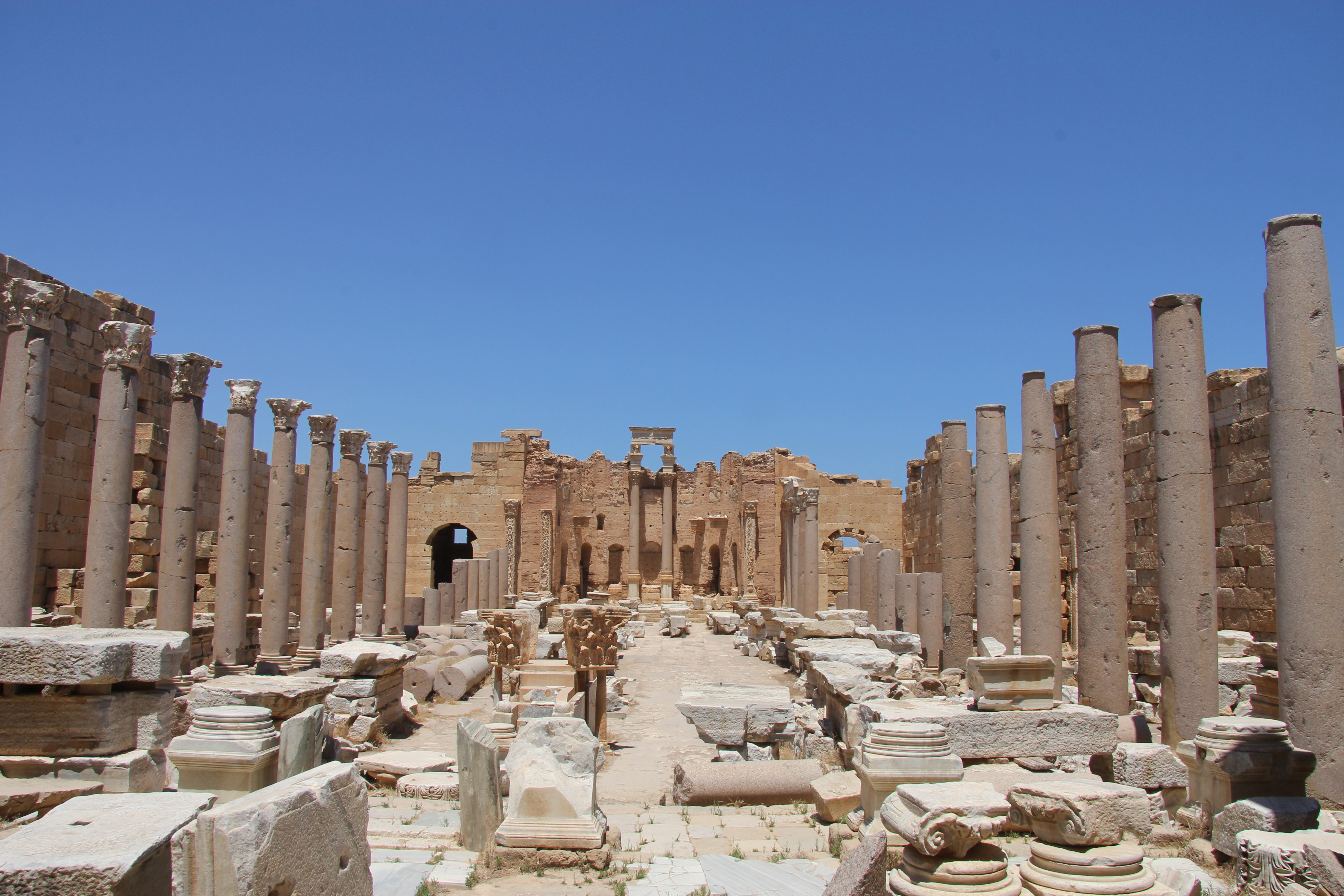
- Source- By joepyrek from Richmond, Va, USA - Leptis Magna (29), CC BY-SA 2.0
2. Tripoli: The Medina and the Red Castle
The capital city of Tripoli is the gateway to the country, blending Italian colonial architecture with deep Arabic history.
- Martyrs' Square: This is the bustling heart of the city, where families gather in the evenings and water fountains flow beneath the palm trees.
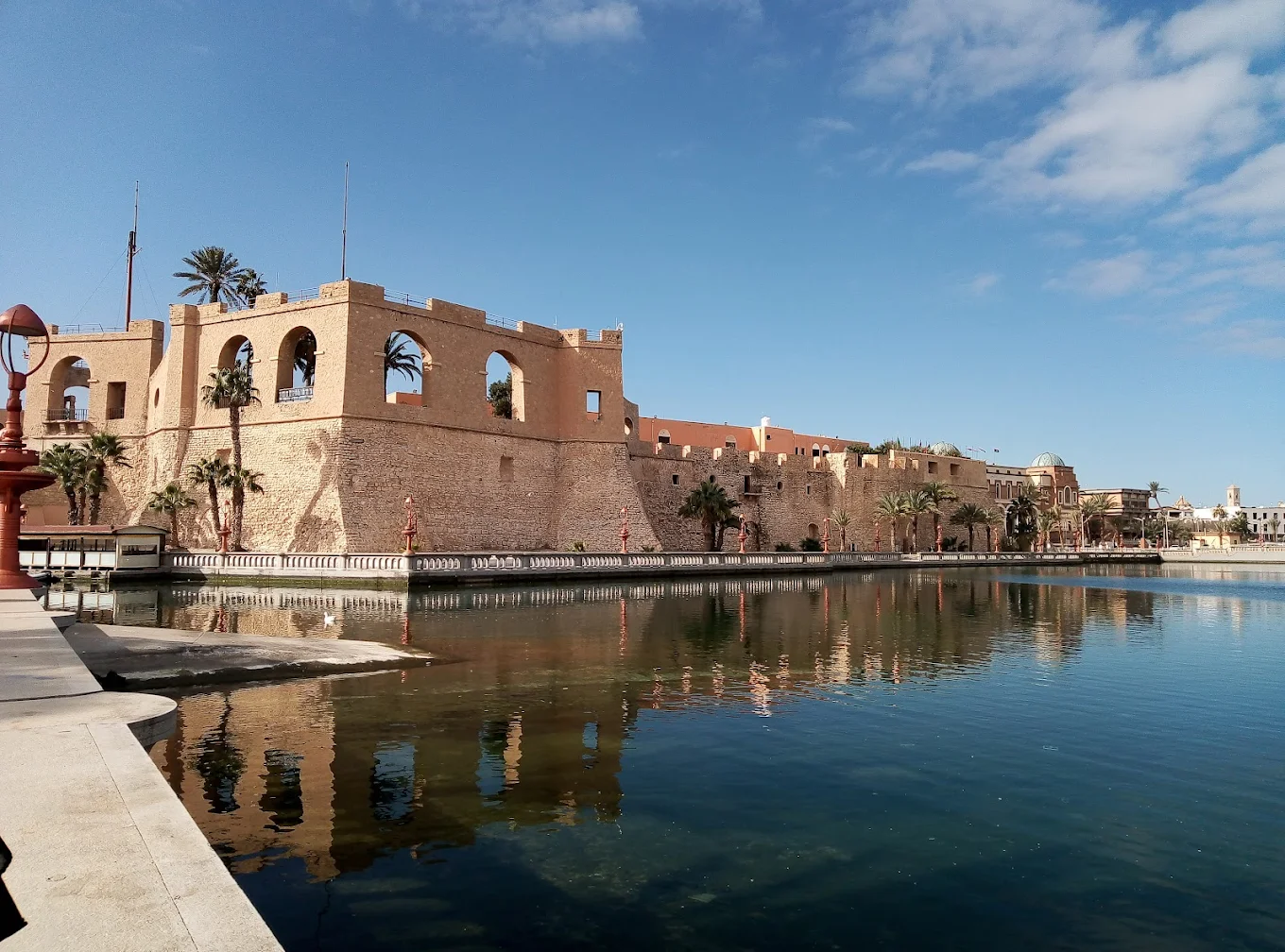
- The Red Castle (Assaraya Alhamra): Dominating the waterfront, this massive fortress has been the seat of power in Tripoli for centuries. It also houses the national museum, which chronicles the region's history from prehistoric times through the Roman and Ottoman eras.
- Arch of Marcus Aurelius: Tucked away in the Old Medina, this 2nd-century Roman arch stands in stark contrast to the surrounding bustling souks and historic mosques.
3. The Connectivity Reality: Why an eSIM is Non-Negotiable
When navigating a frontier destination like Libya, your digital connectivity is your primary safety and logistical tool.
The Legacy Telecom Hurdle
- The Bureaucracy: Securing a physical local SIM card (on networks like Al Madar or Libyana) often involves dealing with legacy infrastructure, handing over physical passport copies, and waiting out unpredictable activation delays.
- The Necessity: You will need constant, reliable internet access to coordinate pickup times with your mandatory government-approved guides and to utilize real-time translation apps in the sprawling local markets.
The Solution: The eSIM To bypass the legacy hardware constraints, provision a Libya-compatible eSIM data plan before your flight.
- The Benefit: An eSIM provides a seamless digital handover the moment your device connects to the local cell towers at Mitiga International Airport. Having instant bandwidth ensures your offline GPS routes and communication pipelines are fully operational before you even step out of the terminal.
4. Ghadames: The Pearl of the Sahara
Deep in the desert, near the borders of Tunisia and Algeria, lies the ancient caravan city of Ghadames.
- The Architecture: This UNESCO World Heritage site is famous for its completely whitewashed, mud-brick houses. The city is brilliantly engineered for the brutal desert climate; the narrow, covered walkways keep the ground level cool, while the interconnected rooftops were traditionally used by the women of the city to move around freely.
- The Vibe: Surrounded by palm groves and towering dunes, Ghadames feels like a living mirage. It is a testament to the endurance of the Berber and Tuareg cultures.

- Source- Robert Bamler, Wikimedia Commons
5. A Taste of Libya- Rich, Spiced, and Authentic
Libyan cuisine is a heavy, comforting blend of Mediterranean and Saharan influences, relying on olive oil, dates, and slow-cooked meats. It is strictly Halal.
- Bazin: This is the quintessential Libyan dish. It is a dense, unleavened dough made from barley flour, shaped into a dome, and placed in the center of a rich, spiced tomato stew containing lamb or camel meat. It is traditionally eaten with the right hand.
- Shorba Libiya: A staple at any gathering, this is a fiery, mint-infused tomato soup loaded with tender chunks of lamb and orzo pasta.
- Couscous: Unlike the sweeter Moroccan versions, Libyan couscous is distinctly savory and spicy, steamed over boiling stews and served heavily garnished with chickpeas, caramelized onions, and tender root vegetables.
The Reality of Travel Here
It is vital to state that Libya is still recovering from a decade of instability. Independent travel is not permitted. You must book your trip through a registered travel agency (like Untamed Borders or local Libyan outfitters), who will provide your visa support, drivers, and mandatory security escorts. Always check your home country's current travel advisories before booking.