
Laos: The Land of a Million Elephants (and Infinite Calm)
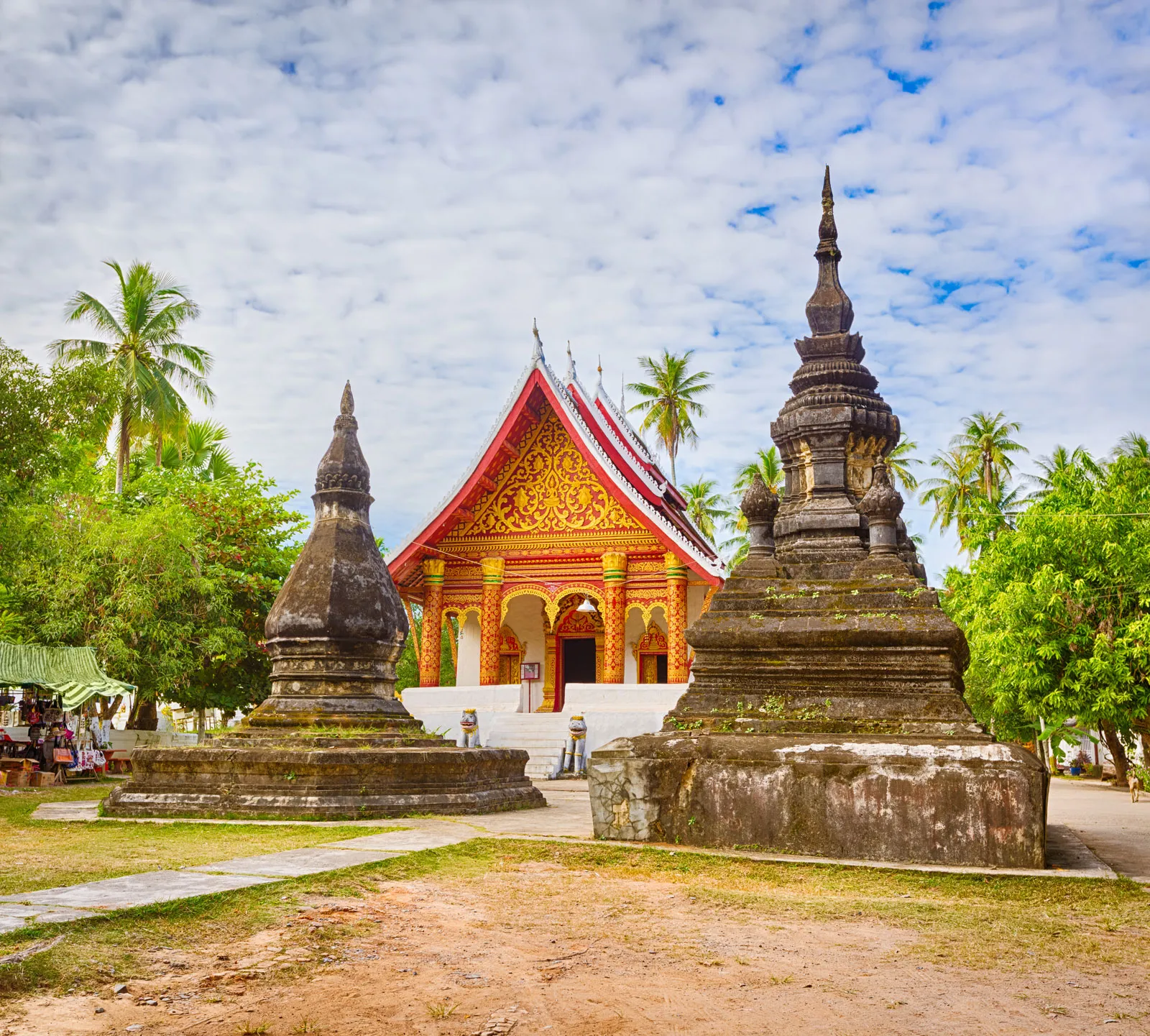
Source: Britannica
If Thailand is the "Land of Smiles," Laos is the "Land of the Chill." Time seems to move differently here. It flows as slowly as the Mekong River that winds through the entire country.
Laos is the only landlocked nation in Southeast Asia, but what it lacks in beaches, it makes up for with misty mountains, cascading turquoise waterfalls, and a spirituality that permeates every aspect of daily life. It is a place where the loudest sound you might hear is the morning gong of a temple or the splash of a boat oar.
If you are ready to unplug from the chaos of modern life, here is your factual guide to Laos.
1. Luang Prabang: The Spiritual Heart
Your journey must begin in Luang Prabang. This UNESCO World Heritage town is a stunning blend of traditional Lao wooden houses and European colonial architecture.
- Tak Bat (Alms Giving): Wake up at 5:30 AM to witness a centuries-old tradition. Hundreds of monks in saffron robes walk silently in single file through the streets to collect sticky rice from locals. It is a moment of profound peace and respect. (Remember to observe silently from a distance unless you are participating meaningfully).
- Kuang Si Falls: A 45-minute drive from town lies one of the most beautiful waterfalls in Asia. The water flows over limestone tiers, creating natural pools of milky turquoise water. It looks photoshopped, but the cool, refreshing swim is very real.
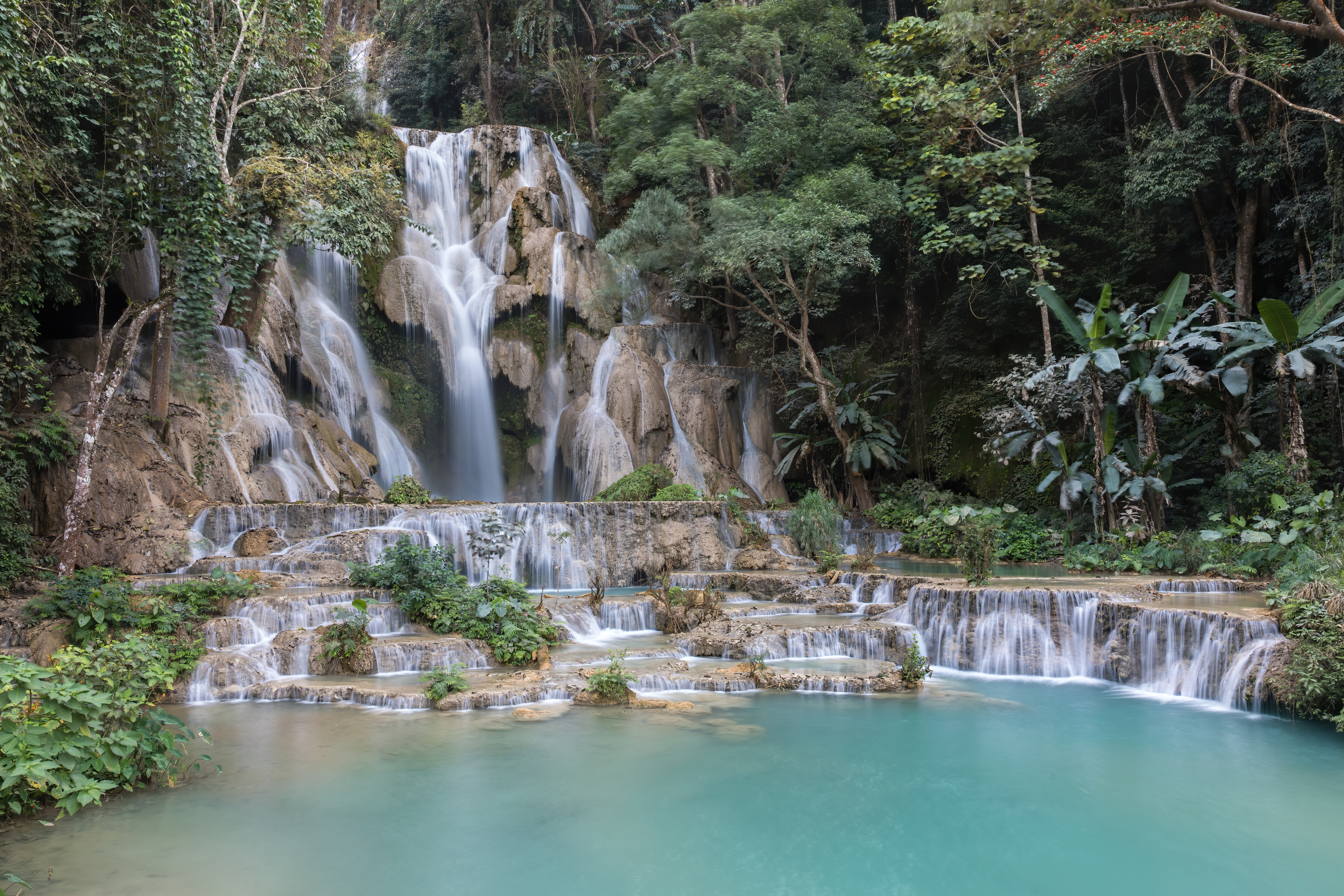
- Source- Basile Morin, CC BY-SA 4.0, via Wikimedia Commons
- Mount Phousi: Climb the 300 steps to the top of this hill in the center of town for a 360-degree view of the Mekong and Nam Khan rivers meeting at sunset.
2. Vang Vieng: Nature’s Playground
Once known for its backpacker crowds, Vang Vieng has reinvented itself as an eco-tourism paradise.
- The Landscape: The town is surrounded by massive limestone karsts that jut vertically out of emerald-green rice paddies. The scenery is arguably the best in the country.
- Blue Lagoons: There are several natural pools (Blue Lagoon 1, 2, and 3) fed by mountain springs. They are perfect for cooling off after a hike.
- Hot Air Ballooning: Because of the dramatic cliffs, this is one of the most affordable and scenic places in the world to take a sunrise hot air balloon ride. Floating silently over the misty mountains is an unforgettable experience.
3. The Connectivity Reality: Why You Need an eSIM
Here is a logistical reality check. Laos is mountainous and developing. While hotels usually have Wi-Fi, it can be slow or intermittent, and once you leave the main towns, you are on your own.
The Navigation Necessity
- Remote Roads: Whether you are renting a scooter to explore the Thakhek Loop or taking a minivan through the mountains, road signage can be scarce or only in Lao script. You need reliable GPS to stay on track.
- Language Barrier: English is not widely spoken in rural areas. You will rely on translation apps to communicate with tuk-tuk drivers or ask for vegetarian food options.
The Solution: The eSIM Roaming charges in Laos can be surprisingly high for international travelers.
- The Fix: Purchase a Laos-compatible eSIM data plan before you fly.
- Why? An eSIM connects you to local networks (like Unitel or Lao Telecom) the moment you cross the border or land at Wattay International Airport.
- The Benefit: It allows you to download offline maps for your jungle treks and keep your family updated on your adventures without hunting for a SIM card vendor in a remote village.
4. Vientiane: The Sleepy Capital
Vientiane is unlike any other capital in Southeast Asia. There are no traffic jams and no skyscrapers blocking the sun.
- Pha That Luang: The "Great Stupa" is the most important national monument in Laos. Covered in real gold leaf, it glows brilliantly in the sun and is believed to house a breastbone of the Buddha.
- Patuxai: This massive war monument resembles the Arc de Triomphe in Paris, but with detailed Lao motifs (kinnari) carved into it. You can climb to the top for a view of the city’s low-rise charm.
- Buddha Park (Xieng Khuan): Located just outside the city, this bizarre and fascinating sculpture park contains over 200 massive concrete statues of Buddhist and Hindu figures, including a giant reclining Buddha.
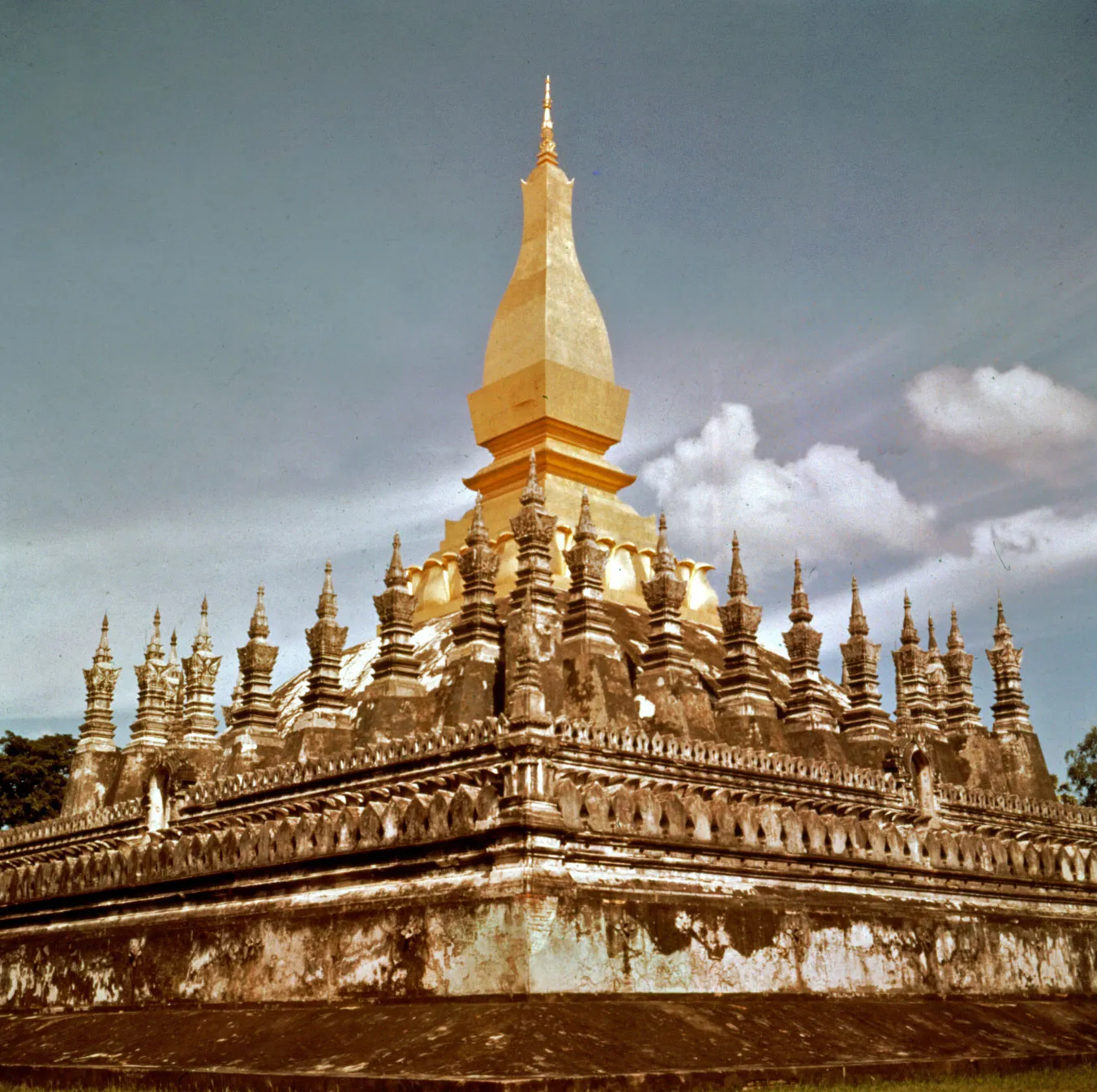
- Source- Britannica
5. The Plain of Jars: An Ancient Mystery
For history buffs, a trip to Xieng Khouang province is essential.
- The Jars: Scattered across the plateau are thousands of massive stone jars, some weighing up to six tons. Archaeologists believe they are 2,000 years old and were likely used in ancient burial practices, though their exact purpose remains a mystery. Walking among them feels like stepping into a forgotten chapter of history.
6. A Taste of Laos (Fresh, Spicy, & Herbal)
Lao cuisine is fresh, fiery, and heavily reliant on herbs. It is distinct from Thai food, though they share some similarities.
- Sticky Rice (Khao Niew): This is the heart of every meal. Laos eats more sticky rice per capita than any other country. It is served in a bamboo basket (thip khao) and eaten with your hands—you pinch a small ball of rice and use it to scoop up sauces and meat.
- Laap (Larb): The national dish. It is a "meat salad" made of minced chicken, beef, duck, or fish, tossed with lime juice, fish sauce, chilies, mint, and toasted rice powder. It is zesty, spicy, and incredibly flavorful.
- Tam Mak Hoong (Green Papaya Salad): Similar to Thai Som Tum but funkier and more savory, often using fermented fish paste. It is crunchy, spicy, and sour.
- Mok Pa: Fish steamed in banana leaves with lemongrass, kaffir lime leaves, and dill. It is soft, fragrant, and healthy.
Why Go Now?
Laos is often skipped by travelers rushing between Vietnam and Thailand, which is exactly why you should go. It remains authentic. The people are gentle, the landscapes are lush, and the pace of life forces you to slow down and breathe. It is a true escape.