
Kabul, Afghanistan: A Journey Through History and Resilience
Source: Laure Wanders
Kabul is a city of profound contrasts, where ancient history whispers from the dust of bustling streets and resilience is etched into the very skyline. For the intrepid traveler or the history enthusiast, the Afghan capital offers a glimpse into a rich tapestry of Mughal heritage, Islamic architecture, and enduring culture.
While travel to the region requires careful planning and situational awareness, the rewards for those who visit are deep and lasting. This guide takes you through five of Kabul's most significant cultural landmarks—each a chapter in the city’s complex story.
1. Eidgah Great Mosque: The Ground of Independence
Your journey begins at the Eidgah Great Mosque (or Id Gah Mosque), the second-largest mosque in the city and a site of immense historical weight. Located near the Mahmoud Khan Bridge, "Eidgah" translates to "Prayer Ground," a fitting name for a space designed to hold thousands of worshippers during the biannual Eid festivals.
Why it matters: Beyond its religious function, Eidgah is politically sacred. It was here, in 1919, that King Amanullah Khan publicly announced Afghanistan's independence from British influence. Standing in the vast open courtyard, you are standing on the very pavement where modern Afghan sovereignty was declared.
What to see:
- The Architecture: The mosque features a long, low structure painted in distinctive beige and white, flanked by towering minarets. Unlike the central-dome style of Ottoman mosques, Eidgah is Mughal-influenced, emphasizing the "iwans" (arched halls) and the expansive open-air courtyard.
- The Atmosphere: If you visit outside of prayer times, the sheer scale of the empty courtyard offers a moment of silence in a noisy city. It is a powerful place to reflect on the turbulent yet proud history of the nation.
2. Kabul City Center: The Face of Modernity
Leaving the historic grounds of Eidgah, a trip to Kabul City Center offers a stark and fascinating contrast. Located in the Shahr-e Naw district, this was Afghanistan’s first modern indoor shopping mall (opened in 2005) and remains a primary symbol of the city's commercial aspirations and contemporary life.
The Experience: Adjacent to the Safi Landmark Hotel, this multi-story complex is a hub for Kabul’s middle class and youth. It offers a rare, climate-controlled environment where you can witness the modern social dynamics of the city away from the street-level bustle.
Highlights:
- The Atrium: The mall features glass elevators and escalators that rise through a central atrium. It is a popular spot for locals to socialize, offering great people-watching opportunities.
- Retail & Gold: While you will find electronics and clothing stores, the jewelry shops on the ground floor are particularly notable, showcasing intricate Afghan gold designs that are famous in the region.
- A Modern Contrast: Visiting the City Center provides balance to your trip; it is a reminder that Kabul is not just a city of ancient ruins, but a living, evolving metropolis with modern consumer culture.
3. Babur Garden (Bagh-e Babur): A Mughal Oasis
No visit to Kabul is complete without walking the terraces of Bagh-e Babur. Laid out in the early 16th century by Emperor Babur, the founder of the Mughal Empire, this garden was his favorite spot in the city—and ultimately, his chosen resting place.
A Walk Through History: The garden is a masterpiece of the "Charbagh" style (four-part garden), utilizing a natural slope to create flowing water channels and waterfalls that run down the center axis. After years of neglect, the Aga Khan Trust for Culture meticulously restored the site, replanting the walnut, cherry, and mulberry trees that Babur himself described in his memoirs.
What not to miss:
- The Tomb of Babur: Located on the upper terrace, the tomb is open to the sky, surrounded by a delicate marble screen built by his descendant, Emperor Shah Jahan (who also built the Taj Mahal).
- The Queen’s Palace: A 19th-century haremserai located at the southeast corner, now often used for cultural exhibitions.
- The View: From the top terrace, you get one of the best panoramic views of Kabul, framed by the jagged peaks of the Hindu Kush. It is a rare place of green tranquility and order.
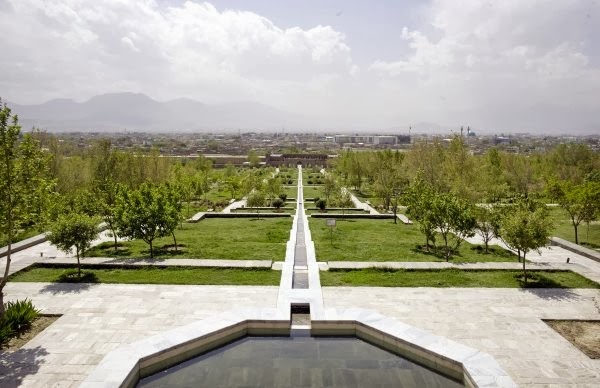 Babur garden, Kabul. Source- Ismailimail.
4. The National Museum of Afghanistan: Keeper of Treasures
Located roughly 9km from the city center, opposite the Darulaman Palace, the National Museum is a testament to survival. Once housing one of the most important collections in Central Asia, the museum suffered devastating looting during the civil wars of the 1990s. However, magnificent efforts have been made to recover and restore its artifacts.
The Collection: The museum tells the story of Afghanistan as the "crossroads of Asia." You will find a fascinating blend of Hellenistic (Greek), Buddhist, Hindu, and Islamic art, proving how diverse this region has been for millennia.
Key Exhibits:
- Buddhist Heritage: Beautiful stucco sculptures from Hadda and Gandharan art that blend Greek realism with Buddhist iconography.
- Nuristani Carvings: Intricate wooden effigies from the Nuristan province, dating back to before the region’s conversion to Islam.
- The Repatriated Items: Ask the curators about items that have been returned from abroad; seeing these restored pieces is a powerful reminder of the global effort to preserve Afghan heritage.
5. Shahr-e Naw Park: The Modern Pulse
After the weight of history at the museum and mosques, Shahr-e Naw Park ("New City Park") offers a look at contemporary Kabul. Located in one of the city's more affluent commercial districts, this park is a social hub where families, friends, and locals gather to relax.
The Vibe: While not as historically ancient as Babur Garden, Shahr-e Naw is essential for people-watching. It is surrounded by flower shops, guest houses, and some of the city's best restaurants.
What to do:
- Local Life: This is where you see the "normalcy" of Kabul—kids playing soccer, vendors selling snacks, and elders sitting on benches.
- Dining: Use the park as a starting point to explore the surrounding Shahr-e Naw district, which is famous for its kebab houses and bakeries. It’s the perfect spot to end your tour with a meal of Kabuli Pulao (rice with carrots and raisins) and lamb skewers.
Practical Tips for the Traveler
- Respectful Dress: Modesty is non-negotiable. Men should wear long trousers and shirts (local Perahan Tunban is appreciated); women must cover their hair with a scarf and wear loose, non-revealing clothing.
- Guides are Essential: Navigating Kabul requires local knowledge, not just for language but for safety and logistics. Always hire a reputable local guide or fixer.
- Photography: Always ask for permission before photographing people, especially women and security personnel.
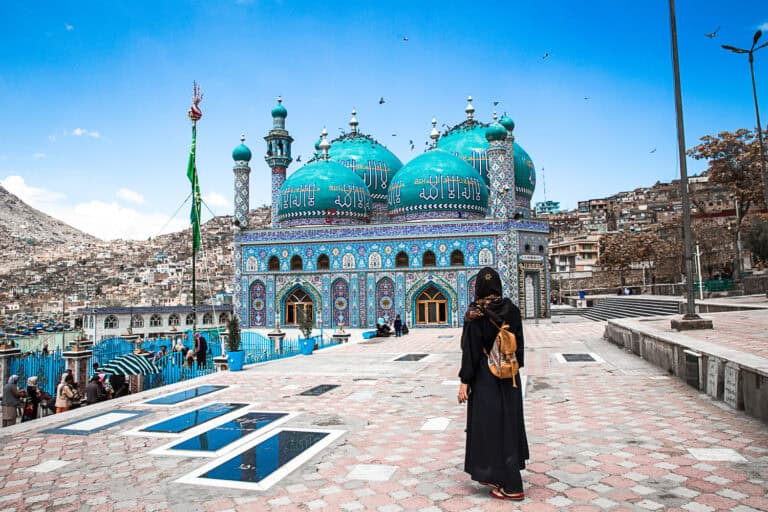
Kabul is a city that defies simple narratives. From the serene terraces of Babur’s resting place to the blue tiles of Pul-e Kheshti, it is a place that demands to be seen with open eyes and a respectful heart. You can browse eSIMs for your trip to Kabul here.