
Guyana: South America’s Untamed Garden
If you are looking for a destination that feels like a true frontier—a place where the map still has blank spots and the wildlife outnumbers the tourists—welcome to Guyana.
Nestled on the northern shoulder of South America, Guyana is the only English-speaking country on the continent. It is not a land of all-inclusive resorts or manicured beaches. It is raw, green, and spectacularly wild. It is a place where you can watch giant river otters play in the morning and stand at the edge of the world’s most powerful waterfall by noon.
If you are ready to trade the beaten path for a jungle trek, here is your factual guide to the Land of Many Waters.
1. Kaieteur Falls: The World’s Widest Curtain
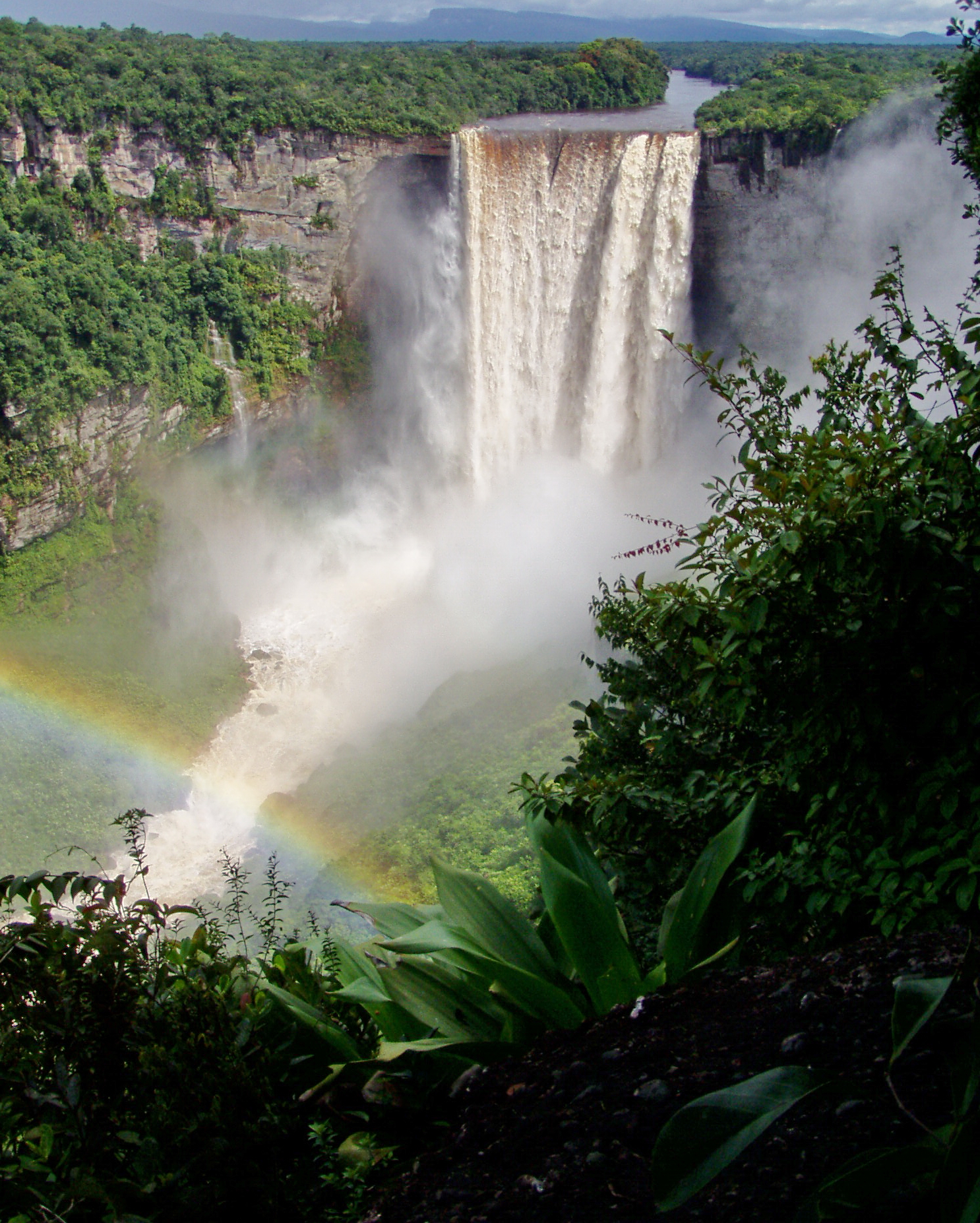
You cannot talk about Guyana without talking about Kaieteur Falls.
- The Scale: While Angel Falls is taller and Victoria Falls is wider, Kaieteur claims the title of the world’s largest single-drop waterfall by volume. The Potaro River plunges 741 feet (226 meters) straight down into a jungle canyon. That is four times higher than Niagara Falls.
- The Experience: Unlike other famous waterfalls, there are no guardrails, no gift shops, and no crowds. You fly in on a small Cessna plane, land on a remote airstrip, and walk a few minutes to the edge. You are often the only person there, standing feet away from the roaring abyss.
- The Golden Frog: Look closely at the giant tank bromeliads (plants) lining the path. They are the home of the Golden Rocket Frog, a tiny, toxic, and glowing yellow amphibian found only in this specific area.
2. The Rupununi Savannah: The Land of Giants
Head south, and the dense rainforest opens up into the Rupununi, a vast golden savannah dotted with termite mounds and mountains.
- The Giants: This region is famous for the "Giants of Guyana." Here, you can find the Giant Anteater (up to 7 feet long), the Black Caiman (the largest predator in the Amazon basin), and the Arapaima (one of the world's largest freshwater fish).
- The Community: The best way to experience the Rupununi is by staying at a community-led eco-lodge, such as Surama. These lodges are owned and run by the indigenous Makushi people. You go out with local guides who know the land intimately, tracking wildlife and learning about medicinal plants in a way no guidebook could teach you.
3. The Connectivity Reality: Why You Need an eSIM
Here is a logistical reality check. Guyana is untamed. Roads are often unpaved, and the distance between lodges can be vast.
The "Jungle" Signal Gap
- The Infrastructure: In Georgetown, the mobile network is reliable. However, once you travel into the interior (to Kaieteur or the Rupununi), coverage becomes spotty.
- The Navigation: If you are exploring the capital or driving along the coast, you need live GPS. Street signs can be confusing, and finding your guesthouse often requires a working map app.
The Solution: The eSIM Roaming charges for foreign carriers in South America can be steep, often exceeding $10 per megabyte.
- The Fix: Purchase a Guyana-compatible eSIM data plan before you fly.
- Why? An eSIM allows you to connect to local networks (like GTT or Digicel) immediately upon landing at Cheddi Jagan International Airport.
- The Benefit: It ensures you can communicate with your drivers (who often use WhatsApp) and keeps you connected during the long transfers between the airport and the capital. It is a safety net that lets you focus on the scenery, not your phone bill.
4. Georgetown: The Garden City
The capital, Georgetown, is a fascinating mix of Caribbean vibes and colonial history.
- St. George’s Cathedral: This is one of the tallest wooden buildings in the world. Painted white and rising 143 feet into the air, it is a stunning example of Gothic Revival architecture built entirely from local Greenheart timber.
- Stabroek Market: Located by the Demerara River, this iron-and-steel structure is the beating heart of the city. The clock tower is iconic. Inside, it is a sensory overload of fruit, vegetables, and local crafts.
- The Seawall: In the late afternoon, do as the locals do and walk along the Seawall. It protects the city (which is below sea level) from the Atlantic. It is the best place to catch a breeze and watch the sunset.
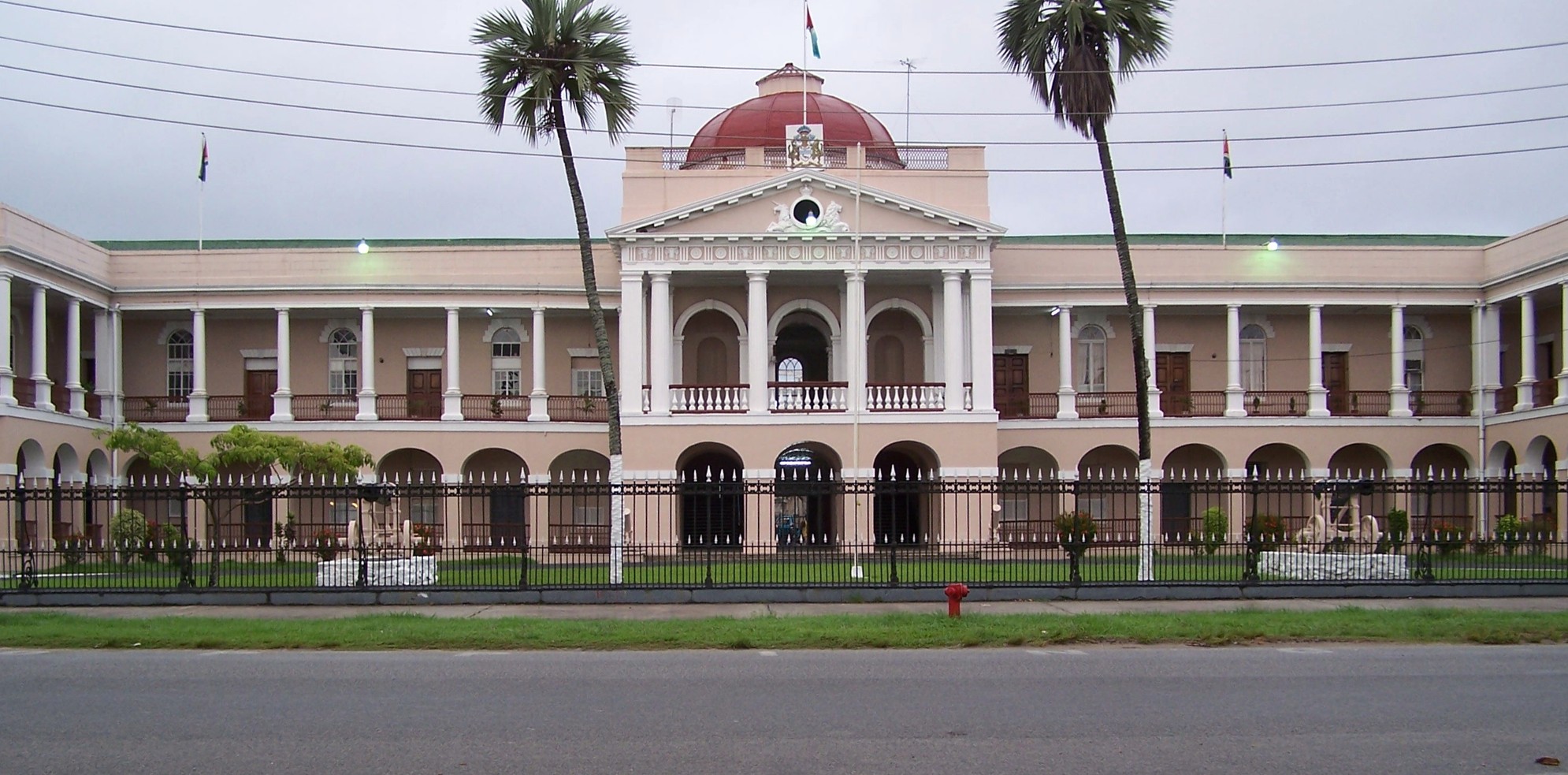
Parliament Building in Georgetown
5. A Taste of Guyana
Guyanese food is a delicious fusion of Indian, African, Indigenous, and European influences.
- Pepperpot: This is the national dish. It is a rich, dark stew made with beef or mutton, cinnamon, and Cassareep (a thick black sauce made from cassava root). It is traditionally eaten with dense, homemade bread to soak up the sauce.
- Cook-up Rice: A one-pot meal that you will find everywhere. It consists of rice, beans (or peas), fresh herbs, coconut milk, and various meats or fish.
- Pineapples: The pineapples in Guyana are legendary. They are smaller, sweeter, and more fragrant than what you find in supermarkets elsewhere. Buy a bag of sliced fruit from a street vendor for a refreshing snack.
Why Go Now?
Guyana is currently poised on the edge of change. It is becoming more accessible, yet it remains one of the few places where you can feel like a true explorer. It is a destination for those who want to wake up to the sound of Howler Monkeys, travel by river canoe, and see nature in its most powerful, unaltered form.