
Guernsey: The Channel Island That Feels Like Nowhere Else
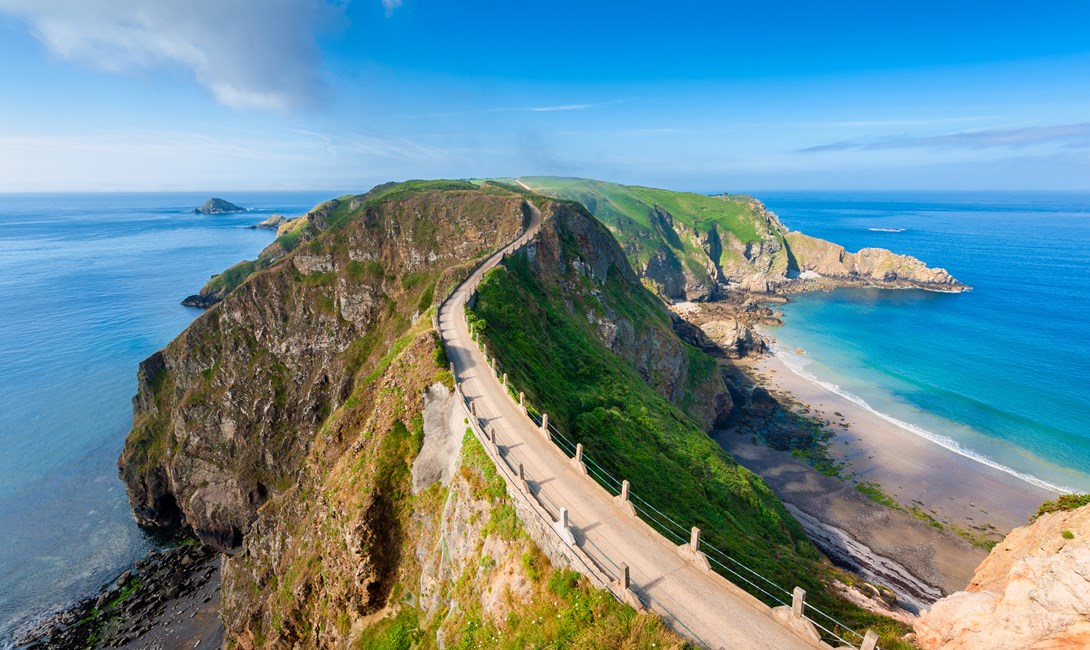
Source: States of Guernsey
If you look at a map, Guernsey sits tantalizingly close to France—just 30 miles off the Normandy coast—yet it remains a steadfastly British Crown Dependency. It is a place of curious contradictions. The street names are in French, the postboxes are blue instead of red, and the speed limit is a relaxing 35 mph.
For travelers, Guernsey offers a rare blend of wild island nature and layered history. You can walk through German bunkers from WWII in the morning and eat fresh crab sandwiches by a turquoise bay in the afternoon. It feels familiar, yet completely foreign.
If you are ready to explore the island of Victor Hugo and the "Little Chapel," here is your factual guide to Guernsey.
1. St Peter Port: The Prettiest Harbor in Europe?
Your journey starts in St Peter Port, the island’s capital. It is a tumble of terraced gardens and Regency architecture cascading down to a bustling harbor.
- Castle Cornet: This 800-year-old fortress guards the harbor mouth. It isn't just a castle; it is a complex of five museums. You can explore everything from military history to maritime heritage. The "Noonday Gun" is still fired daily by soldiers in 19th-century costume—a tradition that startles tourists and locals alike.
- Hauteville House: This is the former home of Victor Hugo, the author of Les Misérables. He lived here in exile for 15 years. The house is a masterpiece of design, decorated personally by Hugo with heavy tapestries, dark wood, and a glass lookout on the roof where he wrote while gazing toward France. Note: You must book tours months in advance; it is incredibly popular.
2. The Little Chapel: A Miniature Marvel
Nestled in the St Andrew parish is one of the world’s smallest—and strangest—tourist attractions.
- The Design: The Little Chapel is a miniature version of the rosary basilica at Lourdes. It is barely large enough for a priest and a tiny congregation.
- The Decor: What makes it unique is the building material. It is covered entirely in broken china, pebbles, and seashells. The builder, Brother Déodat, started it in 1914, using rejected plates and cups from the locals. It is intricate, colorful, and unlike any other church you will ever see.
3. The Connectivity Reality: Why You Need an eSIM
Here is the most critical logistical tip for your trip. Many travelers assume that because Guernsey is a British Crown Dependency, their UK or European mobile plan will work automatically. This is often not the case.
The Roaming Trap
- For UK Travelers: Guernsey is not part of the UK. While some major carriers (like EE or O2) may include it in specific bundles, many budget providers and older contracts classify it as an international zone. You could face per-minute calling charges and data caps.
- For EU Travelers: Guernsey is not in the EU. The "Roam Like at Home" rules do not apply here. Using your French or German SIM card can trigger "Rest of World" roaming charges, which are notoriously expensive.
- For International Travelers: Roaming rates here can be surprisingly high, often exceeding $2.00 per minute or $10.00 per MB of data.
The Solution: The eSIM To avoid a bill shock, purchase a Guernsey-compatible eSIM data plan before you fly.
- Why? An eSIM allows you to connect to local networks (like Sure or JT) the moment you land.
- The Benefit: You will need data to check tide times (crucial for beach visits) and navigate the "Ruettes Tranquilles" (quiet lanes for walkers and cyclists). It ensures you stay connected without relying on spotty public Wi-Fi.
4. The Coast: Cliffs and Bays
Guernsey’s geography is split. The south is high and jagged; the west is flat and sandy.
- The South Coast Cliffs: For hikers, this is the highlight. The path from St Peter Port to Fermain Bay offers views of blue water and gorse-covered cliffs that rival the Mediterranean. Fermain Bay itself is a pebble beach with a popular café, perfect for a mid-hike break.
- Cobo Bay: On the west coast, Cobo Bay is famous for its white sand and shallow, crystal-clear water. It is the prime spot for watching the sunset.
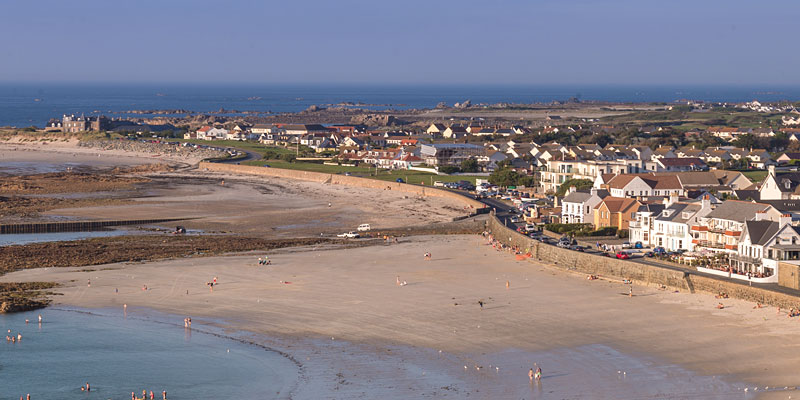
- Source- Cobo Bay hotel
5. A Taste of the Island: Fresh and Creamy
Guernsey’s food scene is defined by its rich dairy and fresh catch.
- Guernsey Cream: The local cows are famous worldwide for producing milk with high butterfat and protein. You must try Guernsey Ice Cream; the golden-yellow color is natural (from beta-carotene in the grass the cows eat) and the texture is incredibly rich.
- Seafood: You are on an island, after all. Fresh Chancre Crab (brown crab) is a local staple, often served simply in a sandwich with lemon and butter. For something rarer, ask about Ormers (abalone). They are a protected delicacy and can only be gathered on specific "ormering tides" in winter, making them a rare treat on menus.
- Guernsey Gâche: This is a traditional fruit loaf, packed with sultanas, raisins, and mixed peel. Unlike a cake, it is eaten like bread—sliced thick and smothered in salty Guernsey butter. It is the perfect fuel for a cliff walk.
Why Go Now?
Guernsey is a place that forces you to slow down. The speed limit is low, the lanes are narrow, and the tea is strong. It is a destination that feels safe and familiar, yet just exotic enough to be an adventure. Whether you are exploring the German Occupation Museum or watching the tide roll in at Vazon Bay, Guernsey offers a peaceful escape from the noise of the mainland.