
Guadeloupe: The Caribbean’s Butterfly Effect
Source: Guadeloupe Islands Tourism Board
If you look at a map of the Caribbean, you will see an island shaped remarkably like a butterfly. This is Guadeloupe. It isn't just one island; it’s an archipelago that offers two completely different holidays in one trip.
The "left wing" (Basse-Terre) is wild, green, and volcanic. The "right wing" (Grande-Terre) is flat, sunny, and lined with white sand. Connecting them is a mangrove swamp and a bridge. It is a place where you pay in Euros, speak French, and eat some of the freshest tropical food on the planet.
If you are looking for a Caribbean destination that feels authentically lived-in rather than just a resort backdrop, here is your factual guide to the Pearl of the French West Indies.
1. Basse-Terre: Into the Jungle
For nature lovers, the western wing of the island is the main event. It is dominated by the Guadeloupe National Park.
- La Soufrière: This active volcano is the highest peak in the Lesser Antilles. You can hike to the summit, but be prepared—it is often shrouded in mist and smells of sulfur (the volcano is very much alive). The hike starts at the Bains Jaunes (Yellow Baths), natural thermal pools where you can soak your legs after the climb.
- Cousteau Reserve: Located off the black-sand beach of Malendure, this marine reserve was championed by Jacques Cousteau. You don't need to be a diver to enjoy it; rent a kayak or take a glass-bottom boat to see sea turtles and coral gardens just meters below the surface.
- Waterfalls: The jungle is full of them. The Cascade aux Écrevisses (Crayfish Waterfall) is the most accessible—a short, easy walk from the main road, perfect for a quick, cool dip.
2. Grande-Terre: The Beach Life
Cross the bridge to the eastern wing, and the landscape flattens out into limestone plateaus and sugar cane fields.
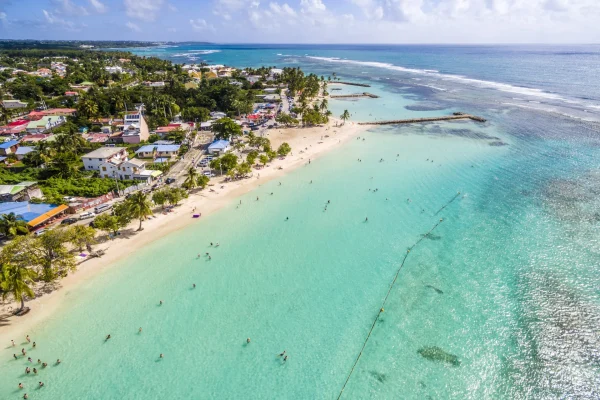
- Sainte-Anne: This is the postcard beach. The water is calm, shallow, and blindingly turquoise. It is protected by a reef, making it perfect for swimming.
- Pointe des Châteaux: Drive to the far eastern tip of the island. Here, massive Atlantic waves crash against jagged rock formations. Hike up to the cross on the hill for a panoramic view that stretches all the way to the neighboring island of La Désirade.
- Source- Guadeloupe Islands Tourism Board
3. The Connectivity Reality: Why You Need an eSIM
Here is a logistical reality check. Guadeloupe is an Overseas Region of France, meaning it is technically part of the European Union. However, your phone carrier might not see it that way.
The "Rest of World" Trap
- For Non-EU Travelers: Most US and UK carriers classify Guadeloupe as "International" or "Caribbean Zone," often charging $10+ per day for roaming.
- For EU Travelers: While "Roam Like at Home" generally applies, signal strength can vary wildly between the two main islands, and some budget carriers throttle data speeds in overseas territories.
The Navigation Necessity
- GPS is Vital: Guadeloupe’s roads are winding and often lack clear signage, especially in the rainforests of Basse-Terre. You will need Waze or Google Maps to find the trailheads or your rental bungalow.
- Translation: Outside of hotels, English is not widely spoken. You will need data for Google Translate to read menus or ask for directions.
The Solution: The eSIM To ensure you aren't stranded without a map in the jungle, purchase a Guadeloupe or Caribbean-specific eSIM data plan before you fly.
- The Benefit: An eSIM connects you to local networks (like Orange Caraïbe or Digicel) immediately upon landing at Pointe-à-Pitre International Airport (PTP). It gives you the high-speed data you need for navigation and safety without the shock of a roaming bill.
4. A Day Trip to Les Saintes
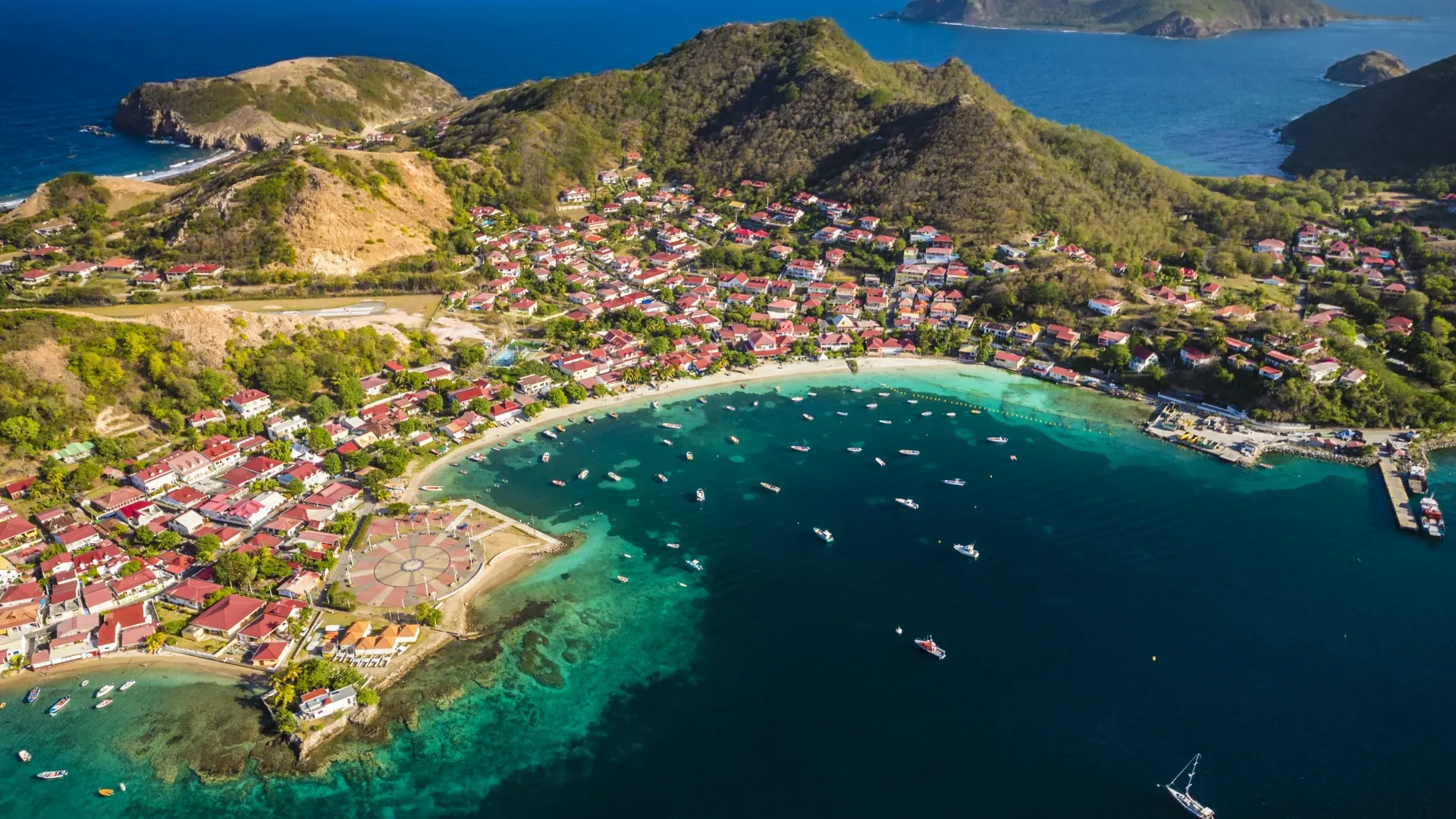
You cannot visit Guadeloupe without taking the ferry to Les Saintes, a small cluster of islands south of Basse-Terre. The bay of Terre-de-Haut is ranked as one of the most beautiful in the world.
- The Vibe: There are very few cars here. You rent a scooter or an electric golf cart to zip around the hilly roads.
- Fort Napoléon: Visit the fort not just for the history, but for the iguanas. Dozens of them live in the gardens and sunbathe on the stone walls.
- Pain de Sucre: Hike down to this small, secluded beach for excellent snorkeling in crystal-clear water.
5. The Taste of the Islands: The Bokit
Forget fancy dining; the real flavor of Guadeloupe is on the street.
- The Bokit: This is the ultimate local sandwich. It is made of dough that is fried until golden and crispy, then sliced open and filled.
- The Fillings: Traditional options include saltfish (cod), shredded chicken, or tuna, topped with lettuce, tomatoes, and a spicy Creole sauce (sauce chien). It is savory, hot, and incredibly satisfying after a swim.
- Tropical Fruit: Stop at any roadside stand for fresh passion fruit (maracudja), tiny sweet bananas (ti-nain), or soursop.
6. Practical Survival Tips
- Rent a Car: Public transport is limited and unreliable for tourists. A rental car is mandatory if you want to leave your hotel.
- Language: A simple "Bonjour" (Hello) goes a long way. It is considered rude to start a conversation (even in a shop) without greeting the person first.
- Currency: The currency is the Euro (€). US Dollars are rarely accepted outside of tourist traps, so withdraw cash from ATMs.
Why Go Now?
Guadeloupe offers a blend of European infrastructure and Caribbean soul. The roads are good, the food is safe, and the healthcare is French-standard, yet the landscape remains wild and dramatic. It is the perfect destination for travelers who want the safety of the EU with the adventure of the tropics.