
Ethiopia: The Land Where Time Stands Still
Source: Britannica
Forget everything you think you know about African travel. Ethiopia is not a safari destination (though it has wildlife). It is not a beach escape. It is a historical heavyweight that operates on its own frequency—quite literally.
This is the only African nation never colonized. It has its own alphabet, its own calendar (it is currently 2018 here), and its own way of counting time (the day starts at sunrise, not midnight). It is the cradle of humanity, the birthplace of coffee, and home to landscapes that look more like Mars than Earth.
If you are ready for a trip that will challenge your comfort zone and rewrite your understanding of history, welcome to the Abyssinian Highlands.
1. Lalibela: The New Jerusalem
If you see one thing in Ethiopia, make it Lalibela.
- The Rock-Hewn Churches: In the 12th century, King Lalibela sought to build a "New Jerusalem" after the old one was captured. The result? Eleven monolithic churches carved down into the solid volcanic rock, not built up from the ground.
- Bet Giyorgis (Church of St. George): This is the icon—a perfect cross shape carved into the earth, connected to the surface only by a winding tunnel. Standing at the edge of the pit at sunset, hearing the chanting of white-robed priests echoing from the rock, is a spiritual experience unmatched anywhere in Christendom.
- The Morning Mass: Wake up at 4:00 AM to witness a mass. You don’t need to be religious to be moved by the sight of hundreds of pilgrims wrapped in white gabi (cotton shawls) praying by candlelight in the cool mountain air.
2. The Simien Mountains: Hiking with "Bleeding Hearts"
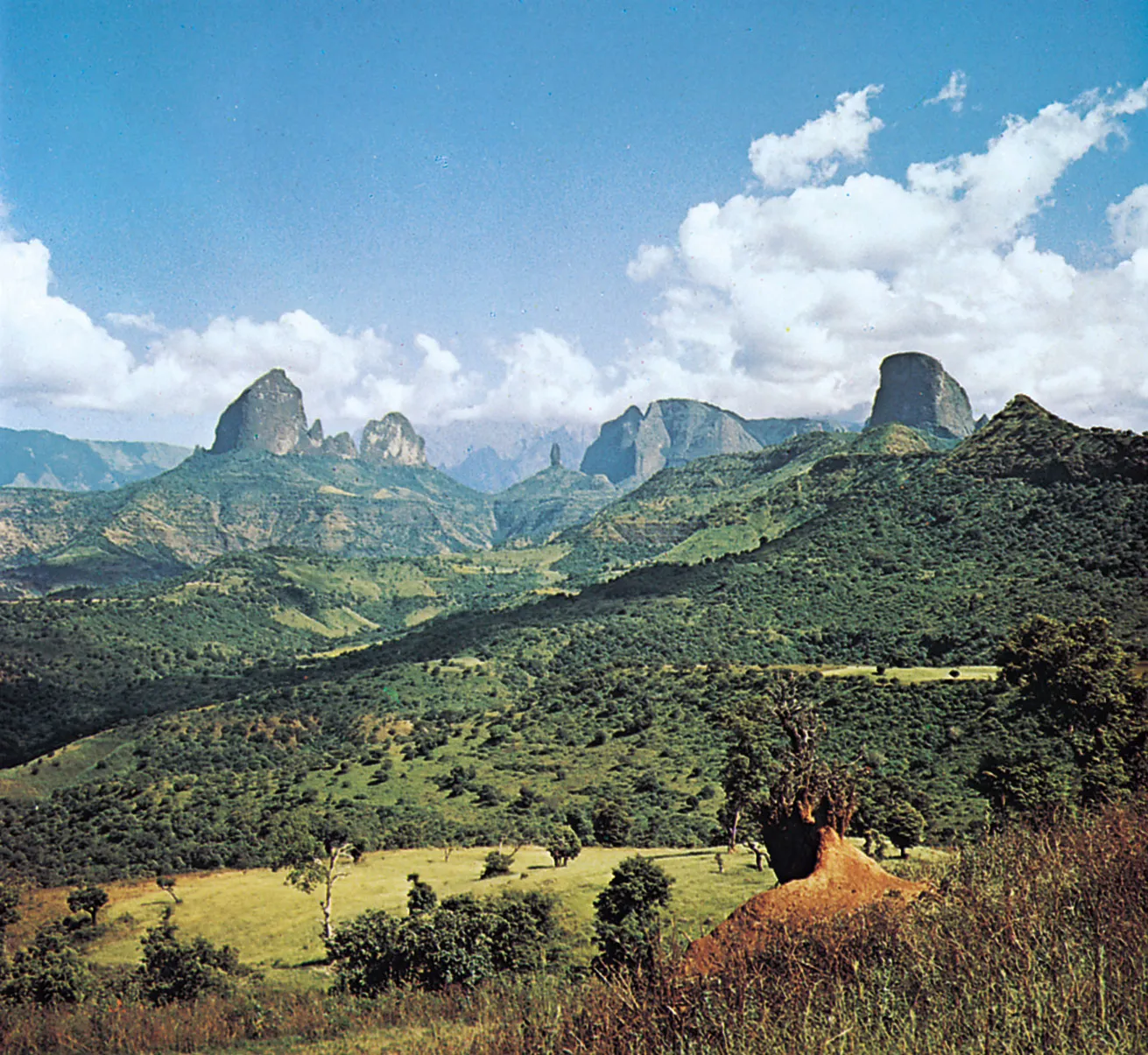
Head north to the Simien Mountains National Park, often called the "Chessboard of the Gods" for its jagged peaks and deep precipices.
- The Gelada Baboons: These are the stars of the show. Known as "Bleeding Heart Baboons" due to the red patch on their chests, they are the only grazing monkeys in the world. They are incredibly docile; you can sit quietly in a meadow and have a troop of 200 monkeys graze around you, grooming each other and ignoring your presence completely.
- Ras Dashen: For the serious trekker, this is the challenge. At 4,550 meters (14,930 ft), it is the highest peak in Ethiopia.
3. The Danakil Depression: The Alien Earth
If the mountains are heaven, the Danakil Depression is hell—in the most spectacular way possible.
- The Heat: This is officially the hottest inhabited place on Earth. Temperatures regularly exceed 50°C (122°F).
- Erta Ale: This is one of the few persistent lava lakes in the world. You hike up the volcano in the dark (to avoid the heat) and stand on the rim, looking down into a bubbling cauldron of molten rock. It is violent, loud, and mesmerizing.
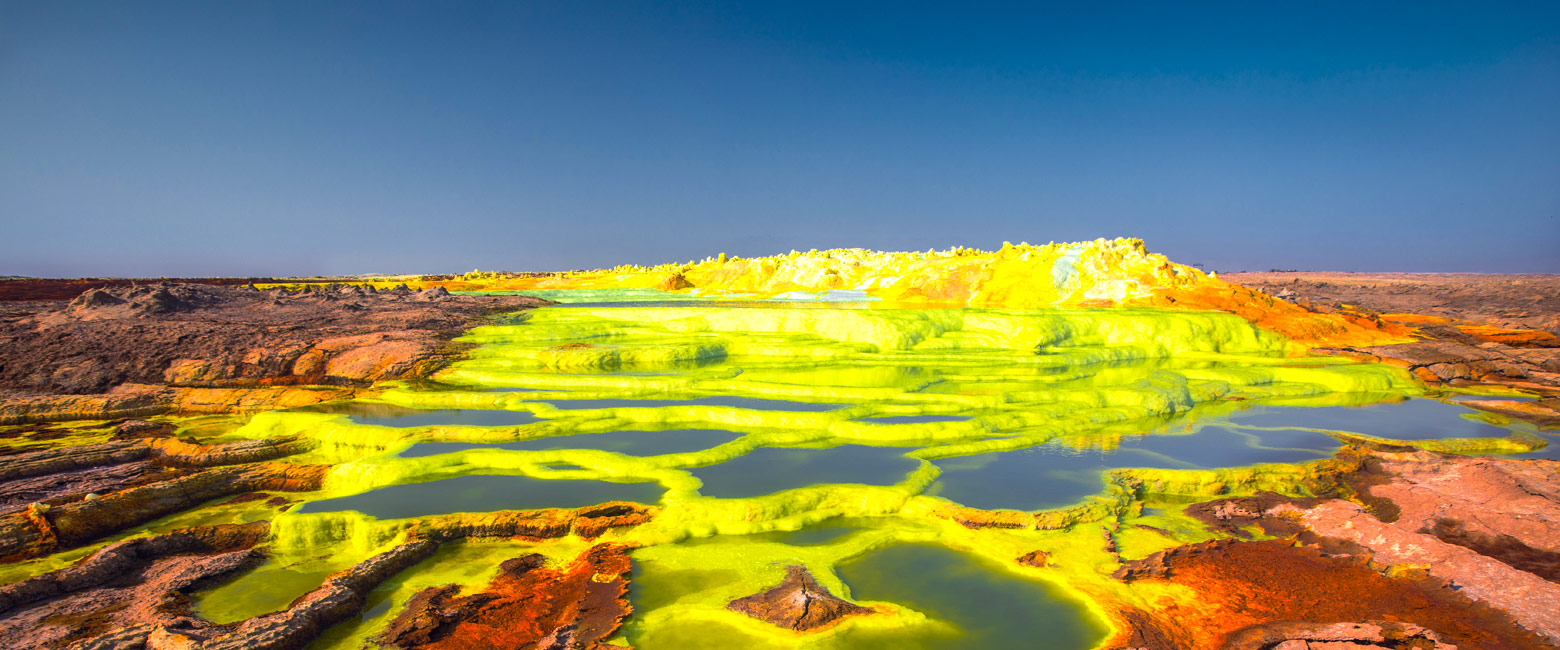
- Dallol: A few miles away lies a landscape of neon yellow and green sulfur springs. The salt formations here look like coral reefs made of acid. It is beautiful, but toxic—watch where you step.
- Source- ATR Safari
4. The Connectivity Reality: Why You Need an eSIM
Ethiopia is an adventure, but its infrastructure can be a test of patience.
- The Monopoly: Telecommunications are state-run (Ethio Telecom, though Safaricom has recently entered the market).
- The "Blackout" Risk: Internet reliability can be spotty. In times of political tension, social media apps or the internet entirely can be throttled.
- The Queue: Buying a SIM card at Bole International Airport often involves a chaotic queue, passport scanning, and a wait for activation that can take hours.
- The Fix: The eSIM.
- The Strategy: Purchase an eSIM data plan before you fly.
- Why? An eSIM allows you to bypass the physical counter at the airport. You connect to the local network the moment you land.
- The Utility: You will need data immediately to use Ride or Feres (the local versions of Uber). Taxis in Addis Ababa are notorious for overcharging foreigners; using an app ensures a fair, tracked price. It also allows you to use a VPN, which is often necessary to access certain apps if local restrictions are in place.
5. Omo Valley: The Cultural Frontier
In the far south lies the Omo Valley, home to some of the most distinct tribal cultures on the planet.
- The Tribes: You will meet the Mursi (famous for their lip plates) and the Hamer (known for the bull-jumping coming-of-age ceremony).
- The Reality Check: Tourism here is controversial. It can feel like a "human zoo" if not done responsibly. Avoid the "drive-by photo" tours. Instead, choose a reputable operator who facilitates genuine interaction and ensures your money goes to the community, not just the driver. It is a confronting, intense, and colorful experience.
6. Addis Ababa: The Chaotic Capital
Don't skip Addis. It is the diplomatic capital of Africa (HQ of the African Union).
- Lucy: Visit the National Museum to see the replica of "Lucy" (Dinkinesh), the 3.2-million-year-old hominid fossil that changed our understanding of human evolution. Her real bones are preserved in a vault below, but seeing her tiny frame puts all of human history into perspective.
- Jazz: Addis has a legendary jazz scene ("Ethio-Jazz"). Head to Fendika Azmari Bet in the Kazanchis district to listen to the hypnotic, pentatonic scales of live bands.
7. The Coffee Ceremony (Bunna)
You cannot leave without experiencing a Coffee Ceremony.
- The Origin: Ethiopia is the birthplace of Coffea arabica.
- The Ritual: It is not a quick caffeine fix; it is a spiritual act. Grass is strewn on the floor, incense (frankincense) is burned, and the green beans are roasted by hand over charcoal in front of you. You must drink three cups: the Abol (for pleasure), the Tona (for peace), and the Baraka (for the blessing).
8. Practical Survival Tips
Time & Calendar
- The Year: The Ethiopian calendar is 7 to 8 years behind the Gregorian calendar. If it is 2026 in London, it is 2018 in Addis.
- The Time: The clock starts at sunrise (6:00 AM is "12 o'clock"). If a local tells you to meet at "2 o'clock," clarify if they mean International time (2:00 PM) or Ethiopian time (8:00 AM).
Safety
- The North: The Tigray and Amhara regions have seen conflict recently. Always check the latest government travel advisories before booking trips to the north (Lalibela and Gondar are usually safe, but roads can be closed). Fly between cities; do not drive long distances in volatile regions.
Why Go Now?
Ethiopia is raw. It is not polished for mass tourism, and that is its greatest strength. It demands your attention. Standing inside a rock-hewn church that has been active for 900 years, smelling the frankincense and hearing the ancient Ge'ez chants, you realize this isn't just a trip—it's a pilgrimage to the source of it all.