
Dominica: The Caribbean As It Used To Be
Source: Britannica
Let’s get the most important thing out of the way first: This is Dominica, not the Dominican Republic. There are no all-inclusive mega-resorts here. There are no sprawling white-sand beaches lined with thousands of sun loungers. And if you are looking for a party strip with neon lights, you are on the wrong island.
Dominica (pronounced Dom-in-EE-ka) is known as "The Nature Island" for a reason. It is the youngest island in the Lesser Antilles, still bubbling with geothermal activity. It is a land of 365 rivers, nine volcanoes, and a rainforest so dense it looks like the set of Jurassic Park. It is wild, raw, and unapologetically rugged.
For the traveler who prefers hiking boots to flip-flops, Dominica is the ultimate Caribbean frontier. Here is your factual guide to exploring this volcanic gem.
1. The "Boiling Lake" Challenge
Dominica is home to the Boiling Lake, the second-largest flooded fumarole in the world (after Frying Pan Lake in New Zealand). Visiting it is not a stroll; it is a conquest.
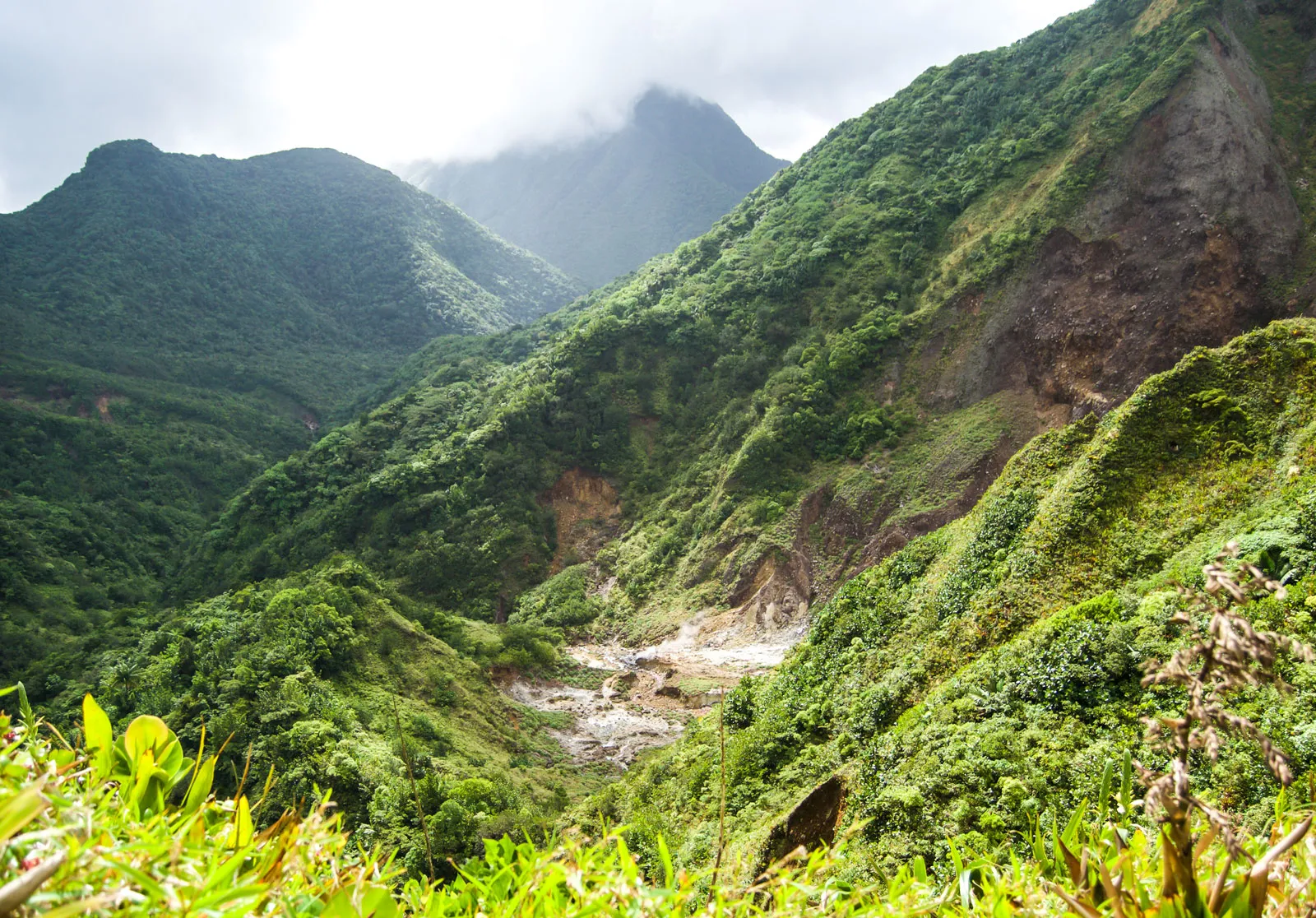
- The Hike: The trail is a grueling 8-mile (13 km) round trip through the Morne Trois Pitons National Park (a UNESCO World Heritage site). You will hike through the rainforest, traverse the "Valley of Desolation"—a lunar landscape of grey mud pots and sulfur vents—and climb steep ridges.
- The Reward: At the end, you stand on a cliff looking down at a cauldron of grey-blue water that is literally boiling. The center rolls with a violent churn, heated by molten magma deep beneath the rock.
- The Warning: You absolutely need a guide. The terrain is treacherous, and the sulfur fumes in the Valley of Desolation can be disorienting.
2. Champagne Reef: Swimming in Soda
You don’t need to be a deep-sea diver to experience Dominica’s volcanic magic. Just head to Champagne Reef near the town of Soufrière.
- The Phenomenon: Geothermal vents on the ocean floor release continuous streams of tiny gas bubbles.
- The Wildlife: The water here is warm and teeming with life. You can spot parrotfish, trumpetfish, and hawksbill turtles paddling through the fizz. It is accessible from the shore, making it one of the easiest and most unique snorkeling spots in the region.
3. The Waitukubuli National Trail
Dominica is the only Caribbean island with a long-distance hiking trail that spans the entire length of the country.
- The WNT: The Waitukubuli National Trail is 115 miles (185 km) long, divided into 14 segments. It runs from the south (Scott’s Head) to the north (Cabrits National Park).
- The Experience: You don’t have to do the whole thing. Segment 1 offers a steep climb with views of Martinique, while Segment 10 passes through the ancestral lands of the Kalinago people. It is a way to see the island’s backyard, passing through local farms, waterfalls, and cloud forests.
4. The Kalinago Territory
Dominica is the only island in the Caribbean with a remaining population of pre-Columbian Carib Indians, known as the Kalinago.
- The History: While colonial powers decimated indigenous populations elsewhere, the Kalinago survived in Dominica’s rugged, inaccessible mountains. In 1903, the British established the Carib Reserve (now the Kalinago Territory).
- The Visit: Located on the Atlantic coast, the territory is home to about 3,000 Kalinago people. You can visit the Kalinago Barana Autê (cultural village) to see traditional canoe building (carved from massive Gommier trees) and basket weaving. It is a vital, living piece of history that offers a perspective you won't find anywhere else in the Caribbean.
5. The Connectivity Reality: Why You Need an eSIM
Dominica is mountainous and wild. This geography is beautiful, but it makes navigation and communication tricky.
The "Dead Zone" Challenge While the capital, Roseau, and major towns have cell service, the signal drops quickly once you head into the interior valleys or the winding coastal roads.
- Navigation is Hard: Road signage in Dominica is sparse. Directions are often given based on landmarks ("turn left after the big mango tree"). If you miss a turn, you can end up miles off course on a single-lane mountain road.
- The Wi-Fi Gap: Do not expect Wi-Fi at trailheads, secluded beaches, or small roadside eateries.
The Solution: The eSIM To ensure safety and ease of travel, purchase an eSIM data plan before you arrive.
- Why? An eSIM allows you to connect to local networks (like Flow or Digicel) immediately.
- The Safety Net: Hiking in Dominica is serious business. Having a working phone to check your GPS coordinates on an offline map, or to call your eco-lodge if a flash flood delays your return, is a critical safety measure.
- The Convenience: It saves you from the hassle of finding a physical SIM vendor in Roseau on a Sunday when everything is closed. You can focus on the volcano, not on finding a cell tower.
6. Whale Watching Capital
Dominica is arguably the best place in the Caribbean for whale watching.
- The Residents: A population of female Sperm Whales and their calves lives off the coast of Dominica year-round. They don't migrate because the deep underwater drop-offs near the shore provide abundant squid for hunting.
- The Encounter: Because the water gets deep so close to shore (dropping to 6,000 feet just a few miles out), boat trips are short.Seeing a 40-foot sperm whale breach against the backdrop of a green rainforest mountain is a sight that defines the Dominican experience.
7. Practical Logistics
Getting There
- No Jumbo Jets: The main airport, Douglas-Charles (DOM), has a short runway nestled between mountains and the sea. You cannot fly direct from the US or Europe on big jets. You must connect through hubs like Puerto Rico (SJU), Barbados (BGI), or Antigua (ANU), usually on smaller turboprop planes.
- The Landing: The approach into Dominica is thrilling (and a bit bumpy), weaving through the valleys.
Getting Around
- The Roads: Driving here is not for the faint of heart. Roads are narrow, steep, and full of hairpin turns. Locals drive fast; you should drive slow.
- Car Rental: If you rent a car, get a 4x4. You will need the clearance for potholes and unpaved driveways.
- Currency: The Eastern Caribbean Dollar (XCD), pegged to the US dollar at roughly 2.70 XCD = $1 USD. US dollars are widely accepted, but you’ll get change in XCD.
8. Where to Stay: Jungle Luxe
Accommodation in Dominica leans toward "Eco-Luxury."
- Secret Bay: Famous for its clifftop bungalows that are among the most exclusive in the Caribbean.
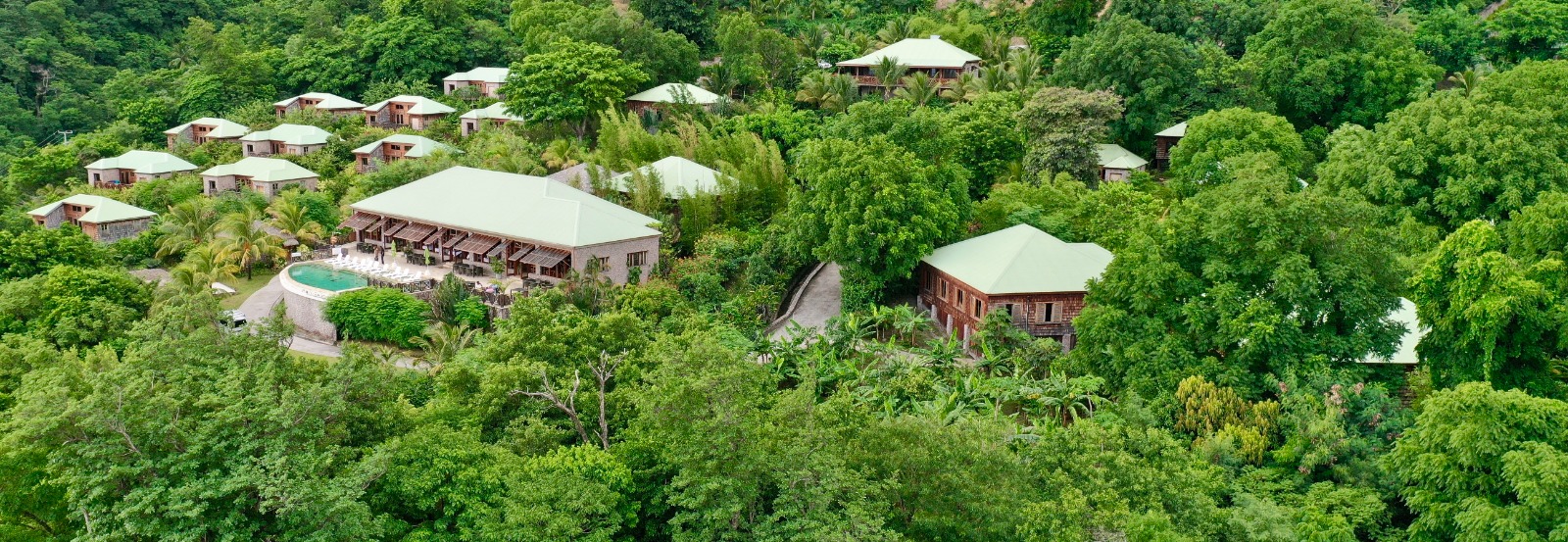
- Jungle Bay: An eco-resort designed to minimize impact on the land, overlooking the marine reserve.
- Wanderlust: For a more budget-friendly option, look for guesthouses in the Roseau Valley, putting you within walking distance of waterfalls and hot springs.
- Source- Jungle Bay Dominica
Why Go Now?
Dominica is currently investing in a new cable car project to the Boiling Lake (set to open in the coming years), which will inevitably change the character of the site. Visiting now means you still have to earn the view with your own two feet. It is a place that demands effort, but rewards you with a connection to nature that feels ancient and undisturbed.