
Chile: The Country That Has Everything
Source: Experience Chile
If you look at a map of South America, Chile looks impossible. It is a thin ribbon of land—4,300 kilometers long and rarely more than 180 kilometers wide—squeezed between the high Andes mountains and the deep Pacific Ocean.
Because of this insane geography, Chile doesn't just have "scenery"; it has all the scenery. In a single trip, you can walk across the driest desert on Earth, explore ancient rainforests, and watch icebergs calve from a glacier. It is a country of extremes, where the landscapes are vast and the adventure is endless.
If you are ready to tackle the "Shoestring of the World," here is your guide to navigating its three distinct worlds.
1. The North: Mars on Earth
Your journey begins in the Atacama Desert. Flying into Calama and driving to San Pedro de Atacama, you will realize quickly why NASA tests its Mars rovers here. The landscape is a mix of rust-red rock, white salt, and blue sky.
- Valle de la Luna (Moon Valley): This is the headline act. It is a landscape of wind-eroded stone and salt formations that look like dinosaur backbones. Go at sunset. As the sun dips, the entire valley turns purple, pink, and gold. It is silent, eerie, and undeniably beautiful.
- The Stargazing: The Atacama has almost zero humidity and high altitude, making it the best place on the planet to see the stars. You don’t need a telescope; you just need to look up. The Milky Way casts a shadow here.
- El Tatio Geysers: This requires a 4:00 AM start and warm clothes (it can be -10°C before dawn), but watching steam columns rise from the frozen earth as the sun crests the Andes is a spiritual experience.
2. The Center: Cities and Vines
Fly south to the central valley, where the climate shifts to Mediterranean. This is the heartbeat of the country.
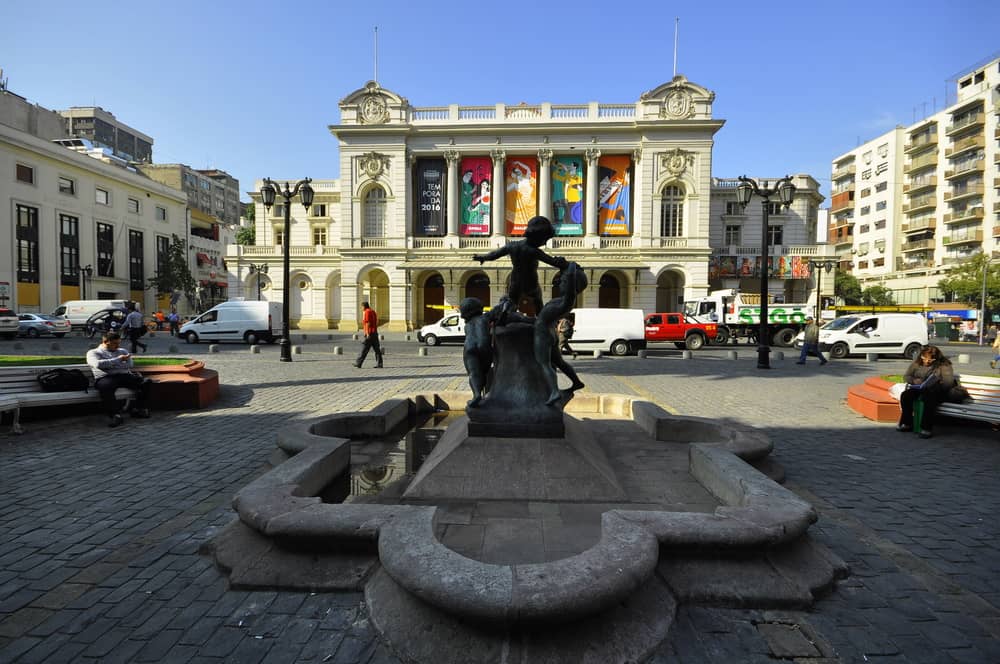
Santiago: The Backdrop City Santiago is modern, clean, and often underrated. It is one of the few capitals in the world where you can see snow-capped mountains from the downtown skyscrapers.
- Sky Costanera: Take the elevator to the top of the tallest building in South America. The 360-degree view of the city bowl and the looming Andes is the best orientation you can get.
- Barrio Lastarria: This is the cool, walkable neighborhood. It’s packed with street musicians and boutique hotels. It feels European but with a distinctly Latin energy.
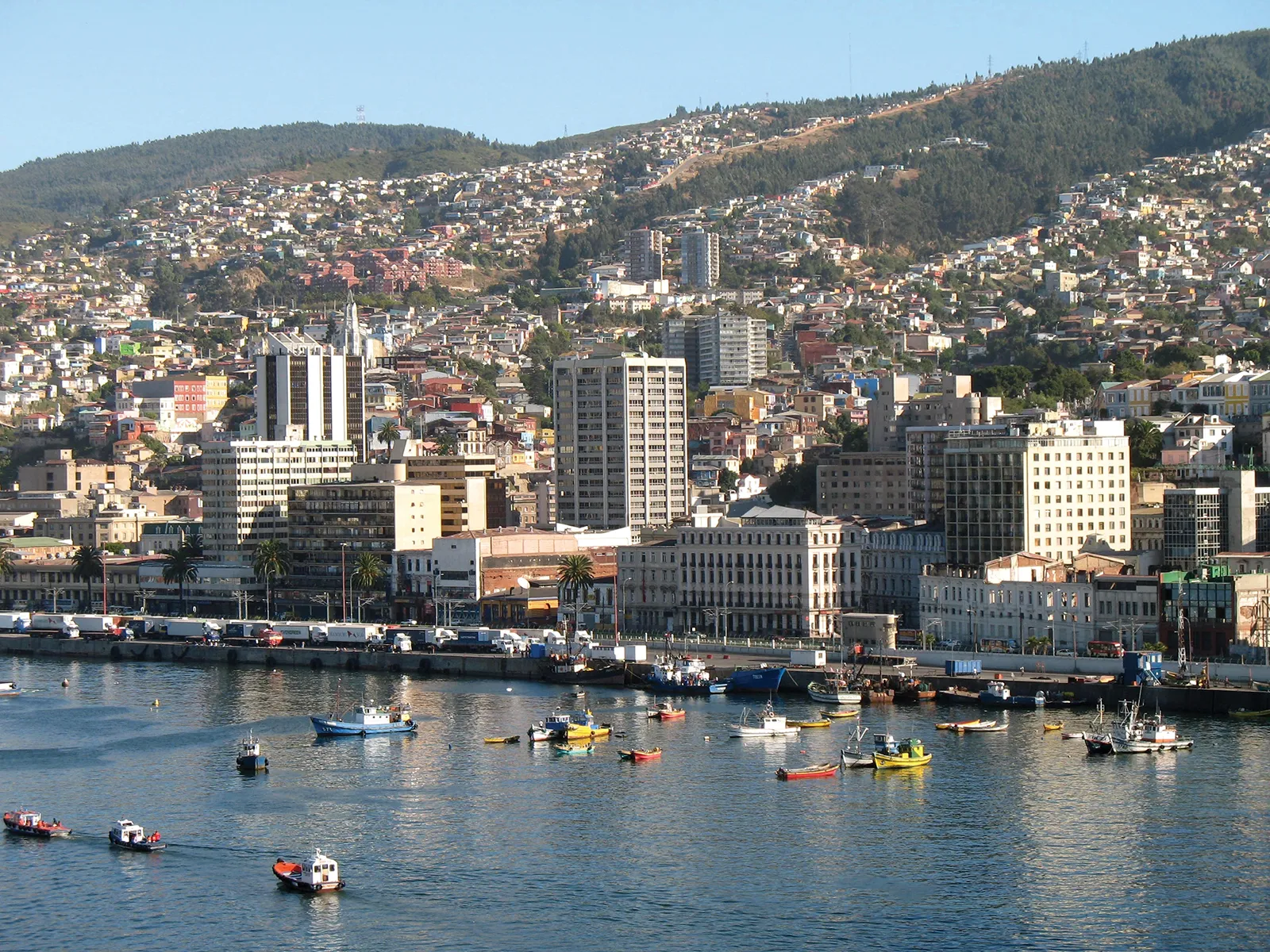
Valparaíso: The Bohemian Port Just 90 minutes from Santiago is Valparaíso. If Santiago is the business brother, Valparaíso is the artistic sister who paints on the walls.
- The Hills: The city is built on 42 steep hills. Forget maps; just wander. The streets are a chaotic maze of colorful corrugated iron houses and world-class street art.
- The Funiculars: To save your legs, ride the rickety, century-old funicular elevators (ascensores) up the cliffs. They are creaky, charming, and offer sweeping views of the Pacific container ships.
- Source- Britannica
3. The "Long Country" Logistics (And How to Stay Connected)
Here is the reality of traveling in Chile: The distances are massive. Traveling from the Atacama in the north to Patagonia in the south is roughly the same distance as flying from London to Baghdad. You will be relying heavily on domestic flights, rental cars, and navigation apps to bridge these gaps.
The "Multibanda" Challenge Chile has a unique law regarding mobile phones called "Multibanda/SAE." While intended to prevent phone theft, it means that foreign phones using physical local SIM cards sometimes face registration hurdles if used for extended periods. Even for short trips, finding a kiosk that sells SIMs to tourists can be a hassle, involving passport registration and activation delays.
The Smart Solution: The eSIM To avoid the bureaucracy and ensure you have navigation in the middle of the desert, purchase an eSIM data plan before you leave home.
- Why? An eSIM (digital SIM) bypasses the physical store entirely. You download a profile for a local network (like Entel or Movistar) and activate it the moment you land in Santiago.
- The Safety Factor: Chile is safe, but getting lost on a gravel road in Patagonia without Google Maps is a real risk. Having immediate, reliable data allows you to check road conditions, translate "bencina" (gasoline), and book your next bus ticket on the fly. It is the smoothest way to handle the logistics of such a long country.
4. The South: Lakes and Ice
Keep moving south, and the world turns green.
The Lake District (Pucón) This region looks like Switzerland, but with active volcanoes. Pucón is the adventure capital.
- Villarrica Volcano: This is one of the few places in the world where you can climb an active volcano and peer into a churning lava lake. It is a tough ascent (crampons and ice axes required), but you get to slide down the snow on a plastic sled to descend.
- Termas Geométricas: After the hike, soak in these hot springs. They are designed with red Japanese-style boardwalks hidden in a fern-filled canyon. It is pure relaxation.
Patagonia (Torres del Paine) Finally, you reach the end of the world. Torres del Paine National Park is the crown jewel of South America.
- The Towers: The three granite needles rising out of a blue glacial lake are the icon of the park. You can see them on a day hike (the rigorous "Base Torres" trek) or as part of the multi-day "W Trek."
- The Wind: Patagonian wind is legendary. It can knock you over. It is part of the experience—raw, wild, and untamed nature.
- The Glaciers: Take a boat to Grey Glacier. You will see thousand-year-old glacial ice while staring at a wall of blue ice 30 meters high.
5. What to Eat and Drink
Chilean food is comfort food.
- Completo Italiano: It’s a hot dog, but better. Loaded with avocado (palta), tomato, and mayonnaise (the colors of the Italian flag), it is the national snack.
- Pastel de Choclo: A corn casserole filled with beef, chicken, olives, and hard-boiled eggs. It is sweet, savory, and incredibly filling.
Why Go Now?
Chile offers a rare combination in modern travel: it is safe and developed, yet largely empty. You can drive for hours in Patagonia without seeing another car. It is a place where nature is still the boss, and we are just visitors. Whether you are watching the sunset on Mars (Atacama) or the sunrise in Mordor (Patagonia), Chile will leave you breathless.