
Canada: The Great White North is Calling
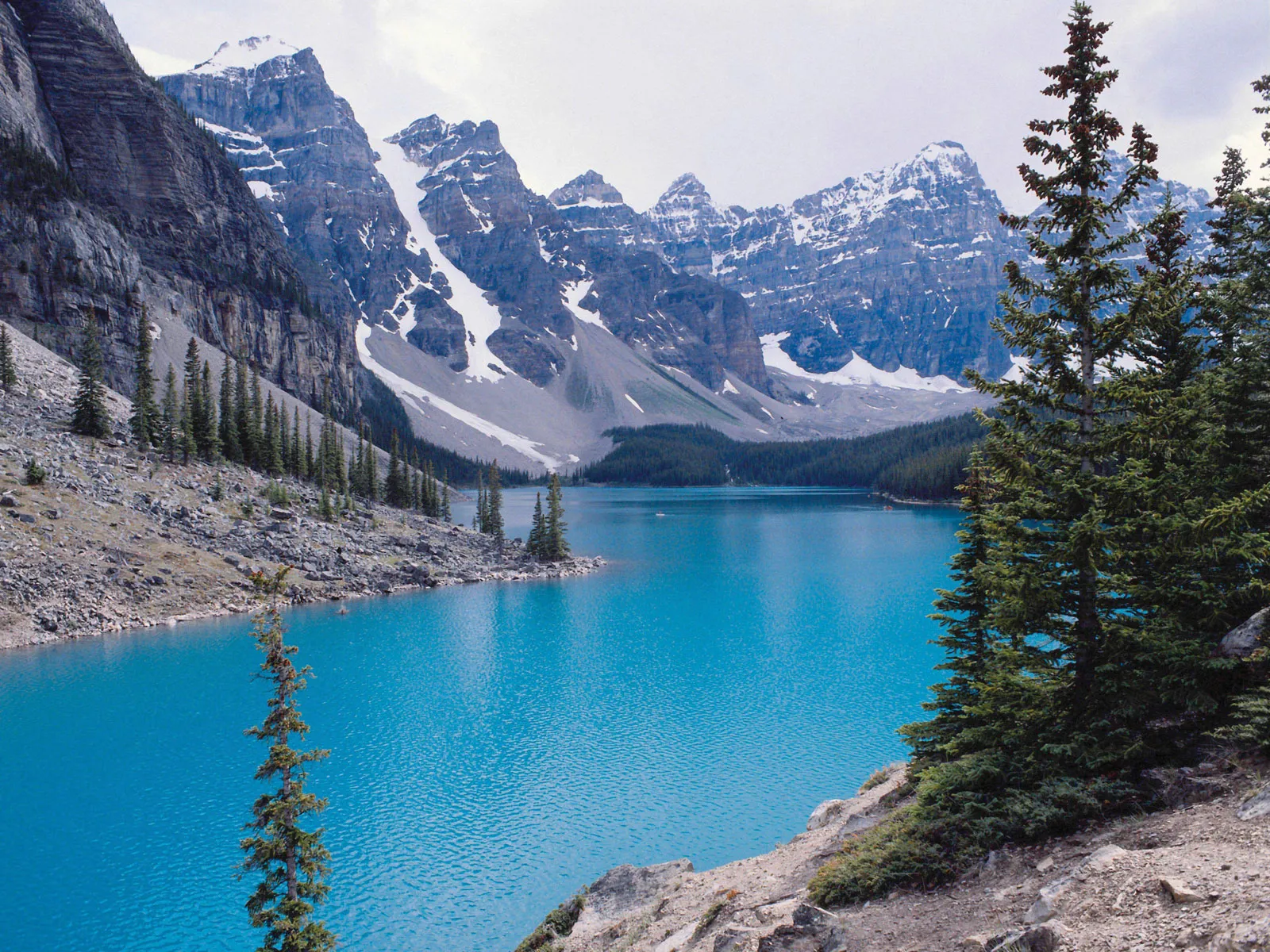
Source: Britannica
Canada is not just a country; it is a continent-spanning collection of landscapes that seem too vast to be real. From the rain-soaked cedar forests of British Columbia to the colorful fishing villages of Newfoundland, Canada offers a scale of travel that is both humbling and exhilarating.
It is a place where you can surf in the Pacific and ski in the Rockies on the same day. It is a land where modern, multicultural cities sit on the edge of limitless wilderness. And, let’s be honest, it is the only place where it is socially acceptable to eat french fries covered in cheese curds and gravy (poutine) for breakfast.
If you are ready to explore the true North, here is your guide to tackling this massive, beautiful beast of a destination.
1. The West: Mountains, Ocean, and Rainforest
If you crave adrenaline and postcards that don't need filters, start in the West.
Vancouver: The Urban Oasis Vancouver is often voted one of the most livable cities in the world, and it takes about five minutes to see why.
- Stanley Park: Larger than New York’s Central Park, this green lung is surrounded by a seawall perfect for cycling. You are biking through old-growth rainforest with the ocean on one side and glass skyscrapers on the other.
- Granville Island: Take a tiny "Aquabus" ferry across False Creek to this public market. It is a sensory overload of fresh salmon, donuts, and local art.
The Rockies: Banff and Jasper Drive east into Alberta, and the world changes. The Canadian Rockies are sharper, craggier, and more dramatic than their American counterparts.
- The Icefields Parkway: This stretch of highway connecting Banff and Jasper is widely considered one of the most scenic drives on the planet. You will pass over 100 ancient glaciers, turquoise lakes, and cascading waterfalls.
- Lake Louise: Yes, it is crowded. Yes, you still have to go. The water is a milky turquoise color caused by "rock flour" (silt) from the melting glaciers. It looks like someone dumped paint into the valley.
2. Central Canada: The Cultural Core
Fly east to Ontario and Quebec, where the population density rises and the history deepens.
Toronto: The Metropolis Toronto is Canada’s NYC—fast, diverse, and vertical.
- The CN Tower: It was once the tallest freestanding structure in the world. The glass floor observation deck is terrifying, but the view of Lake Ontario is unmatched.
- Kensington Market: This isn't a "market" in the traditional sense; it’s a neighborhood. It is a chaotic, colorful mix of vintage stores, Jamaican patty shops, and Latin American bakeries. It is the best place to taste Toronto’s multiculturalism.
Quebec: A Slice of Europe Crossing into the province of Quebec feels like crossing the Atlantic.
- Montreal: This city is effortlessly cool. It has the bagels (boiled in honey water), the jazz festivals, and the history. Climb Mount Royal for the view, then head to Old Montreal to walk on cobblestones that date back to the 1600s.
- Quebec City: If Montreal is the fun cousin, Quebec City is the elegant grandmother. It is the only walled city north of Mexico. Walking through the Petit Champlain district in winter, with snow falling on the stone buildings, feels like stepping inside a Christmas card.
3. The Connectivity Challenge: Why You Need an eSIM
Here is a reality check about Canadian travel: Canada is huge. Driving from Toronto to Vancouver takes about 40 hours of pure driving time. That is longer than driving from London to Moscow. Because the country is so vast, mobile coverage can be tricky, and domestic roaming data rates for foreign travelers can be shocking.
The "Roaming" Trap If you use your home carrier (especially from Europe or Asia), roaming in Canada can cost upwards of $10 per megabyte. Even US travelers can find their "unlimited" plans throttled after a few days.
The Solution: Get an eSIM To navigate this massive territory without going broke, purchase an eSIM data plan before you arrive.
- Why? An eSIM (digital SIM) allows you to connect to top-tier local networks like Rogers, Bell, or Telus instantly.
- The Benefit: You need reliable data to use Google Maps on the remote Icefields Parkway, to check the ferry schedule for Vancouver Island, or to translate French menus in rural Quebec. An eSIM gives you local rates and keeps you connected from the urban jungle of Toronto to the literal jungle of BC.
4. The East Coast: The Maritimes
For a slower pace, head to the Atlantic provinces (Nova Scotia, New Brunswick, PEI, and Newfoundland).
- The Cabot Trail (Nova Scotia): This driving loop on Cape Breton Island clings to the edge of cliffs that drop straight into the ocean. It is exhilarating and beautiful.
- Bay of Fundy (New Brunswick): This bay has the highest tides in the world. The water can rise as much as 16 meters (52 feet)—the height of a four-story building—in just six hours. You can walk on the ocean floor in the morning and kayak over the same spot in the afternoon.
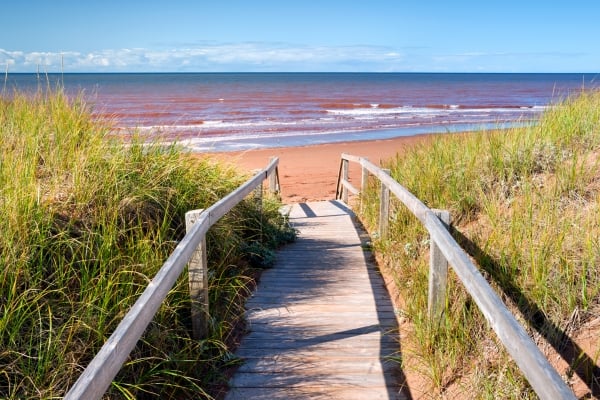
- Prince Edward Island. Source- Tourism PEI
5. Practical Tips for the Great White North
When to Go
- Summer (June–Aug): Best weather, highest prices. The hiking trails are snow-free, and the patios are open.
- Shoulder Season (Sept–Oct): The fall colors in Ontario and Quebec are legendary. The red maple leaves look exactly like the flag.
- Winter (Dec–March): Only for the brave or the skiers. Whistler and Banff offer world-class skiing, but cities like Winnipeg and Ottawa can drop to -30°C (-22°F).
Budget Hacks
- Tim Hortons: This coffee chain is a national identity. It’s cheap, it’s everywhere, and the "Timbits" (donut holes) are essential road trip fuel.
- Parks Canada Discovery Pass: If you plan to visit more than 2-3 National Parks (like Banff, Jasper, and Yoho), buy the annual pass ($75 CAD). It pays for itself quickly.
- VIA Rail: Train travel is romantic but expensive in Canada. Book "Escape" fares months in advance for the best deals, or stick to the "Corridor" trains between Toronto and Montreal.
Why Go Now?
Canada offers space. In a world that feels increasingly crowded, Canada is one of the few places where you can drive for hours without seeing another soul, where the air tastes like pine needles, and where the silence of the mountains resets your nervous system. It is big, it is beautiful, and it is waiting for you.