
Côte d’Ivoire: The West African Giant You’ve Been Overlooking
Source: africa.com
If you look at a map of West Africa, your eyes might drift to the popular beaches of Ghana or the chaotic energy of Nigeria. But sandwiched right between them is a country that feels like a secret the rest of the world hasn't quite figured out yet.
Côte d’Ivoire (Ivory Coast) is a land of jarring, beautiful contrasts. It is a place where you can sip espresso in a café that feels like Paris, drive three hours to see the largest church in the world rising out of the jungle, and end your day eating grilled fish with your fingers on a palm-lined beach.
It is sophisticated, it is raw, and it is arguably the most dynamic destination in Francophone Africa right now. If you are ready to practice your high-school French and explore the "Manhattan of the Tropics," here is your guide.
1. Abidjan: The Manhattan of the Tropics
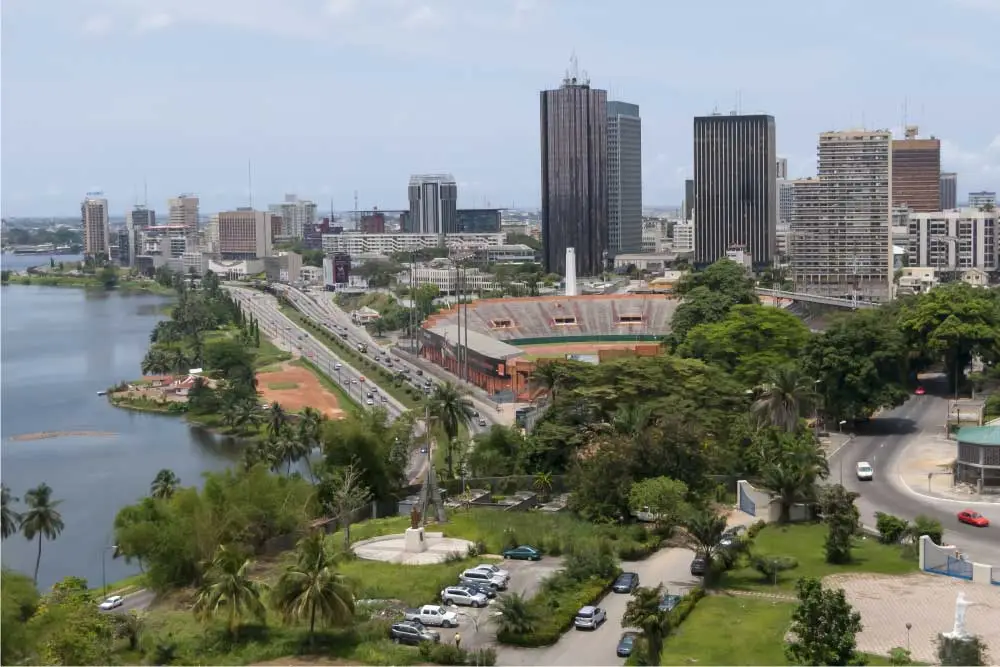
Your trip starts in Abidjan. While Yamoussoukro is the political capital, Abidjan is the beating heart. It is a city of islands and lagoons connected by massive bridges, with a skyline that rivals almost anywhere on the continent.
- Le Plateau: This is the business district. Walking here feels like walking through a tropical version of Wall Street. The architecture is a mix of 1970s modernist concrete and sleek glass towers. Visit St. Paul’s Cathedral, a stunning architectural feat where the entire church is tethered to a massive concrete cross by cables.
- The Vibe: Abidjan loves to party. The music—Coupé-Décalé—is loud, fast, and everywhere. Head to the Zone 4 or Cocody districts for upscale dining, or hit a "Maquis" (an open-air local restaurant) for the real experience.
- What to Eat: You cannot leave without trying Garba. It is the national obsession: a mound of Attiéké (fermented cassava couscous that looks like fluffy rice) topped with deep-fried tuna and chopped chili peppers. It costs about $2 and will keep you full for hours.
2. Grand-Bassam: The Faded Glory
Just 45 minutes east of Abidjan lies Grand-Bassam, the country’s former colonial capital and a UNESCO World Heritage site.
- The Ghost Town: The historic district, Quartier France, is a hauntingly beautiful collection of decaying 19th-century colonial mansions. The jungle is slowly reclaiming them, with vines creeping over French balconies. It feels like a living museum.
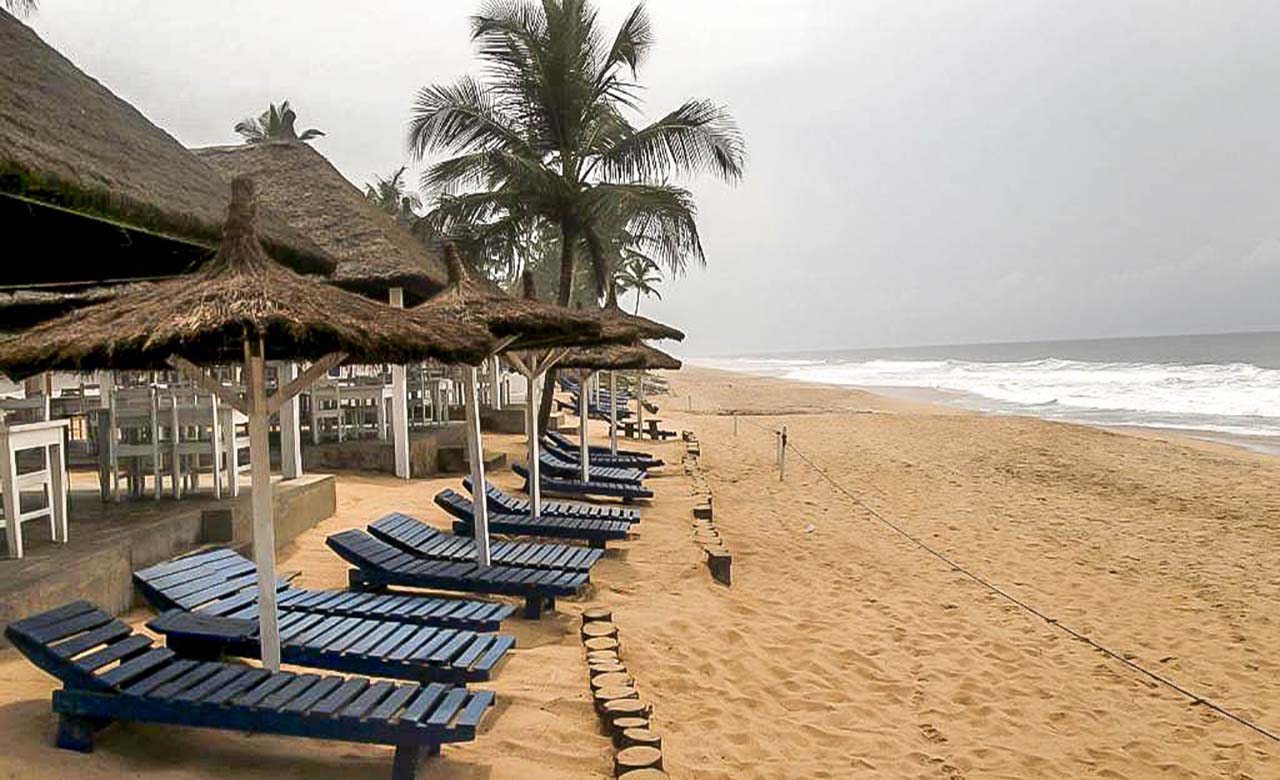
- The Beach: On the other side of the bridge, the town comes alive with beach resorts. The ocean here is rough (swimming can be dangerous due to undertows), but the beach bars are perfect for people-watching.
- Source- Discover Ivory Coast
3. Yamoussoukro: The Surreal Capital
Drive three hours north on a surprisingly good highway, and you reach Yamoussoukro. This city is bizarre in the best way possible. It was the birthplace of the country’s first president, Félix Houphouët-Boigny, who decided to turn his small village into the capital.
- The Basilica: The Basilica of Our Lady of Peace is the headline act. Guinness World Records lists it as the largest church in the world, surpassing even St. Peter’s in the Vatican. It sits in the middle of vast, empty plains, a dome of Italian marble rising out of the red African dust. It is empty, quiet, and absolutely mind-blowing.
- The Crocodiles: Visit the Presidential Palace to see the sacred crocodiles. They live in the artificial lake surrounding the palace and are fed chickens by the guards every afternoon—a ritual that is equal parts terrifying and fascinating.
4. Man: The City of 18 Mountains
If you crave nature, head west to the region of Man.
- The Landscape: The geography here shifts dramatically to lush, green mountains. The air is cooler, and the vibe is slower.
- La Dent de Man: "The Tooth of Man" is a jagged rock formation that towers over the city. It’s a steep hike, but the view is worth it.
- The Waterfall: The Cascade de Man is a natural waterfall nestled in a bamboo forest. It’s a popular spot for locals to cool off, and there is a famous bridge made of liana vines nearby (Pont de Lianes) that, according to tradition, is built by spirits in a single night.
5. The Connectivity Reality: Why You Need an eSIM
Here is a logistical tip that will save you a massive headache on arrival.
Côte d’Ivoire is modern, but the bureaucracy can be intense.
- The Registration Hurdle: In an effort to curb cybercrime, the government strictly enforces SIM card registration. Buying a local SIM (MTN or Orange) often involves long queues at official branches, fingerprinting, and passport scanning. Roadside vendors often cannot activate them for tourists anymore.
- The Navigation Necessity: You will need Google Maps to navigate the lagoons of Abidjan or to translate French menus in Yamoussoukro.
- The Fix: To skip the bureaucratic line, purchase an eSIM data plan before you fly.
- Why? An eSIM allows you to connect to local networks the moment you land at Félix-Houphouët-Boigny Airport. You can order a Yango (the local, safer version of Uber) immediately without having to haggle with taxi drivers in a currency you aren't used to yet. It gives you a safety net of connectivity from minute one.
6. Practical Survival Tips
The "Visa" Situation
- The E-Visa: Most travelers need a visa. The good news is there is an official "SNEDAI" e-visa system.
- The Catch: You apply and pay online, but you pick up the physical visa sticker at the airport in Abidjan. Print your receipt and pre-enrollment paper. You cannot board your flight without them.
Health: The Yellow Card
- Mandatory: You absolutely must have a Yellow Fever vaccination certificate (Yellow Card) to enter. They check it before they even check your passport. No card, no entry.
Language: Parlez-vous Français?
- The Barrier: English is not widely spoken outside of high-end hotels.
- The Hack: Download the French language pack on Google Translate. Learning a few basics—Bonjour (Hello), Ça va? (How are you?), and L'addition, s'il vous plaît (The check, please)—will go a long way in earning respect from the locals.
Why Go Now?
Côte d’Ivoire is currently hosting major international events (like the recent AFCON) and is investing heavily in tourism. It is in that "sweet spot" where the infrastructure is good (smooth highways, modern hotels), but mass tourism hasn't ruined the authenticity. It is vibrant, spicy, and unapologetically African.