
Burkina Faso: A 5-Minute Guide to West Africa’s Cultural Heart
Let’s be upfront: Burkina Faso is not for the faint of heart. With current travel advisories from most Western governments flashing "Do Not Travel" due to security concerns in the north and east, this is a destination for the seasoned, informed, and cautious traveler.
But for those who monitor the situation and stick to the safer southern corridors, Burkina Faso offers an experience that has vanished from much of the world. This is West Africa without the filter. It is a land of red dust, blindingly bright fabrics, mud-brick architectural masterpieces, and a hospitality so genuine it gave the country its name: "The Land of Honest People."
If you are an experienced traveler planning a trip to the accessible regions, here is your guide to the soul of the Sahel.
1. Ouagadougou: The Motorcycle Capital
Your journey begins in Ouagadougou (pronounced Wa-ga-doo-goo), a name that rolls off the tongue and a city that buzzes with the sound of a million mopeds.
- The Vibe: Ouaga is not about grand monuments; it’s about energy. The streets are a river of motorcycles, dusty boulevards, and open-air maquis (bars).
- Village Artisanal: This is the best place to start. Unlike the aggressive markets in some tourist hubs, the artisans here are calm and incredibly skilled. You can watch them cast bronze figures using the "lost wax" technique or weave intricate textiles. It is a one-stop shop for high-quality souvenirs that support local makers.
- FESPACO: If you are lucky enough to visit during an odd-numbered year (usually February/March), the city transforms for FESPACO, Africa’s largest film festival. For a week, Ouaga becomes the Cannes of the continent, buzzing with screenings and directors.
2. Bobo-Dioulasso: The Cultural Soul
If Ouaga is the brain, Bobo-Dioulasso is the heart. Located in the safer southwest, this city feels greener, slower, and deeply musical.
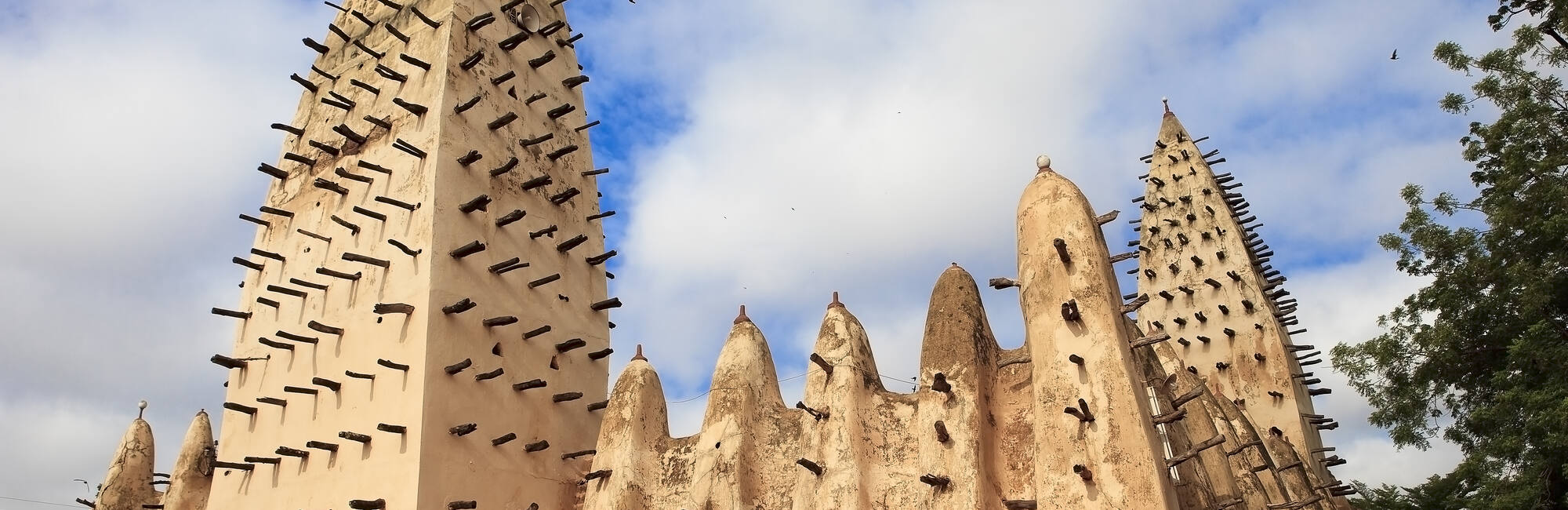
- The Grand Mosque: This is the icon of the country. Built in the late 19th century, it is a masterpiece of Sudano-Sahelian architecture—a massive structure made of mud and protruding wooden logs. It looks prehistoric and organic, rising from the earth like a clay fortress.
- The Music: Bobo is the home of the balafon (a wooden xylophone). Walk through the Kibidwé neighborhood, and you will likely hear the frantic, joyful hammering of wood on wood.
3. The Peaks of Sindou: Nature’s Sculpture
Travel further west to the Banfora region (generally considered one of the more stable areas for tourism), and the landscape shifts dramatically.
- Les Pics de Sindou: These are thin, needle-like sandstone cones that have been eroded by wind and rain over millions of years.
- The Experience: You can hike through the valley floor, walking between these towering rock chimneys. In the silence of the early morning, with the harmattan haze hanging in the air, it feels like walking on Mars.
- Nearby: Don't miss the Karfiguéla Waterfalls. It’s a series of cascading tiers rather than one big drop, surrounded by mango trees. It’s the perfect spot to cool off after a dusty hike.
4. Tiébélé: The Painted Village
Located in the south near the Ghana border, Tiébélé is a visual marvel. It is the home of the Kassena people, famous for their sukhala—windowless mud houses decorated with intricate geometric patterns.
- The Art: The painting is a community project undertaken by the women, using black graphite, red clay, and white chalk. Every wall is a canvas, covered in symbols that represent everyday life and animist beliefs. It is one of the most photogenic spots in all of West Africa.
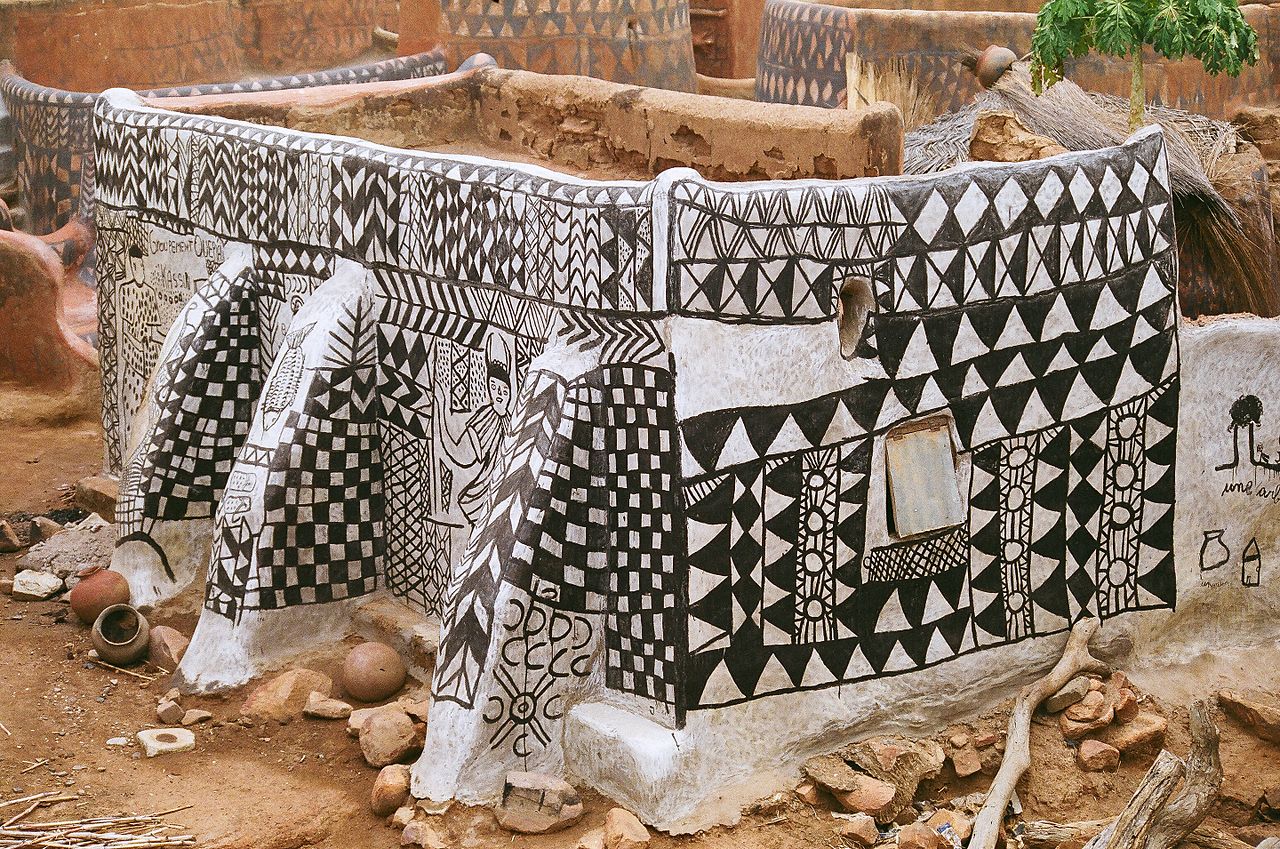
- Source- Alexander Leisser, CC BY-SA 4.0, via Wikimedia Commons
5. Practical Survival Tips
Safety First The security situation in Burkina Faso is fluid.
- The Golden Rule: Stay south and west. Avoid the Sahel region (North) and the East.
- Road Travel: Avoid driving at night. Banditry is a risk on dark highways. Always check with locals or your embassy before moving between cities.
The Connectivity Necessity In a country with security challenges, information is your most valuable asset. You need to be able to check travel advisories in real-time, use GPS to avoid getting lost in restricted zones, and stay in touch with your contacts.
- The Obstacle: Buying a SIM card in Burkina Faso can be a slow bureaucratic process involving passport registration and fingerprinting at crowded carrier offices.
- The Fix: For immediate and discreet connectivity, purchase an eSIM data plan before you arrive.
- An eSIM allows you to connect to local networks (like Orange) the moment your plane lands in Ouagadougou. It means you can have your secure transport driver’s location on your screen before you even step outside the airport terminal. In a destination where "being prepared" is a safety requirement, an eSIM is not just a convenience; it’s a tool.
Money
- Currency: West African CFA Franc (XOF).
- Cash is King: Credit cards are useless outside of the top hotels in Ouaga. You need cash. Euros are the easiest to exchange (the rate is fixed), but US dollars are accepted at banks.
The Verdict
Burkina Faso is not a vacation; it is an education. It is a place that reminds you that dignity and warmth can thrive in the hardest of environments. For the traveler willing to respect the risks and navigate the challenges, it offers a glimpse of Africa that is raw, artistic, and unforgettably honest.