
Bulgaria: Europe’s Oldest Soul
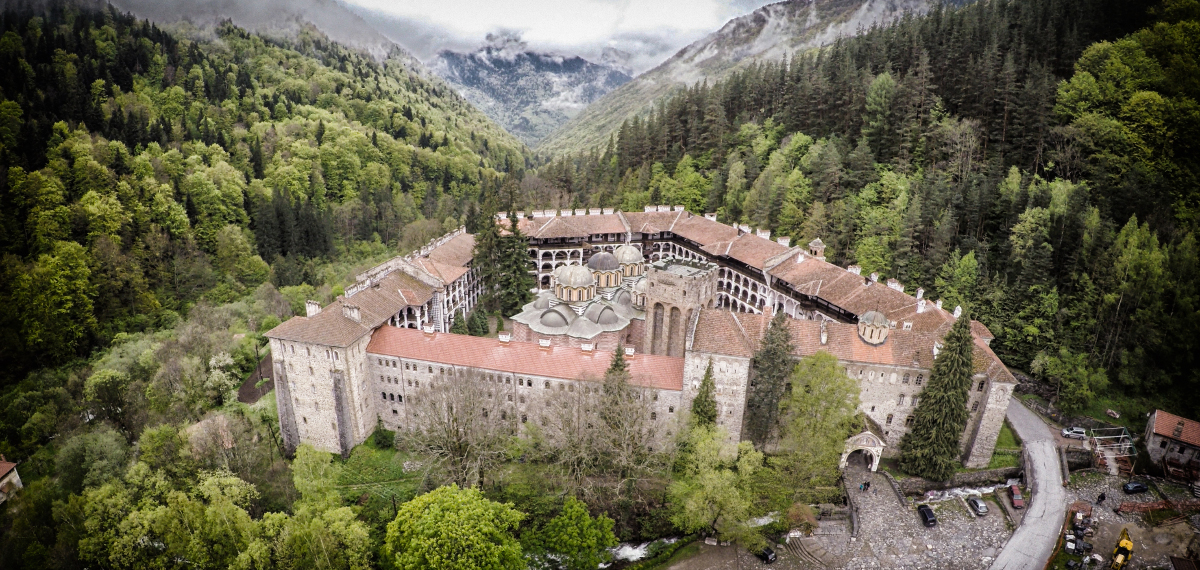
Source: Rila Monastery
Bulgaria is the Europe you picture when you close your eyes and imagine the continent fifty years ago: authentic, unpolished, and teeming with history. It is the only country in Europe that hasn't changed its name since it was established in 681 AD.
Here, you will find Roman theaters that are still in use, brutalist Soviet monuments that look like spaceships, and beaches that rival Greece—often for half the price. Bulgaria is a land where people nod to say "no" and shake their heads to say "yes" (a confusing quirk you will learn quickly), and where the hospitality is strong.
If you are ready for a European adventure that feels like a discovery rather than a checklist, here is your guide to the Land of Roses.
1. Sofia: The City of Layers
Your trip begins in Sofia. It is a city built literally on top of its past. If you take the metro near the Serdica station, you will walk past exposed Roman walls and streets preserved inside the terminal.
- The Golden Domes: The St. Alexander Nevsky Cathedral is the icon of the city. Its gold-plated domes can be seen for miles. Go inside (it’s free) to smell the incense and hear the haunting orthodox chants.
- The Yellow Bricks: Walk down the "Yellow Brick Road" (Tsar Osvoboditel Blvd), which leads past the Parliament and the former Royal Palace.
- Vitosha Boulevard: This is the main pedestrian artery. It is lined with cafes and shops, but the real attraction is the view: the massive, snow-capped Vitosha Mountain looms directly at the end of the street. You can take a taxi to the chairlift and be hiking in alpine meadows in 30 minutes.
2. Plovdiv: Older Than Rome
Two hours east of Sofia lies Plovdiv. It claims to be the oldest continuously inhabited city in Europe (dating back 6,000 years). It is remarkably different from the capital—slower, artistic, and warmer.
- The Ancient Theatre: This 2nd-century Roman theatre isn't a ruin; it’s a venue. It sits on a cliff overlooking the city. If you are lucky, you might catch an opera or a rock concert here at sunset.
- Kapana ("The Trap"): Once a tangle of craft workshops, this district is now the creative heart of Bulgaria. It is a maze of pedestrian streets filled with art galleries and endless bunting flags hanging overhead.
- The Old Town: Climb the cobblestone hills to see the "National Revival" houses. These colorful, timber-framed mansions overhang the streets, creating shaded tunnels that are incredibly photogenic.
3. Rila Monastery: The Spiritual Heart
If you only leave the city once, go to the Rila Monastery. Tucked deep in the Rila Mountains, this UNESCO World Heritage site looks like a fortress on the outside and a jewelry box on the inside.
- The Frescoes: The striped black-and-white arches and the vivid, terrifying murals of Judgment Day (depicting demons and sinners in graphic detail) are masterpieces of religious art.
- The Mekitsa: Just outside the monastery’s back gate, there is a small window selling "Mekitsa"—a fried dough pastry. It is greasy, covered in powdered sugar, and legendary.
4. The Black Sea: Nessebar
Skip the noisy party resort of Sunny Beach and head to the peninsula of Nessebar.
- The Pearl: Connected to the mainland by a thin isthmus, Old Nessebar is a UNESCO-protected town packed with the ruins of 40 different churches. It is a charming mix of Byzantine stone ruins and 19th-century wooden houses overlooking the sea.
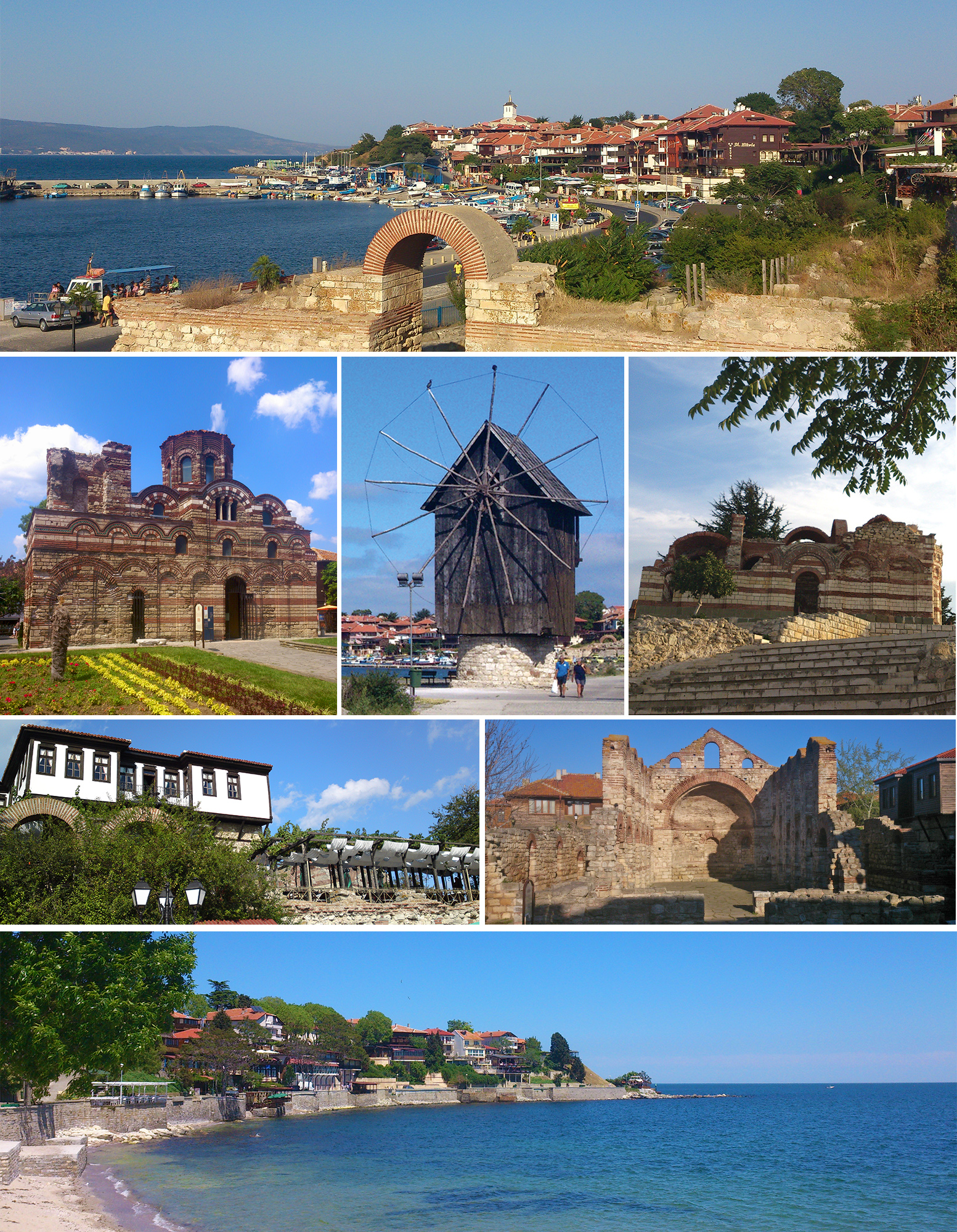
- From top left: Northern harbour, Church of Christ Pantokrator, The wooden windmill on the isthmus, Church of St John Aliturgetos, Old house and town walls, Church of St Sophia, Southern bay of the old town
- Source- NightBlade151, CC BY-SA 3.0, via Wikimedia Commons
Practical Tips: Surviving the Alphabet
This is where the adventure gets real. Bulgaria uses the Cyrillic alphabet (in fact, they invented it). While young people in Sofia speak English, street signs, bus schedules, and menus in rural areas are often strictly in Cyrillic. This makes navigation a genuine challenge. You cannot simply "guess" that Ресторант means "Restaurant."
The Connectivity Solution To navigate a country where you cannot read the signs, you will rely heavily on Google Maps and Google Lens (for instant visual translation of menus).
- The Roaming Situation: If you are from the UK, USA, or outside the EU, your home carrier likely charges high fees for roaming in Bulgaria. Even some "European" plans exclude the Balkans.
- The Fix: The smartest move is to purchase an eSIM profile before you fly.
- An eSIM allows you to connect to local networks (like Vivacom or Yettel) the moment you land. This is a safety essential—it ensures you can translate the bus schedule in Plovdiv or find your way back to your hotel in Sofia without needing to ask a local who might only speak Bulgarian.
Money Matters
- Currency: The Bulgarian Lev (BGN).
- The Peg: The Lev is pegged to the Euro at a rate of roughly 1.96 BGN = 1 Euro. This makes mental math easy (just divide the price in Lev by two to get the Euro price).
- Cash is King: While Sofia is modernizing, cash is still required for small shops, museums, and that crucial monastery donut.
The "Buzludzha" UFO For the adventurous, look up the Buzludzha Monument. Perched on a mountain peak, this abandoned Communist headquarters looks exactly like a concrete UFO. While entering the crumbling structure is often forbidden due to safety, the exterior is one of the most surreal sights in Eastern Europe.
Why Go Now?
Bulgaria is affordable, safe, and gloriously unpretentious. It is a place where you can eat a Shopska salad (cucumbers, tomatoes, and mountains of white cheese) for a few dollars, surrounded by history that predates the Romans.