
Bosnia & Herzegovina: Europe’s Most Underrated Crossroads
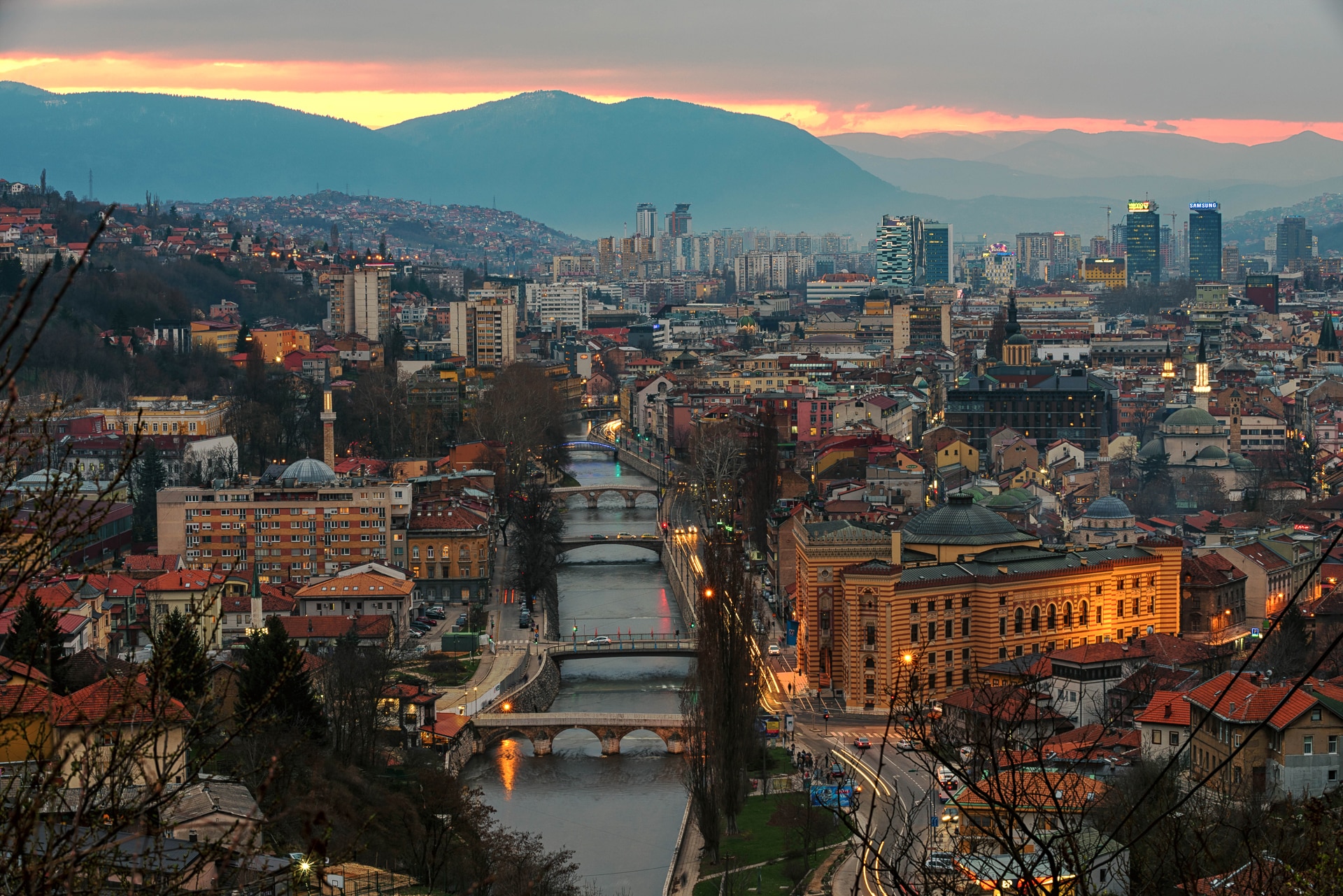
Source: meetbosnia.com
If you look at a map of Europe, there is a heart-shaped gap between the popular beaches of Croatia and the mountains of Montenegro. That gap is Bosnia and Herzegovina (BiH). For years, it was associated only with the tragic conflict of the 1990s. Today, however, it is emerging as one of the most fascinating, resilient, and stunningly beautiful destinations on the continent.
It is a place where church bells ring simultaneously with the call to prayer, where rivers run the color of emeralds, and where the coffee is strong enough to wake the dead. If you are looking for a European adventure that feels genuinely different, here is your guide to the Balkans' hidden gem.
Sarajevo: Where East Meets West
Your journey will likely start in the capital, Sarajevo. It is often called the "Jerusalem of Europe" because within a few hundred meters, you can find a mosque, a Catholic cathedral, an Orthodox church, and a synagogue.
- Baščaršija (The Old Bazaar): The heart of the city feels distinctly Ottoman. Narrow cobblestone streets are lined with coppersmiths hammering out coffee sets and cafes serving ćevapi (grilled minced meat sausages in flatbread). The smell of grilled meat and roasting coffee is everywhere.
- The Latin Bridge: Stand on the corner where history turned. This small stone bridge is the site of the 1914 assassination of Archduke Franz Ferdinand, the spark that ignited World War I.
- The Tunnel of Hope: For a sobering look at recent history, visit the tunnel that served as the city's only lifeline during the Siege of Sarajevo in the 1990s. Walking through a preserved section of it is a deeply moving experience.
The Scenic Route: Sarajevo to Mostar
Do not take the bus. Do not fly. Take the train. The rail journey from Sarajevo to Mostar is widely considered one of the most scenic train rides in Europe.
- The View: For roughly two hours, the modern, air-conditioned train winds through jagged mountains and deep gorges, following the path of the Neretva River. The water is a shocking, vibrant turquoise that looks fake even in person.
- Pro Tip: Sit on the left side of the train when heading south to Mostar for the best river views.
Mostar: The Bridge and the Brave
Mostar is the postcard of the Balkans. The city is centered around the Stari Most (Old Bridge), a 16th-century Ottoman masterpiece that arches high over the river.
- The Divers: You will see young men pacing the edge of the bridge. They aren't just showing off; they are members of the local diving club. They collect tips from tourists until they reach a quota, and then they jump 24 meters (78 feet) into the freezing water below. It is a tradition that goes back centuries.
- The Streets: The Old Town is slippery with polished stone (wear good shoes) and packed with shops selling lavender, pomegranates, and copper art.
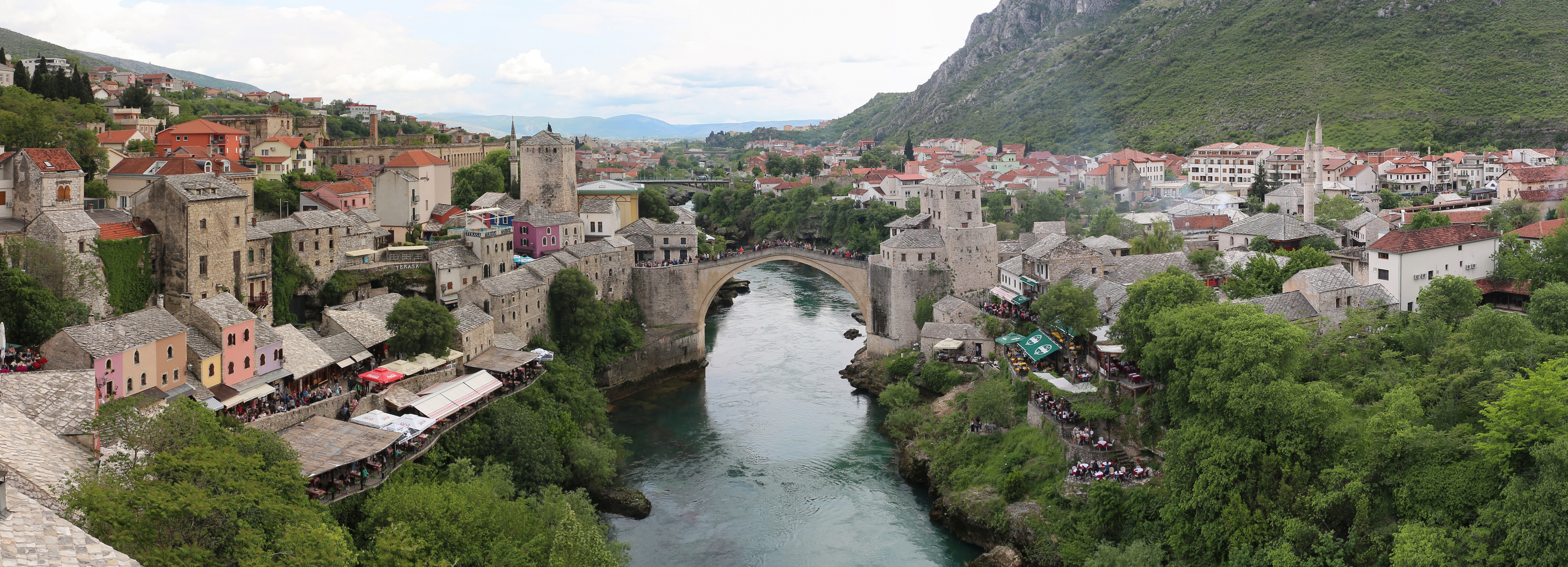
- Stari Most. Source- Bernard Gagnon, CC BY-SA 4.0, via Wikimedia Commons
Herzegovina: Waterfalls and Dervishes
While Bosnia (the north) is green and mountainous, Herzegovina (the south) is rocky, sunny, and Mediterranean.
- Kravice Waterfalls: Often called a "mini-Niagara," this amphitheater of waterfalls cascades into a large lake. Unlike many protected sites in Europe, you can actually swim here. In the summer, you can float right up to the falls.
- Blagaj Tekke: Just a short drive from Mostar, a 600-year-old Dervish monastery sits at the base of a massive 200-meter cliff. Right next to it, the Buna River explodes out of a dark cave in full force. It is arguably the most serene spot in the country.
Practical Tips for the Traveler
The "Roaming" Surprise Here is the most critical logistical tip: Bosnia and Herzegovina is NOT in the European Union.
- The Trap: If you have a UK or EU SIM card with "free European roaming," it likely does not apply here. Crossing the border can trigger massive daily charges or pay-per-megabyte fees.
- The Fix: To avoid a bill shock, purchase an eSIM data plan before you cross the border. Modern eSIMs allow you to connect to local networks (like BH Telecom) instantly. You will need data to navigate the winding roads to Kravice or to use Google Translate to read menus in rural mountain restaurants. It is the cheapest and most reliable way to stay connected.
Cash Culture While credit cards are accepted in major hotels and supermarkets, cash is king (and often the only option) in cafes, souvenir shops, and bakeries.
- Currency: The currency is the Convertible Mark (BAM or KM).
- The Peg: It is pegged to the Euro (approx. 2 KM = 1 Euro). You can often pay in Euros in tourist areas, but you will get change in KM.
Coffee is a Ritual Do not order a "coffee to go." In Bosnia, coffee (Bosanska kafa) is meant to be savored. It arrives in a copper pot (džezva) with a side of sugar cubes and Turkish delight (rahat lokum). There is a specific way to drink it—ask a local, and you’ll make a friend for life.
Why Go Now?
Bosnia and Herzegovina is currently in the "sweet spot" of travel. It is safe, organized, and welcoming, but it hasn't yet been overrun by the massive crowds of Dubrovnik or Santorini. It is a place where you can eat a world-class meal for $10 and have a UNESCO World Heritage site almost to yourself.