
Bhutan: A 5-Minute Guide to the Last Shangri-La
Source: Britannica
Bhutan is not a country you visit casually. You don't end up there by accident on a backpacking trip through Southeast Asia. You go to Bhutan because you are called to it.
Tucked away in the folds of the eastern Himalayas, sandwiched between the giants of India and China, this tiny kingdom has done the impossible: it has prioritized happiness over GDP. It is a land where traffic lights are considered too impersonal (Thimphu is the only capital city in the world without them), where chillies are treated as a vegetable rather than a spice, and where success is measured by the spiritual well-being of its citizens.
If you are willing to pay the price of admission, Bhutan offers a travel experience that feels less like a vacation and more like time travel. Here is your guide to the Land of the Thunder Dragon.
The "High Value" Price Tag
Let’s address the elephant in the room first: The Cost. Bhutan operates on a "High Value, Low Volume" tourism policy. They don't want mass tourism; they want sustainable impact.
- The SDF: As of late 2023 (valid until 2027), the Sustainable Development Fee (SDF) is $100 USD per person, per night.
- What it covers: Nothing for you personally. This fee goes directly to the government to fund free healthcare, education, and infrastructure for Bhutanese citizens.
- The Reality: On top of the $100 daily tax, you must pay for your hotels, food, guide, and transport. This makes Bhutan an expensive destination, but it also ensures you are often the only tourist at a temple. There are no crowds, no lines, and no souvenir hawkers chasing you.
1. Paro Taktsang: The Tiger’s Nest
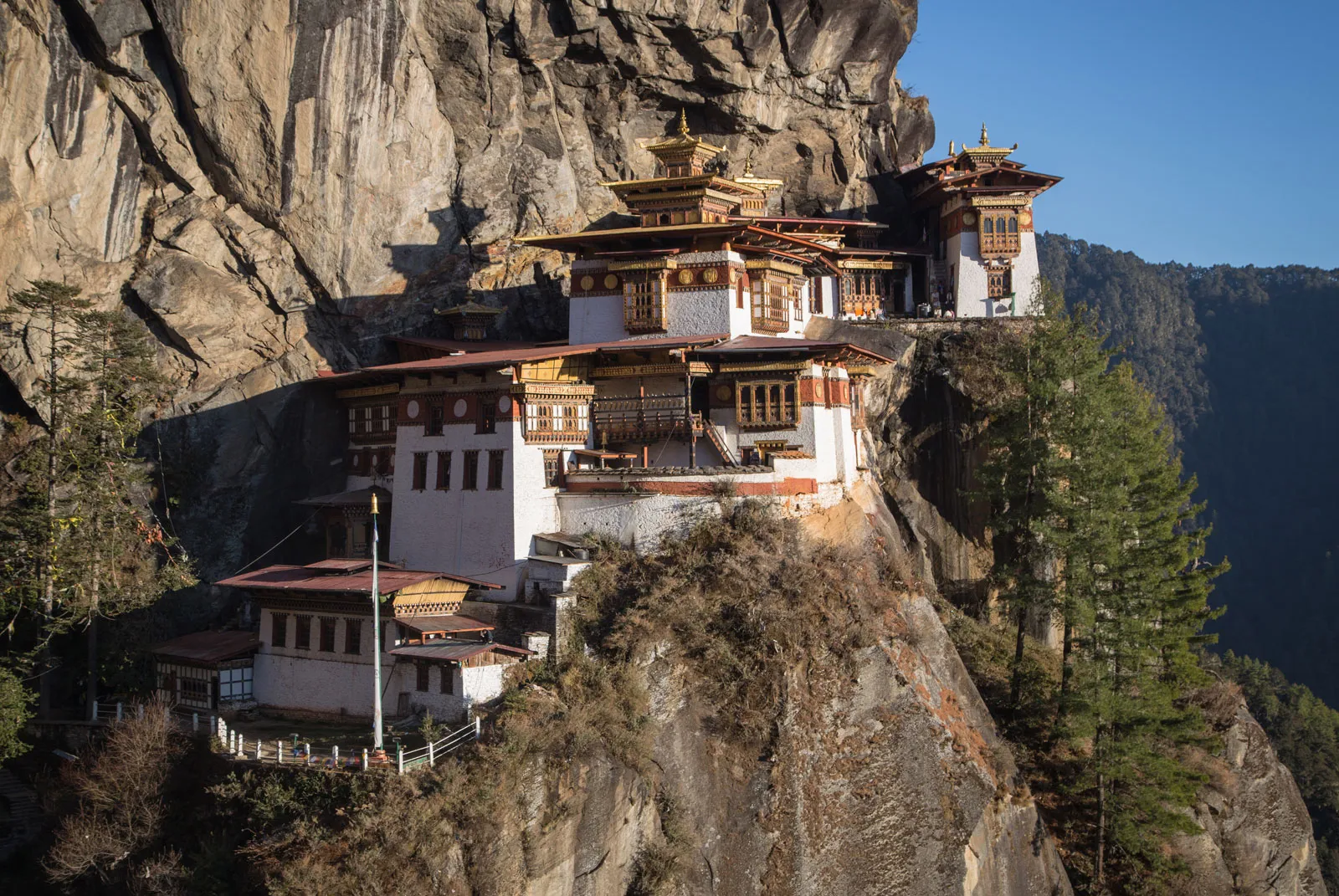
This is the image that likely made you book the ticket. Tiger’s Nest Monastery clings to a sheer cliff face 900 meters (3,000 feet) above the Paro Valley.
- The Legend: It is said that Guru Rinpoche, the father of Bhutanese Buddhism, flew here on the back of a tigress to subdue a demon.
- The Hike: It is not a walk in the park. It is a steep, 2-to-3 hour climb at high altitude. You will be out of breath, but when you turn the final corner and see the white temple floating against the grey rock and green pine, the fatigue vanishes.
- Pro Tip: Start early (7:00 AM) to beat the heat and the horses that carry visitors halfway up.
2. Punakha Dzong: The Palace of Great Happiness
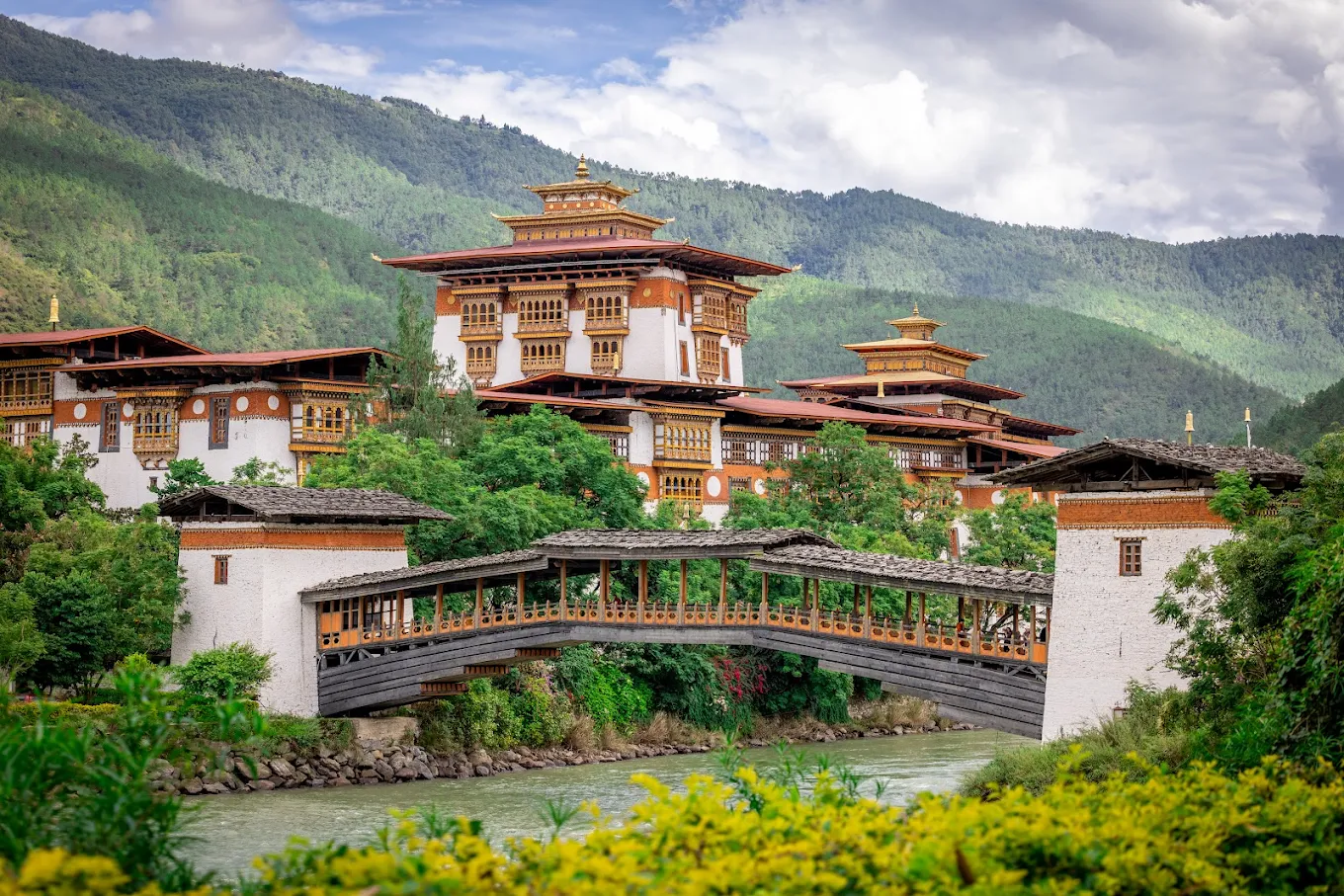
If you only visit one Dzong (fortress) in Bhutan, make it Punakha. Sitting at the confluence of the "Male" (Pho) and "Female" (Mo) rivers, it is widely considered the most beautiful building in the country.
- The Jacaranda: If you visit in spring (May), the fortress is framed by blooming purple Jacaranda trees against the whitewashed walls.
- The Bridge: To enter, you must cross a massive wooden cantilever bridge. Inside, the silence is heavy, broken only by the chanting of monks and the creaking of prayer wheels.
- Source- Photo by NamgayImage courtesy of Namgay
3. Thimphu: The Quiet Capital
Thimphu is a fascinating mix of ancient tradition and slow modernization.
- Buddha Dordenma: A massive 51-meter (169 ft) tall gold-plated Buddha statue sits atop a hill overlooking the city. Inside the statue are 125,000 smaller Buddhas. The view of the valley from here is panoramic.
- The Traffic Policeman: Head to the main intersection in town. Instead of a traffic light, you will see a policeman in a decorated booth directing cars with white-gloved, dance-like hand movements. It is hypnotic to watch.
4. Phobjikha Valley: The Crane’s Home
Drive over the mountain passes to this vast, U-shaped glacial valley. It is the winter home of the rare Black-Necked Cranes that fly over the Himalayas from Tibet.
- The Respect: The locals revere these birds so much that the power lines in the valley are buried underground to prevent the cranes from colliding with them. It is a perfect example of Bhutan’s commitment to nature.
Practical Tips: Connectivity & Comfort
The "Digital Detox" Reality Bhutan is remote. You will be driving through mountain passes at 3,000 meters and hiking through dense pine forests. While it is the perfect place to disconnect, you still need maps, translation apps, and a way to contact your driver.
- The Roaming Gap: Most Western carriers (AT&T, Verizon, Vodafone, etc.) have zero roaming agreements with Bhutan. If they do, the rates are astronomical (often over $10/MB).
- The Fix: The smartest move is to purchase an eSIM data plan before you fly.
- Why? Buying a physical SIM card in Bhutan involves paperwork and passport copies at the airport. An eSIM allows you to connect to local networks (like B-Mobile or TashiCell) the moment you land in Paro. It gives you immediate access to WhatsApp (to find your guide) and weather apps (crucial for hiking) without the hassle.
The Food: Ema Datshi Bhutanese food is spicy. The national dish is Ema Datshi—literally "Chili and Cheese."
- The Warning: It is not a dish with chilies; the chilies are the main ingredient, cooked in a cheese sauce. It is delicious, but proceed with caution.
- Red Rice: You will eat red rice with almost every meal. It is nutty, earthy, and grown in the high-altitude paddies you see everywhere.
Getting There Landing at Paro International Airport is an adventure itself. It is considered one of the most difficult approaches in the world, weaving between mountain peaks. Only a handful of specially trained pilots are certified to land there. Sit on the left side of the plane when flying in for a chance to see Mount Everest in the distance.
Why Go Now?
Bhutan forces you to slow down. The air is cleaner, the smiles are genuine, and the mountains are humbling. In a world that is increasingly loud and fast, Bhutan is a quiet sanctuary. It is expensive, yes. But standing on a cliff edge at Tiger’s Nest, listening to the wind in the prayer flags, you realize: some things are priceless.