
Benin: West Africa’s Best Kept Secret
Source: Africa.com
If you are looking for a sterilized, resort-heavy holiday, Benin is not for you. But if you want to see the birthplace of Voodoo, walk the red earth of ancient kingdoms, and navigate a city built entirely on stilts, then this slender strip of West Africa is arguably the most fascinating destination on the continent.
Benin is intense, colorful, and surprisingly accessible compared to its neighbors. It offers a profound mix of tragic history and vibrant living culture that you don't just see—you feel. Here is your guide to navigating the "Latin Quarter of Africa."
1. Cotonou: The Motorbike Metropolis
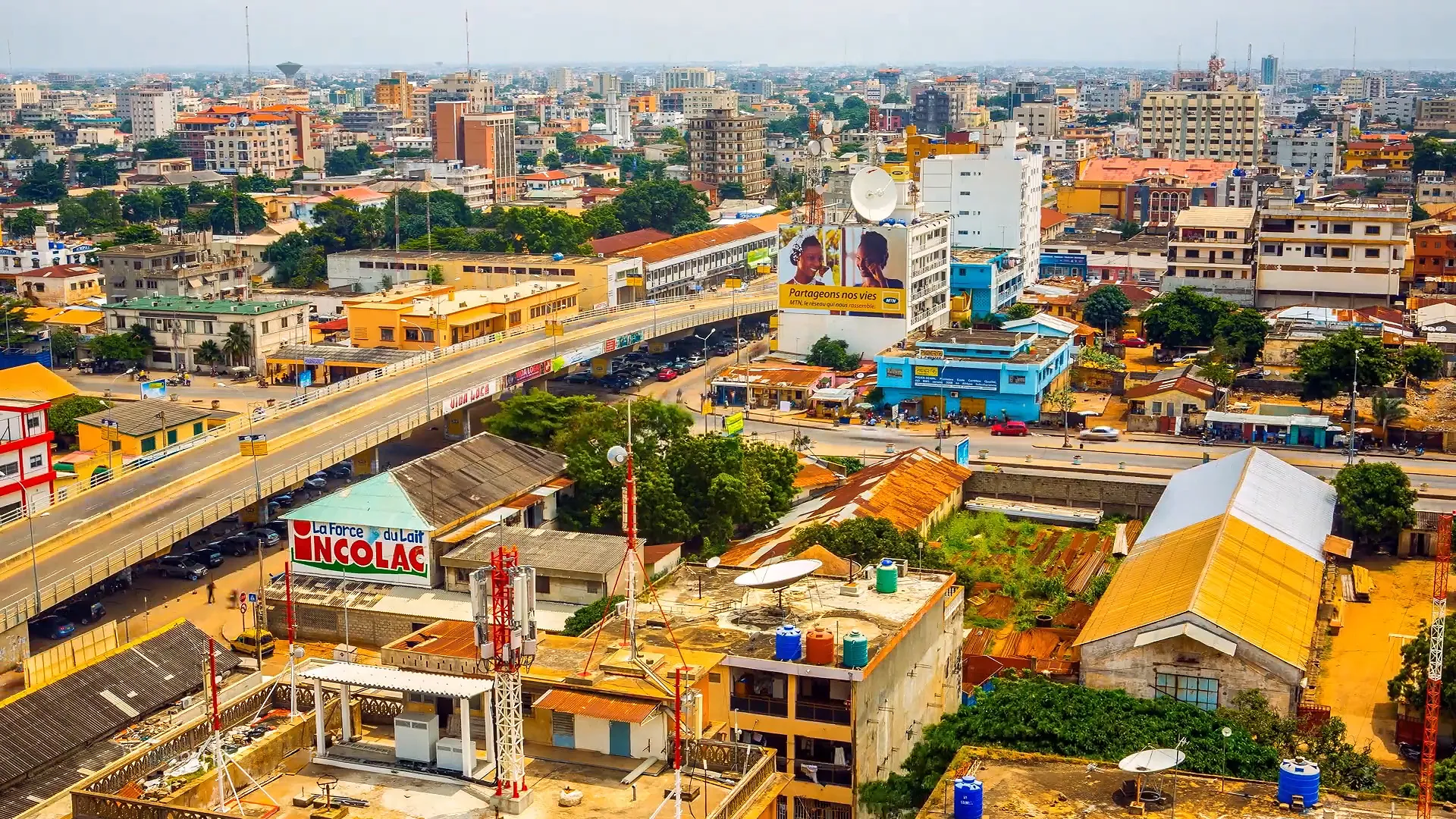
You will land in Cotonou, the economic capital. It is a sensory overload of humidity, buzzing zemidjans (motorbike taxis), and spicy street food.
- Dantokpa Market: This is the largest open-air market in West Africa. It is chaotic, loud, and essential. You can find everything from Dutch wax prints to dried fish and medicinal market supplies (dried chameleons and monkey skulls used for traditional medicine).
- The Amazon Statue: A recent addition to the skyline, this massive bronze statue towers over the city, paying tribute to the Agodjie—the all-female warrior unit of the Dahomey Kingdom (the real-life inspiration for the Woman King movie).
2. Ganvié: The "Venice of Africa"
Just an hour north of Cotonou lies Lake Nokoué, home to Ganvié, a bamboo city built completely on stilts.
- The History: It was founded in the 16th century by the Tofinu people to escape the Fon warriors of the Dahomey Kingdom, who hunted them for the slave trade but were religiously forbidden from attacking communities on water.
- The Experience: You take a motorized pirogue through the "streets" of water. You will see floating markets where women sell fish and fruits from their boats, and children rowing themselves to school. It is a surreal, living community that has adapted perfectly to its environment.
3. Ouidah: The Spiritual Heart
Ouidah is the soul of Benin. It is known for two seemingly contradictory things: the tragic history of the Atlantic slave trade and the practice of Voodoo (Vodun).
- The Route of Slaves: This 4km red sand track traces the final walk of enslaved people from the auction plaza to the ocean. It ends at the Door of No Return, a massive monumental arch on the beach. It is a somber, heavy, and necessary experience.
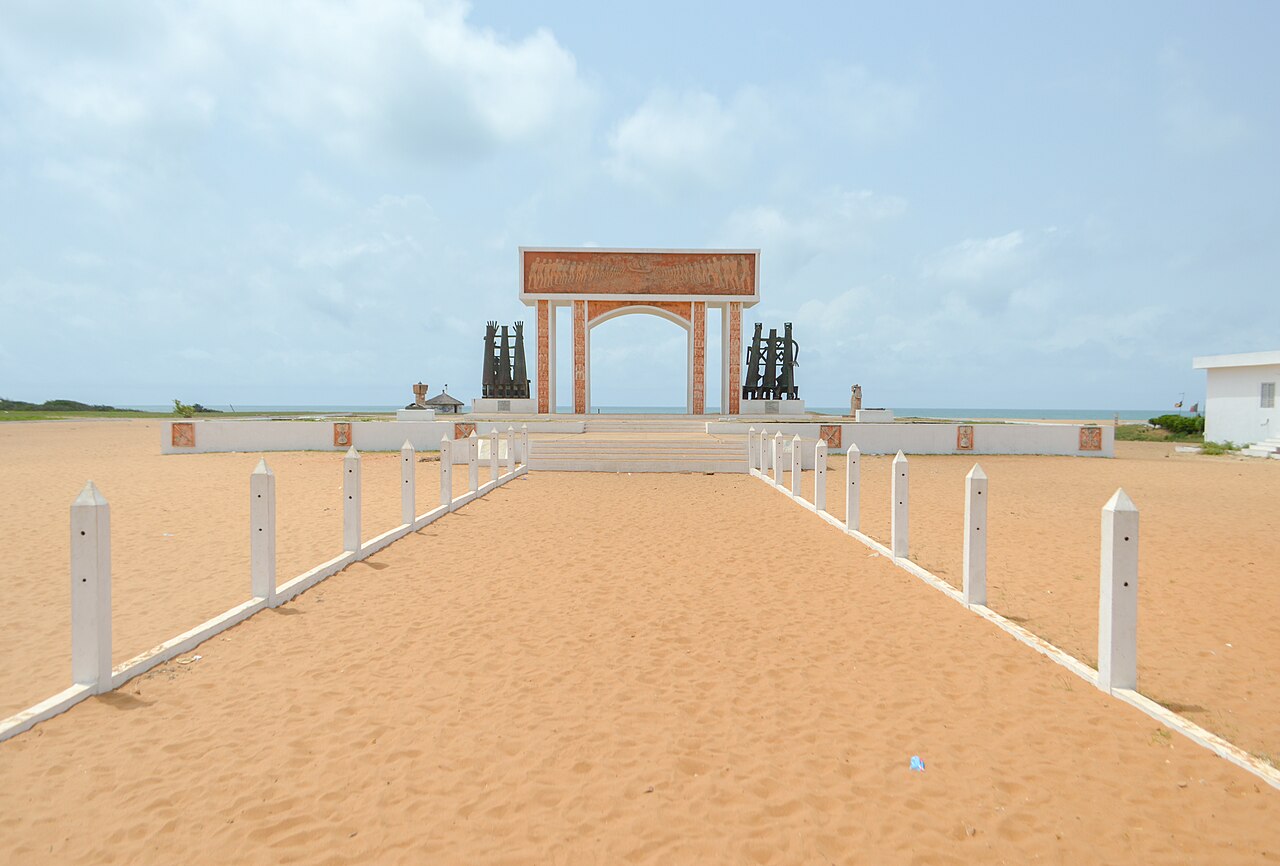
- Door of no return leading to the beach in Ouidah, Benin. Source- Francisco Anzola, CC BY 2.0, via Wikimedia Commons
- The Temple of Pythons: Across the street from the Catholic basilica sits this sacred temple. It is home to dozens of royal pythons that slither freely around the shrine. They are considered harmless and sacred; you can even let one drape around your neck for a blessing (and a photo).
4. Abomey: The Kingdom of Skulls
To understand the power that once ruled this region, head north to Abomey. This was the capital of the Dahomey Kingdom for 300 years.
- The Royal Palaces: Now a UNESCO World Heritage site, the earthen palaces house a museum that displays the throne of King Ghezo (mounted on human skulls) and tapestries depicting the kingdom's bloody battles. It provides the crucial context for why the coast developed the way it did.
5. Practical Tips for the Traveler
Visa & Entry Benin has modernized its entry process significantly. Most travelers (including US, UK, and EU citizens) can get an e-Visa online. It is processed quickly (often within 48 hours) and avoids the stress of embassy visits.
The "Connectivity" Hack Navigating the chaotic streets of Cotonou or translating French (the official language) requires a reliable connection. Public Wi-Fi is rare outside of high-end hotels.
- The Roaming Trap: Using your home carrier in West Africa can lead to astronomical roaming bills.
- The Smart Fix: The most reliable way to stay connected is to purchase an eSIM data plan before you arrive. This allows you to connect to local networks (like MTN or Moov) the moment you step off the plane. It saves you the hassle of finding a vendor and registering a physical SIM card with your passport in a busy market.
Cash is King The currency is the West African CFA Franc (XOF). Credit cards are rarely accepted outside of major hotels in Cotonou. You must carry cash.
- Exchange Tip: Euros are the easiest currency to exchange (the CFA is pegged to the Euro). US Dollars are accepted for exchange but often at a worse rate.
Safety Note While the southern coastal region (Cotonou, Ouidah, Ganvié) is generally safe for tourists, the northern border regions (near Pendjari National Park) have seen security issues in recent years. Always check your government's travel advisory before planning a trip to the far north.
Why Go Now?
Benin is raw and unfiltered. It doesn't hide its scars, but it also celebrates its survival with a culture that is vibrant, loud, and proud. It is a place where you can touch the history of the world and see a way of life that has resisted change for centuries.