
Angola: The Last Great Adventure of Africa
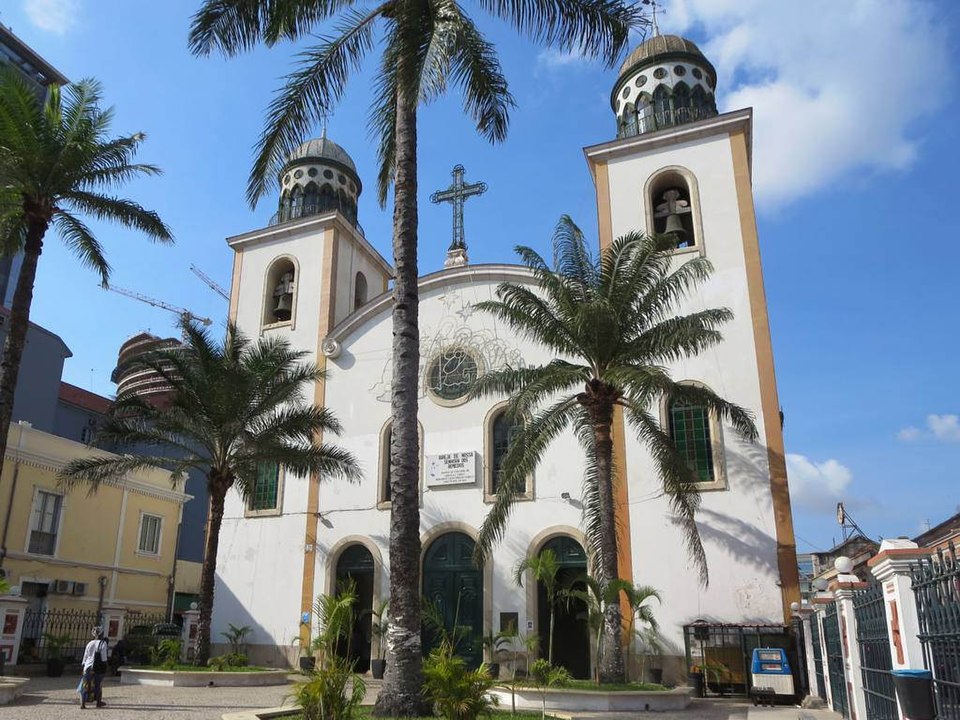
For decades, Angola was off-limits to all but the most hardened travelers or oil executives. A long civil war and a notoriously difficult visa policy kept this massive nation hidden behind a curtain of mystery. But that curtain has been lifted.
With a new visa-free policy for 98 countries (including the US, UK, and most of the EU) and a push for tourism, Angola is finally revealing itself as one of Africa’s most diverse and dramatic destinations. From the "Dubai-like" skyline of Luanda to waterfalls that rival Victoria Falls, Angola is raw, expensive, and utterly captivating.
If you are ready to visit a place where you won’t see another tourist for days, here is your guide to the Land of the Giant Sable Antelope.
Luanda: The City of Contrasts
Your journey begins in Luanda, a city that defies logic. It is frequently ranked as one of the most expensive cities in the world for expats, and you will feel it.
- The Marginal: Start your walk at the Marginal de Luanda, a polished, palm-lined promenade that curves along the bay. On one side, you have the shimmering Atlantic; on the other, gleaming glass skyscrapers and the pink Banco Nacional de Angola building.
- Ilha do Cabo (The Island): Just off the coast (connected by a bridge), "The Ilha" is the playground of Luanda. It is a thin spit of land packed with high-end beach clubs and seafood restaurants. It feels more like Miami than West Africa.
- Fortaleza de São Miguel: For history, climb up to this 16th-century Portuguese fortress. It offers the best view of the city and houses the Museum of the Armed Forces, guarded by statues of Portuguese kings and old Soviet tanks.
Kalandula Falls: The Thunder of Malanje
If you leave the capital, you must head to Malanje province to see Kalandula Falls.
- The Scale: These are the second-largest waterfalls in Africa by volume, surpassed only by Victoria Falls. But unlike Victoria, there are no guardrails, no paved paths, and likely no other people. You can stand right at the edge of the horseshoe-shaped cliff and feel the ground shake as the Lucala River plummets 105 meters down.
- The Experience: It is wild and uncurated. You can hike down to the bottom (with a local guide) to get soaked in the spray. It is a reminder of what travel used to be before mass tourism.
Miradouro da Lua: The Moon Landscape
Just an hour south of Luanda, the landscape shifts violently from tropical coast to alien desert.
- The View: Miradouro da Lua (Viewpoint of the Moon) is a set of tri-colored cliffs—red, orange, and white—eroded by wind and rain into sharp pinnacles. It looks like a jagged canyon on Mars.
- Sunset: Go at sunset. The fading light turns the cliffs a deep, fiery red, offering one of the most photogenic moments in the entire country.
The Tundavala Gap: The Abyss
For those willing to travel further south to Lubango, the Tundavala Gap (Fenda da Tundavala) awaits.
- The Drop: Imagine a grassy plateau that suddenly ends in a sheer vertical drop of 1,000 meters. The clouds often sit below you. Standing on the edge of the escarpment, looking down into the desert plains of Namibe, is a vertigo-inducing experience that puts the Grand Canyon to shame.
- Serra da Leba: On the way there, you will drive the famous Serra da Leba pass, a zig-zagging road that spirals down the mountain range. It is an engineering marvel and a national icon (you’ll see it on the back of the 5 Kwanza note).
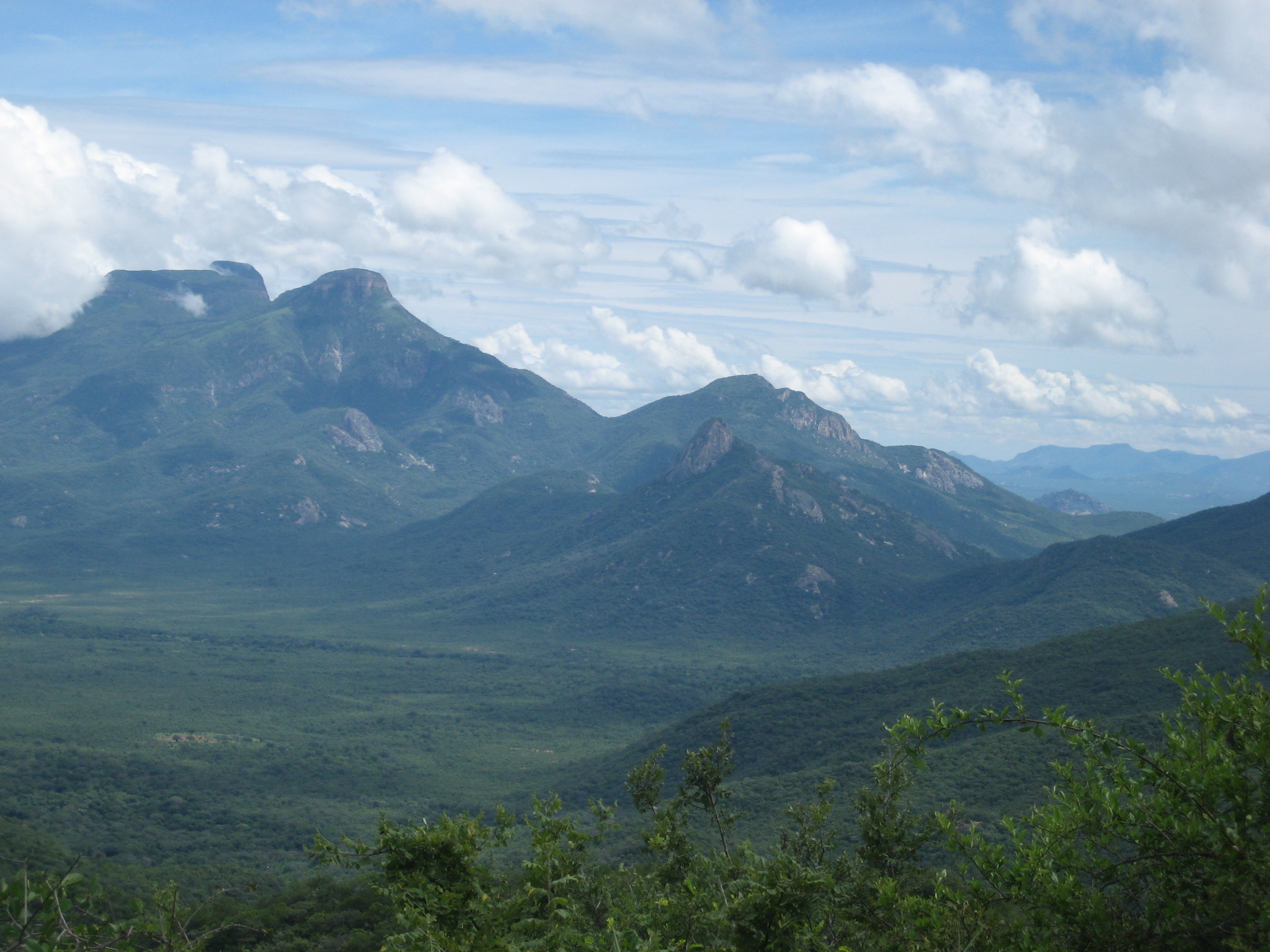
Lubango. Source- Erik Cleves Kristensen, CC BY 2.0, via Wikimedia Commons
Practical Tips: Surviving the "Hard" Stuff
Angola is not a beginner destination. The infrastructure is improving, but you need to be prepared.
1. The Language Barrier Portuguese is the official language, and English is rarely spoken outside of 5-star hotels and oil company offices.
- The Tip: Learn the basics (Bom dia, Obrigado, Quanto custa?). For everything else, you will rely heavily on translation apps.
2. The Connectivity Challenge This brings us to a critical point: your phone. Navigating the chaotic streets of Luanda, translating Portuguese menus, or calling a ride-share (apps like Heetch or Yango are essential for safety) requires constant data.
- The Fix: Roaming charges in Angola can be astronomical for Western carriers, and buying a local SIM card can be a bureaucratic headache involving queues and passport registration. The smartest move is to purchase an eSIM data plan before you fly. This allows you to connect to local networks (like Unitel) the moment you land, ensuring you aren't left stranded at the airport without a map or a translator.
3. Cash is King (and Queen) Credit cards are accepted in luxury hotels and big supermarkets in Luanda, but for everything else—markets, gas stations, roadside restaurants—you need cash.
- Currency: The Angolan Kwanza (AOA).
- The Exchange: Bring US Dollars or Euros (pristine, new notes only; old or torn bills will be rejected). You will get a much better exchange rate at legitimate exchange houses (casas de câmbio) than at the airport.
4. Safety Angola is generally safe for tourists, but petty crime exists in Luanda.
- Rule of Thumb: Don't walk around the city at night. Use ride-hailing apps or hotel taxis. When driving, keep windows up and doors locked. In the countryside, stick to well-travelled paths; landmines from the war are still an issue in very remote, unmarked areas, though major tourist sites are clear.
Why Go Now?
Angola is currently in a "sweet spot." The visa barriers are down, the war is a distant memory, but the tour buses haven't arrived yet. It is a place where adventure is still guaranteed, where the landscapes are prehistoric, and where the culture is a vibrant, thumping mix of African rhythm and Portuguese soul.
It is not the easiest trip you will ever take, but standing alone at the top of Kalandula Falls, it might just be the best.